The Bigger Picture: Visual Archives and the Smithsonian
Posts tagged with: Flickr Commons
Celebrate Our Fifth Annual Women's History Month!

Throughout March, we will be celebrating Women's History Month with new photos to the Flickr Commons and a series of blog posts about women in science from the Archives' collections.
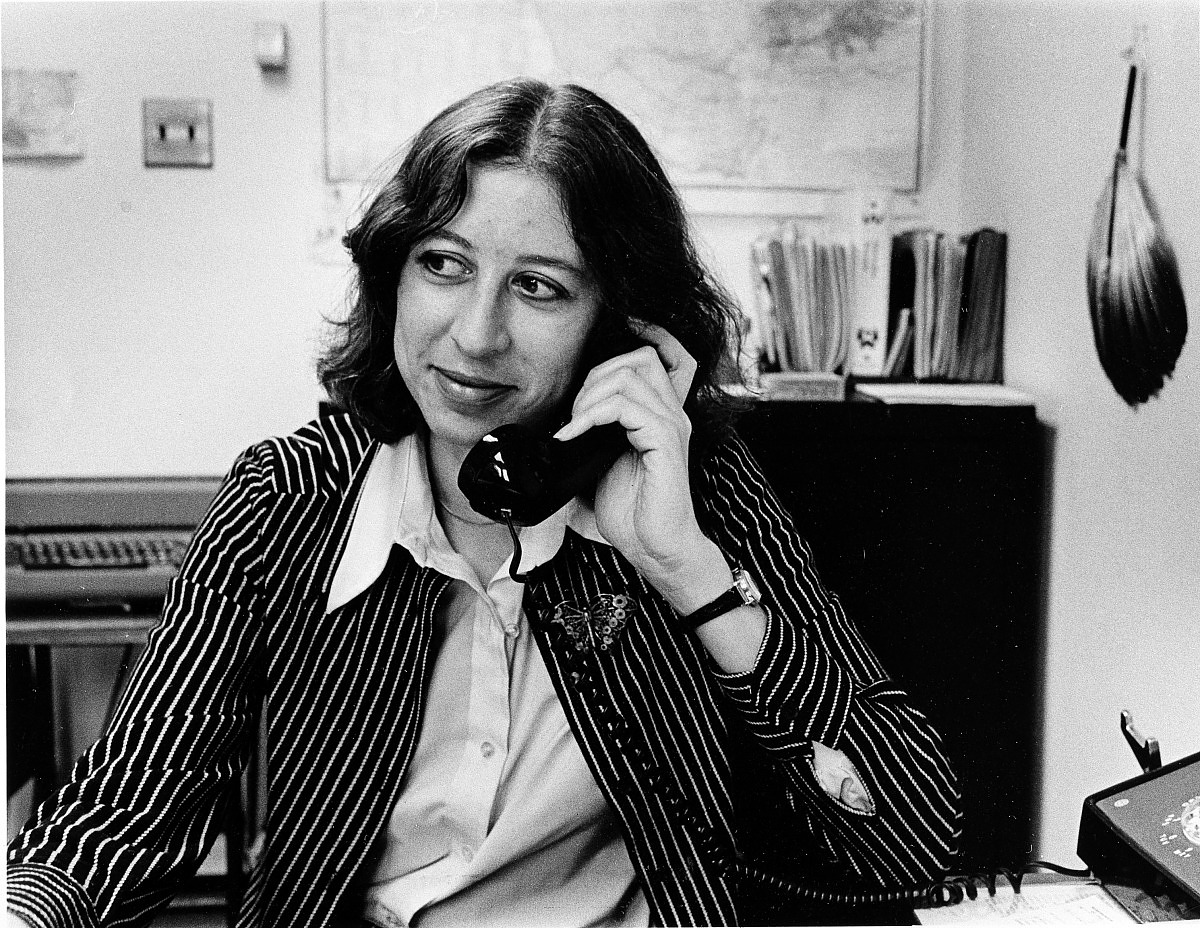
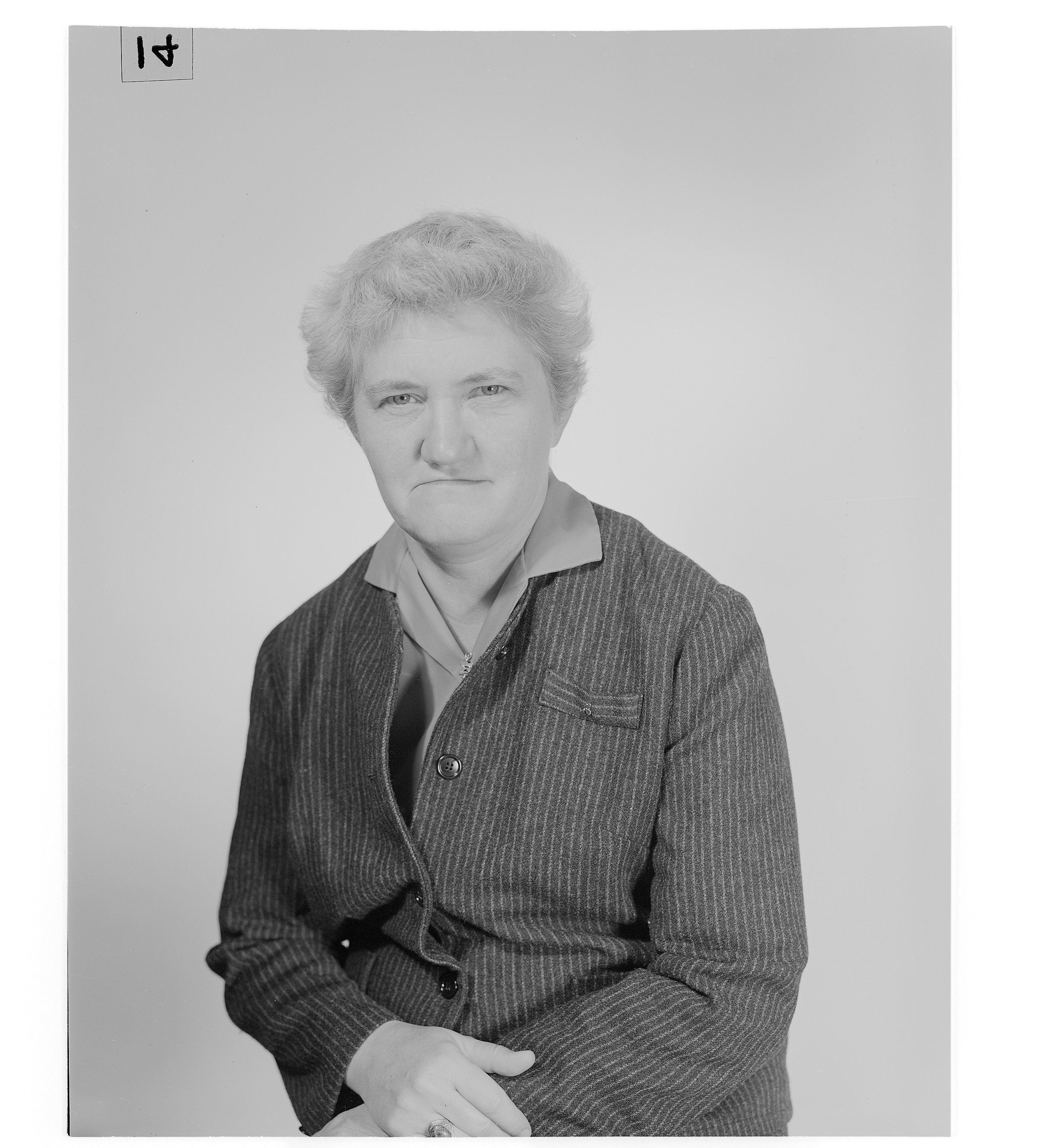
Today marks the 5th anniversary of our Women’s History Month celebration. We have a set of 71 images of women in science which we’ll be rolling out throughout the month. We will also be highlighting a little known, but ground-breaking woman each day through March on a Pinterest board and Facebook, whichever you prefer! We have women in the fields of botany, biology, physiology, biochemistry, anthropology, and much more. Some notables in today's group are Marion Schmidt Escallon, the first woman employed as a petroleum exploration geologist, and Laurel van der Wal, the 1961 Woman Scientist of the Year who specialized in engineering problems of manned space flight, including effects of weightlessness, radiation protection, and development of data handling and processing systems.
We also have a few mysteries which we’d love your help in solving. If you’d like to learn more about these important figures, keep checking back as we will be blogging about them throughout the month.
Found: Two People in the Flickr Commons!
In celebration of 5 years of the Flickr Commons, peruse a set of the most popular photographs on Flickr to date.
Today marks five years of the Flickr Commons, an online space for cultural heritage institutions to post historic photographs, and other images, with the "no known copyright restrictions" terms. Library of Congress was the first to make their mark on the Commons. We follwed 6 months later in June 2008. It's been immensely satisfying to get to know visitors, see what they dig up about our collections, and after 5 years, observe the dedication people show in helping us do some of the work we frankly don't have time and/or resources to get to. Specifically, two recent comments helped us identify faces in our collections.
The first identification happened in September 2012, nearly a year after we uploaded a picture of Agnes Mary Claypole Moody. A timely comment from Flickr user, Elliot20122012, gave us evidence supporting previous comments made pointing to Moody. It turns out Elliot20122012 had been in touch with a descendant of Clarypole Moody’s, Kate Moody, who sent Elliot20122012 a photo of the Claypole sisters in 1898. Elliot20122012 shared the photo with us and alas, a match was made.
Agnes Mary Claypole Moody (1870-1954), was a zoologist and professor of natural science, and Edith Jane Claypole (1870-1915) was also a biologist. According to Caltech’s website, when the California Institute of Technology was known as the Throop University vocational school in 1898, Edward Waller Claypole was their geology and biology instructor. He had twin daughters, Agnes and Edith, who earned their Masters of Science; Edith in 1893 with a thesis on the blood cells of amphibians and Agnes in 1894 with a thesis on the digestive tract of eels. In 1898, Agnes Mary Claypole wrote a book called, “The embryology and oögenesis of Anurida maritime" (Anurida maritima is a wingless animal found in water).
When Edward Waller Claypole died in 1901, both daughters were hired on at Throop University to teach in his place. In 1903-4, Agnes M. Claypole was Professor of Natural Science and Curator, the first female biology professor at Throop. After a year on the job, she married Robert O. Moody, and moved to northern California where she later joined the faculty at Mills College.
The second identification happened just the end of last week. We had posted a set of images from the Scopes "Monkey Trial" in January, 2010. We knew the identity of the man on the right to be William Silverman, the father of the donor of the collection, Henrietta Jenrette. However, we didn't know the name of his teacher who had accompanied him to the trial.

Jenrette contacted us after finding his photograph in the 1925 and 1922 Chattanooga Hight School yearbooks with a match. There's no mistaking the face of Creed F. Bates, Jr., aka "the living Dynamo of Chattanooga High School," as the senior class of 1925 affectionately called him.

Jenrette commented, "Isn't the Internet wonderful?" Actually, we think the people who give their time to helping us learn about our collections are wonderful. It is satisfying to see an unidentified person become a complete composition with a history and a name. This is the power of the crowd, and we thank you!
Related Collections
Related Resources
New Field Book Images on Flickr Commons
There is a dedicated team of people at the Smithsonian's Archives and the National Museum of Natural history who are digitizing and describing field books which document the collecting of biological specimens. As they are creating descriptions and images in order to make these fieldbooks more widely available, they are also shedding light on the personal stories of the people behind the research. These are some stories you can read about in our most recent set of Flickr Commons images.
Through the field notes of mammalogist Vernon Orlando Bailey, we learn about a biologist who balanced his desire to study the natural world with a dedication to the humane treatment of his animal subjects which is sweetly illustrated in his poem about an encounter with a Bobbity mouse.
We peek into the fascinating life of Lucile Mann, wife of former Smithsonian National Zoo Director William Mann, who sometimes accompanied her husband on collecting expeditions. Lucile Mann had a background in military intelligence and writing and her skills (and sense of humor) are apparent in this scrapbook of a collecting expedition to Argentina.
If you’re simply in search of something pleasing to the eye, then check out the beautiful drawings of fish specimen from the United States Exploring Expedition (1838-1842), and these jade samples from a survey of jade conducted in Central America, circa 1949.
Related Resources
Cocktails, Cubs, & Costinika
What do cocktails, lion cubs, and costinika have in common? These are all things that can be found in the latest batch of images contributed to Flickr Commons from Field Books held in our collections. There’s also an itinerary from an F.D.R. presidential cruise in 1938, and an overly adorable primate cuddling a tiger cub.
There are always wonderful surprises to be had in these diaries that document scientific expeditions, and the project team writes about the gems on their blog. And in case you didn’t know (I didn’t), costinika is a plant that apparently makes a fine jelly.
Where Are Archives Going? Impressions from SAA 2012
Just two weeks ago, I had the opportunity to attend the 2012 Annual Meeting of the Society of American Archivists. Sporting the theme “Beyond Borders,” I was impressed by the recent transformation in how archives and archivists “do business”—how the technological and digital border has for the most part disappeared.
Five years ago, the handful of conference sessions talking about digital records focused on how to capture and preserve born-digital records. This year, most sessions touched on digitization and digital records not as a novelty topic, but as one of today’s facts of life. History and access to it is happening in the digital realm, and archivists around the globe have embraced the Internet’s potential to enhance and expand the ways their organizations deliver services on a daily basis.
Then and now on my phone. Today, people are searching archival collections with their smartphones, accessing primary sources through “wired” devices they carry with them almost everywhere. In many cases, visitors are using the web browsers on their phones to visit an archives website or review the RSS feed from its blog. Mobile apps are starting to roll out. Photos from the Smithsonian Institution Archives collections can be accessed through the Historypin app (you can also see our photos on the Historypin website). You can plot the images on a map, use an embedded Google Street View to superimpose the historic photograph on the location in real time, and contribute your own stories about that particular place.
Going where the people go. More and more, archives, museums and libraries are establishing a presence at popular online social media sites. In places like Flickr, Facebook, and Twitter, they proactively call attention to the rich body of primary source materials in their permanent collections. Some have begun to engage with Wikipedians enhance and expand content related to their collection. Several Wikipedia editing events have been held at the Smithsonian, including our own recent edit-a-thon “She Blinded Me With Science: Smithsonian Women in Science." We are planning another event with the Archives of American Art and other Smithsonian groups for mid-October in honor of the “Wikipedia Loves Libraries” initiative.
Relevant connections. Has someone ever told you about something they’ve just discovered? The connections other researchers have made with a particular set of historical records can stir up new ideas and point to new areas to focus on. Some of the best archival blogs do just that, sharing the stories of people making connections with rich research material relevant to their field of study. In our own case, Archives’ research associate Marcel LaFollette ran across previously unpublished photos from the famous Scopes Monkey Trial, and she and our staff blogged about these finds here on The Bigger Picture. The trial photo set we shared on Flickr have been viewed over a 107,000 times, and people who were actually at the trial have contacted us to share their personal experience of the event.
Conversations enrich collections. Something archives have known for a long time is changing the way we learn more about our special collections. That secret: we are not the only experts. “Crowdsourcing” is another way archives and libraries are inviting others to contribute their own expertise or even simply their interest to enrich parts of their collections. Maybe you took part in New York Public Library’s “What’s On the Menu?” transcription project? It’s still going on with over one million dishes on over 15,000 menus transcribed so far!
These are just some of the huge and valuable changes occurring in Archives worldwide. Are there any issues we’ve missed or innovative archives projects you’d like to share? Please let us know in the comments below.
- 1 of 22
- ››
Produced by the Smithsonian Institution Archives. For copyright questions, please see the Terms of Use.
About
Smithsonian on Flickr Commons
Topics/Tags
- See Here (611)
- American History (542)
- Science (429)
- Archive (329)
- Cities/Places (277)
- Exhibitions (234)
- Web/Tech (210)
- Photo History (189)
- Link Love (153)
- Politics/Government (153)
Blog Roll
Categories
- Collections in Focus (989)
- What Gets Saved (337)
- Behind the Scenes (212)
- Smithsonian History (134)
Monthly Archive
- May 2013 (21)
- April 2013 (26)
- March 2013 (26)
- February 2013 (26)
- January 2013 (28)
- December 2012 (26)
- November 2012 (28)
- October 2012 (32)
- September 2012 (26)
- August 2012 (31)
- July 2012 (26)
- June 2012 (27)
- May 2012 (27)
- April 2012 (27)
- March 2012 (28)
- February 2012 (27)
- January 2012 (26)
- December 2011 (31)
- November 2011 (28)
- October 2011 (35)
- September 2011 (31)
- August 2011 (35)
- July 2011 (41)
- June 2011 (43)
- May 2011 (33)
- April 2011 (40)
- March 2011 (43)
- February 2011 (35)
- January 2011 (36)
- December 2010 (42)
- November 2010 (40)
- October 2010 (44)
- September 2010 (37)
- August 2010 (39)
- July 2010 (38)
- June 2010 (37)
- May 2010 (42)
- April 2010 (44)
- March 2010 (47)
- February 2010 (40)
- January 2010 (39)
- December 2009 (43)
- November 2009 (34)
- October 2009 (11)
- September 2009 (11)
- August 2009 (12)
- July 2009 (14)
- June 2009 (10)
- May 2009 (12)
- April 2009 (14)
- March 2009 (10)
- January 2009 (1)