Smithsonian Institution Archives
  • Collections
  • Services
  • Smithsonian History
  • About
  • Education
  • Blog
  • Forums
  • Press
  • Audiences
  • Donate

The Bigger Picture: Visual Archives and the Smithsonian

Posts tagged with: Science

Link Love: 5/17/2013

by Mitch Toda on May 17, 2013

Laid out on the floor of the Marine Mammal Collection building at the Garber Facility in Suitland, Md., the recently acquired skeleton of a gray whale is a much welcome addition.

  • At long last, the tale of how a California Gray Whale skeleton made it into the collections of the National Museum of Natural History. [via Smithsonian Science]
  • The Library of Congress offers 50 digital preservation activities that you can do. [via The Signal: Digital Preservation, LOC]
  • Congratulations to the Digital Public Library of America which welcomed 360,000 unique visitors and 1.5 Million API calls since it launched in April. [via InfoDocket]
  • With the help of the public, the Arthur M. Sackler Gallery will be putting on an exhibition on yoga, Yoga the Art of Transformation. [via DCist]
  • More 3-D awesomeness! Amanda Ghassaei of instructables.com has figured out a way to turn any MP3 into a physical record using 3-D printing. [via Retina, Smithsonian Magazine]
  • Want to know how 3-D scanning is done at the Smithsonian?  Watch the video below to find out. [via Smithsonian Science]


Categories: What Gets Saved
Tags: Science, Web/Tech, Digitization, Link Love
Comments: View 2 comments, or Give us yours!
All comments are moderated and subject to approval. Further information is available in The Bigger Picture’s Commenting Guidelines.

Weird and Wonderful: The Surprising Mrs. Hilda Hempl Heller

by Rudi Bracaglia, Volunteer, Collections Care Division on May 16, 2013

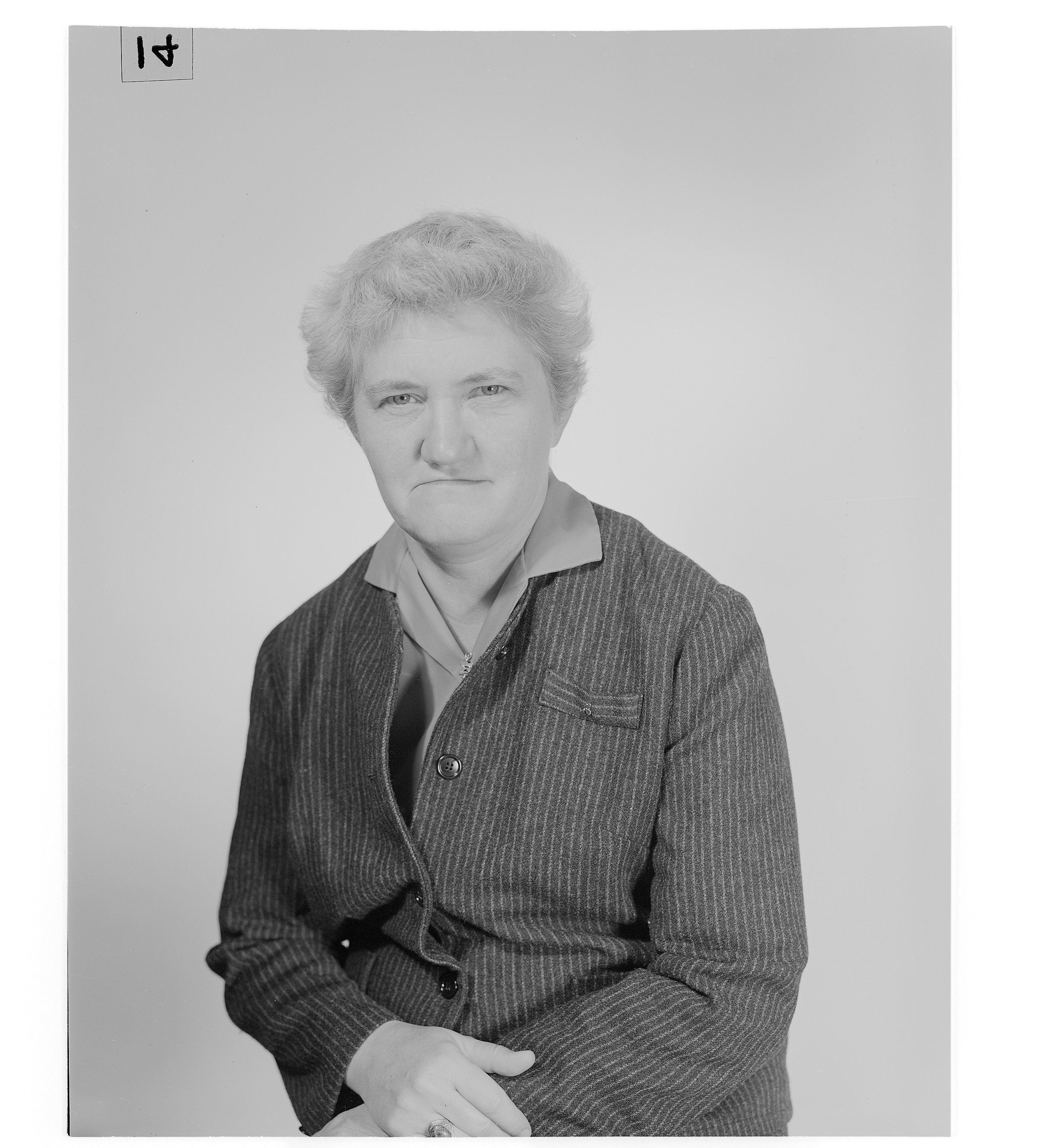
Hilda Hempl Heller, by Watson Davis, 1924, Accession 90-105 - Science Service, Records, 1920s-1970s, Smithsonian Institution Archives. Neg. no. SIA2008-3769.As an archival student and volunteer, I have been very fortunate to be able to work with the collections at the Smithsonian Institution Archives.  My favorite project so far has been the rehousing and cataloging of the Watson Davis Papers (Accession 13-197, Smithsonian Institution Archives). This collection serves as a fascinating kaleidoscope of scientific information as well as a window into the lives of his many friends and colleagues.  I would like to share with you the story of one particular woman who corresponded a great deal with Watson Davis and his wife, Helen Miles Davis, as she journeyed into the wilds of Peru in pursuit of her scientific career. 

Letter from Hilda Heller to Watson Davis, May 7, 1953. Accession 13-197 - Watson Davis Papers, Smithsonian Institution Archives. Neg. nos. SIA2013-05505 to SIA2013-05508.Hilda Hempl Heller, being one of the few female scientists of the time, lived and worked with much enthusiasm and aplomb, characteristics she shared with the Davis’ and the Science Service community. Her story inspired me because despite the limited access women had to higher education and the scientific field at the time, Heller succeeded and excelled in both. She did not subscribe to the societal norms of what a woman's role should be, but rather forged her own path. Heller is an exceptional example of a person who did not merely see life as it should be, but instead was a person who saw that life held enormous possibilities so long as you were open to the challenge.

According to her unpublished autobiography found in the Watson Davis Papers, Hilda Hempl Heller was born in 1891 in Ann Arbor, Michigan, to George Hempl, a professor of philosophy. She studied biology at Stanford University, with a focus on zoology and bacteriology. She went on to study at the University of Michigan, where she spent two years during World War I, traveling as a research fellow in Copenhagen, London, Algiers, and Paris, and finally got her doctorate in 1920 under Dr. Karl F. Meyer at the University of California.

Andean Geese in Peru, by Hilda Heller. Accession 13-197 - Watson Davis Papers, Smithsonian Institution Archives. Neg. no. SIA2013-05509.In 1918, she married Edmund Heller, a prolific naturalist who was made famous working as the field scientist for Colonel Theodore Roosevelt on his hunting expeditions throughout Africa and various parts of the world.  Between 1921 and 1926, Heller accompanied her husband three times on these expeditions where she participated in the study of the big game animals of Yellowstone Park, a mammal collecting expedition to central Peru, and down the Amazon River. After divorcing her husband in 1949, she went on to pursue her own career by conducting field research in anthropology and natural history by returning to the wilderness of Peru. Her fond letters to Davis and his wife, Helen, detail the triumphs and failures she experienced while on her adventures, including the life and death of a peculiar residential penguin by the name of Poncho.Paulina Wearing a Bow Tie, by Hilda Heller. Accession 13-197 - Watson Davis Papers, Smithsonian Institution Archives. Neg. no. SIA2013-05510.

Hilda Hempl Heller, a woman possessed of a charming, vivacious personality and intelligence, challenged the stereotypical idea of a woman’s role in society during her lifetime.  However, the research and field books she may have  kept are not at the Smithsonian alongside those created by her husband. It may be that they are being processed or stored at another location. At this time, it is difficult to find information on this amazing woman outside of the Watson Davis Papers. There is a photograph collection at The Field Museum in Chicago, which contains images from her fieldwork and her husband's expeditions. Regardless of whether or not she was formally recognized for her contributions to the scientific field in her lifetime, Heller was a unique character who refused to live by the social status quo, and serves as an inspiration for women today and for future generations. 

Related Resources

  • Women in Science, Smithsonian Institution Archives
  • There Are Prizes . . . and There Are Winners, The Bigger Picture blog, Smithsonian Institution Archives
  • Where are Heller's Field Books, Field Book Project blog, National Museum of Natural History/Smithsonian Institution Archives

Related Collections

  • Record Unit 7179 - Edmund Heller Papers, circa 1898-1918, Smithsonian Institution Archives
Categories: Collections in Focus
Tags: Science, Cities/Places, Archive
Comments: View 2 comments, or Give us yours!
All comments are moderated and subject to approval. Further information is available in The Bigger Picture’s Commenting Guidelines.

Women in Science Wednesday: Anne Hagopian

by Effie Kapsalis on May 15, 2013

Anne Hagopian was the  winner in  the Science Talent Search and later became an

Categories: Collections in Focus
Tags: Science, Science History, Women in Science Wednesday
Comments: View 4 comments, or Give us yours!
All comments are moderated and subject to approval. Further information is available in The Bigger Picture’s Commenting Guidelines.

Women in Science Wednesday: Irène Joliot-Curie

by Effie Kapsalis on May 8, 2013

1935, Science Service, Records, 1920s-1970s, SIA2008-4487.

Categories: Collections in Focus
Tags: Science, Science History, Women in Science Wednesday
Comments: View 3 comments, or Give us yours!
All comments are moderated and subject to approval. Further information is available in The Bigger Picture’s Commenting Guidelines.

Celebrate Asian Pacific American Heritage Month!

by Mitch Toda on May 1, 2013

May is Asian Pacific American Heritage Month and is a celebration of the culture, traditions, and history of Asian Americans and Pacific Islanders in the United States. Across the country there will be numerous events and programs for people to attend and participate in, including right here at the Smithsonian.  In honor of Asian Pacific American Heritage Month, the Archives presents the following slideshow.

PreviousPauseNext
1 of 1
Mr. Ikawa, Japanese astronomer, Accession 90-105 - Science Service, Records, 1920s-1970s, Smithsonian Institution Archives, Neg. no. SIA2008-4259.

Mr. Ikawa, Japanese astronomer


Mr. Ikawa, Japanese astronomer, Accession 90-105 - Science Service, Records, 1920s-1970s, Smithsonian Institution Archives, Neg. no. SIA2008-4259.

Chinese-American astrophysicist Hong-Yee Chiu (b. 1932) is credited with coining the term "quasar" in 1964. Copyright: NASA, Accession 90-105 - Science Service, Records, 1920s-1970s, Smithsonian Institution Archives, Neg. no. SIA2008-0238.

Hong-Yee Chiu (b. 1932), Chinese-American astrophysicist


Chinese-American astrophysicist Hong-Yee Chiu (b. 1932) is credited with coining the term "quasar" in 1964. Copyright: NASA, Accession 90-105 - Science Service, Records, 1920s-1970s, Smithsonian Institution Archives, Neg. no. SIA2008-0238.

American Pacific Industrial Corporation - T.L. Shang, who was with the Chinese Aeronautical Commission, an early Chinese Air Force type organization, founded by Madame Chiang Kai-Shek, and connected with Claire Chennault's American Volunteer Group-Flying Tigers. Accession 90-105 - Science Service, Records, 1920s-1970s, Smithsonian Institution Archives, Neg. no. SIA2008-1644.

George Gunn, John Foster, George Jimenez, T. L. Shang, Victor de Mattos Cardoso


American Pacific Industrial Corporation - T.L. Shang, who was with the Chinese Aeronautical Commission, an early Chinese Air Force type organization, founded by Madame Chiang Kai-Shek, and connected with Claire Chennault's American Volunteer Group-Flying Tigers. Accession 90-105 - Science Service, Records, 1920s-1970s, Smithsonian Institution Archives, Neg. no. SIA2008-1644.

Biochemist and bacteriologist Ruby Hirose researched serums and antitoxins at the William S. Merrell Laboratories.  In 1940, Hirose was among ten women recognized by the American Chemical Society for accomplishments in chemistry, and later made major contributions to the development of vaccines against infantile paralysis. Accession 90-105 - Science Service, Records, 1920s-1970s, Smithsonian Institution Archives, Neg. no. SIA2008-3224.

Biochemist and bacteriologist Ruby Hirose


Biochemist and bacteriologist Ruby Hirose researched serums and antitoxins at the William S. Merrell Laboratories. In 1940, Hirose was among ten women recognized by the American Chemical Society for accomplishments in chemistry, and later made major contributions to the development of vaccines against infantile paralysis. Accession 90-105 - Science Service, Records, 1920s-1970s, Smithsonian Institution Archives, Neg. no. SIA2008-3224.

Mitsuhara Ishikawa was a Japanese botanist and plant collector. He was photographed while attending the International Congress of Plant Sciences, Cornell University, August 16-23, 1926, and is holding a copy of the program. Accession 90-105 - Science Service, Records, 1920s-1970s, Smithsonian Institution Archives, Neg. no. SIA2008-4281.

Mitsuhara Ishikawa, Japanese botanist and plant collector


Mitsuhara Ishikawa was a Japanese botanist and plant collector. He was photographed while attending the International Congress of Plant Sciences, Cornell University, August 16-23, 1926, and is holding a copy of the program. Accession 90-105 - Science Service, Records, 1920s-1970s, Smithsonian Institution Archives, Neg. no. SIA2008-4281.

T. Imaseki was one of two official Japanese delegates to the First International Congress of Soil Science, June 1927, Washington, D.C. Accession 90-105 - Science Service, Records, 1920s-1970s, Smithsonian Institution Archives, Neg. no. SIA2008-4284.

T. Imaseki


T. Imaseki was one of two official Japanese delegates to the First International Congress of Soil Science, June 1927, Washington, D.C. Accession 90-105 - Science Service, Records, 1920s-1970s, Smithsonian Institution Archives, Neg. no. SIA2008-4284.

The University of Pittsburgh team that was working towards the synthesis of insulin, 1963. With (at right) team leader Dr. Panayotis G. Katsoyannis, associate professor of biochemistry in the school of medicine; (left to right) Dr. Kouhei Fukuda, Japanese postdoctural fellow studying at Pitt, and Andrew Tometsko, an American graduate student, October 14, 1963. Accession 90-105 - Science Service, Records, 1920s-1970s, Smithsonian Institution Archives, Neg. no. SIA2008-4571.

Dr. Kouhei Fukuda, Japanese postdoctural fellow at the University of Pittsburgh


The University of Pittsburgh team that was working towards the synthesis of insulin, 1963. With (at right) team leader Dr. Panayotis G. Katsoyannis, associate professor of biochemistry in the school of medicine; (left to right) Dr. Kouhei Fukuda, Japanese postdoctural fellow studying at Pitt, and Andrew Tometsko, an American graduate student, October 14, 1963. Accession 90-105 - Science Service, Records, 1920s-1970s, Smithsonian Institution Archives, Neg. no. SIA2008-4571.

Mr. Hideyuki Kikuchi, the Japanese scientist who turned iron-sand into 99.7% pure iron in less than five minutes. Accession 90-105 - Science Service, Records, 1920s-1970s, Smithsonian Institution Archives, Neg. no. SIA2008-4793.

Hideyuki Kikuchi, Japanese scientist


Mr. Hideyuki Kikuchi, the Japanese scientist who turned iron-sand into 99.7% pure iron in less than five minutes. Accession 90-105 - Science Service, Records, 1920s-1970s, Smithsonian Institution Archives, Neg. no. SIA2008-4793.

Kitasato Shibasaburō (1853-1931), Japanese physician and bacteriologist. Accession 90-105 - Science Service, Records, 1920s-1970s, Smithsonian Institution Archives, Neg. no. SIA2008-4865.

Kitasato Shibasaburō (1853-1931), Japanese physician and bacteriologist


Kitasato Shibasaburō (1853-1931), Japanese physician and bacteriologist. Accession 90-105 - Science Service, Records, 1920s-1970s, Smithsonian Institution Archives, Neg. no. SIA2008-4865.

Dr. Waro Nakahara graduated from Cornell University with a PhD in Biology in 1918.  He began his career at the Rockefeller Institute conducting research in tumor immunology.  In 1934 he was appointed Chief of the Pathology Division, Cancer Institute, Japanese Foundation for Cancer Research, in what would be a career long dedication to cancer research. Accession 90-105 - Science Service, Records, 1920s-1970s, Smithsonian Institution Archives, Neg. no. SIA2009-0452.

Dr. Waro Nakahara (1896-1976)


Dr. Waro Nakahara graduated from Cornell University with a PhD in Biology in 1918. He began his career at the Rockefeller Institute conducting research in tumor immunology. In 1934 he was appointed Chief of the Pathology Division, Cancer Institute, Japanese Foundation for Cancer Research, in what would be a career long dedication to cancer research. Accession 90-105 - Science Service, Records, 1920s-1970s, Smithsonian Institution Archives, Neg. no. SIA2009-0452.

Anna Chao Pai was a predoctoral student in the Department of Genetics, Albert Einstein College of Medicine, working with Dr. Salome Waelsch on developmental genetics and cross-breeding special strains of mice. Chao immigrated to the United States in 1940 with her family and graduated from Sweet Briar College in 1957. Copyright: Albert Einstein College of Medicine. Accession 90-105 - Science Service, Records, 1920s-1970s, Smithsonian Institution Archives, Neg. no. SIA2009-0795.

Anna Chao Pai (b. 1935)


Anna Chao Pai was a predoctoral student in the Department of Genetics, Albert Einstein College of Medicine, working with Dr. Salome Waelsch on developmental genetics and cross-breeding special strains of mice. Chao immigrated to the United States in 1940 with her family and graduated from Sweet Briar College in 1957. Copyright: Albert Einstein College of Medicine. Accession 90-105 - Science Service, Records, 1920s-1970s, Smithsonian Institution Archives, Neg. no. SIA2009-0795.

Dr. Toyosaku Minagawa, Japanese biochemist and enzymologist. Copyright: Camera Hawaii, Honolulu. Accession 90-105 - Science Service, Records, 1920s-1970s, Smithsonian Institution Archives, Neg. no. SIA2009-0924.

Dr. Toyosaku Minagawa, Japanese biochemist and enzymologist


Dr. Toyosaku Minagawa, Japanese biochemist and enzymologist. Copyright: Camera Hawaii, Honolulu. Accession 90-105 - Science Service, Records, 1920s-1970s, Smithsonian Institution Archives, Neg. no. SIA2009-0924.

National Museum of Natural History Foreign Language Tour Guides, including Yumiko Gillepsie, Japanese, and Kaoru Fukumoto, Japanese. Other docents in the program but not in the picture are Toshiko Takeuchi, Japanese; Teiko Hirasawa, Japanese, 1976. Record Unit 371 - Office of Public Affairs, The Torch, 1955-1960, 1965-1988, Smithsonian Institution Archives, Neg. no. 2009-3229.

Yumiko Gillepsie and Kaoru Fukumoto, NMNH Foreign Language Tour Guides


National Museum of Natural History Foreign Language Tour Guides, including Yumiko Gillepsie, Japanese, and Kaoru Fukumoto, Japanese. Other docents in the program but not in the picture are Toshiko Takeuchi, Japanese; Teiko Hirasawa, Japanese, 1976. Record Unit 371 - Office of Public Affairs, The Torch, 1955-1960, 1965-1988, Smithsonian Institution Archives, Neg. no. 2009-3229.

Dr. Li-chi Tai of China, who pursued advanced studies at the Carnegie Institute of Technology, under a grant provided by the American Chemical Society through the United Nations Educational, Scientific and Cultural Organization (UNESCO). Dr. Tai was associated with the Iron and Steel Division of the Chinese National Resources Commission. Accession 90-105 - Science Service, Records, 1920s-1970s, Smithsonian Institution Archives, Neg. no. SIA2009-4041.

Dr. Li-chi Tai


Dr. Li-chi Tai of China, who pursued advanced studies at the Carnegie Institute of Technology, under a grant provided by the American Chemical Society through the United Nations Educational, Scientific and Cultural Organization (UNESCO). Dr. Tai was associated with the Iron and Steel Division of the Chinese National Resources Commission. Accession 90-105 - Science Service, Records, 1920s-1970s, Smithsonian Institution Archives, Neg. no. SIA2009-4041.

Dr. Robert Kho-Seng Lim, Director of the Chinese Medical Relief Corps since the outbreak of the Sino-Japanese hostilities in 1937, received much of his support from United China Relief.  He was a former professor of Physiology at the Rockefeller-Endowed peiping Union Medical Hospital, May 23, 1942. Accession 90-105 - Science Service, Records, 1920s-1970s, Smithsonian Institution Archives, Neg. no. SIA2010-2217.

Dr. Robert Kho-Seng Lim


Dr. Robert Kho-Seng Lim, Director of the Chinese Medical Relief Corps since the outbreak of the Sino-Japanese hostilities in 1937, received much of his support from United China Relief. He was a former professor of Physiology at the Rockefeller-Endowed peiping Union Medical Hospital, May 23, 1942. Accession 90-105 - Science Service, Records, 1920s-1970s, Smithsonian Institution Archives, Neg. no. SIA2010-2217.

Related Resources

  • Asian Pacific American Heritage Month 2013 Events Calendar - Smithsonian Institution
  • Asian Pacific American Heritage Teaching Resources - Smithsonian Center for Learning and Digital Access

Related Collections

  • Accession 90-105 - Science Service, Records, 1920s-1970s, Smithsonian Institution Archives
Categories: Collections in Focus
Tags: Science, Archive, Asian Pacific American Heritage Month
Comments: View comments, or Give us yours!
All comments are moderated and subject to approval. Further information is available in The Bigger Picture’s Commenting Guidelines.
  •  
  • 1 of 86
  • ››

Produced by the Smithsonian Institution Archives. For copyright questions, please see the Terms of Use.

Stay in touch!

Facebook Twitter Flickr YouTube SlideShare
Join our eNewsletter

About

Connecting you to America’s past with a behind-the-scenes exploration of the Smithsonian’s history, treasures, and the challenges that Archives face preserving collections. More details...

Smithsonian on Flickr Commons

Topics/Tags

  • See Here (611)
  • American History (542)
  • Science (429)
  • Archive (329)
  • Cities/Places (277)
  • Exhibitions (234)
  • Web/Tech (210)
  • Photo History (189)
  • Link Love (153)
  • Politics/Government (153)

Blog Roll

All Smithsonian blogs
American Historical Association Blog
American Institute of Conservation Blog
Archives Next
Archives of American Art
Around the Mall
Field Book Project
Hanging Together
Library of Congress Blogs
National Archives (US) Blogs
National Museum of American History, O say can you see?
Smithsonian Collections Blog
Smithsonian Libraries
Teaching American History

Categories

  • Collections in Focus (989)
  • What Gets Saved (337)
  • Behind the Scenes (212)
  • Smithsonian History (134)

Recent Posts

  • Sneak Peek 5/20/2013
  • Link Love: 5/17/2013
  • See Here: 5/17/2013
  • Weird and Wonderful: The Surprising Mrs. Hilda Hempl Heller
  • Women in Science Wednesday: Anne Hagopian

Monthly Archive

  • May 2013 (21)
  • April 2013 (26)
  • March 2013 (26)
  • February 2013 (26)
  • January 2013 (28)
  • December 2012 (26)
  • November 2012 (28)
  • October 2012 (32)
  • September 2012 (26)
  • August 2012 (31)
  • July 2012 (26)
  • June 2012 (27)
  • May 2012 (27)
  • April 2012 (27)
  • March 2012 (28)
  • February 2012 (27)
  • January 2012 (26)
  • December 2011 (31)
  • November 2011 (28)
  • October 2011 (35)
  • September 2011 (31)
  • August 2011 (35)
  • July 2011 (41)
  • June 2011 (43)
  • May 2011 (33)
  • April 2011 (40)
  • March 2011 (43)
  • February 2011 (35)
  • January 2011 (36)
  • December 2010 (42)
  • November 2010 (40)
  • October 2010 (44)
  • September 2010 (37)
  • August 2010 (39)
  • July 2010 (38)
  • June 2010 (37)
  • May 2010 (42)
  • April 2010 (44)
  • March 2010 (47)
  • February 2010 (40)
  • January 2010 (39)
  • December 2009 (43)
  • November 2009 (34)
  • October 2009 (11)
  • September 2009 (11)
  • August 2009 (12)
  • July 2009 (14)
  • June 2009 (10)
  • May 2009 (12)
  • April 2009 (14)
  • March 2009 (10)
  • January 2009 (1)
Smithsonian Institution Archives
eNewsletter Facebook Twitter Flickr Historypin YouTube SlideShare Browsealoud
Smithsonian Institution
  • Privacy
  • Copyright
  • Contact