
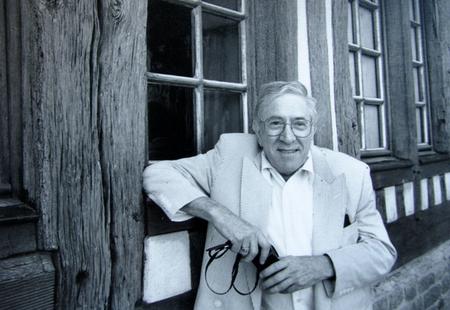
It doesn't happen frequently, but here at the Archives we acquire the personal papers of individuals and organizations closely associated with the Smithsonian's programs and activities. Such was the case when in May 2009, Lydia Puccinelli Robbins, widow of Warren M. Robbins, contacted the Archives to see if we would be interested in having his personal papers. Among many other things, Robbins was the founder and director of the Museum of African Art which became part of the Smithsonian in 1979 and was later renamed the National Museum of African Art.
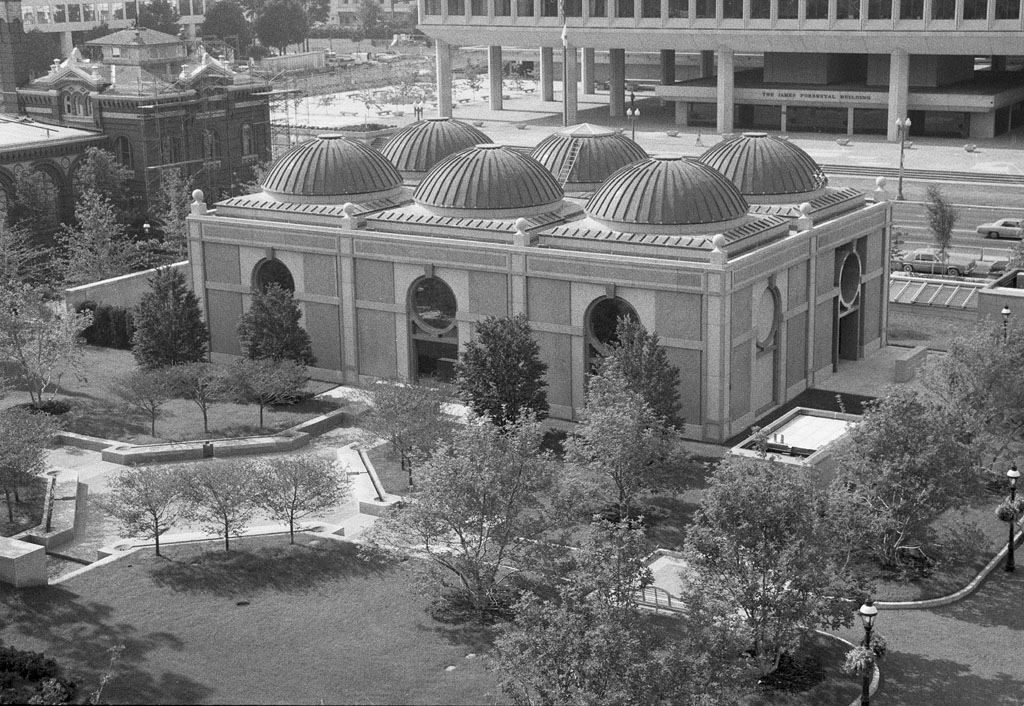
In August 2010, myself and three colleagues, drove our two minivans over to the Capitol Hill townhouse where the Robbins papers were. The papers were in a variety places and in differing degrees of organization.
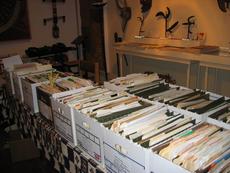
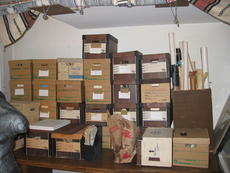 In my experience, these images are pretty indicative of how records are stored when we go and acquire them, both in the case of personal papers as well as when it comes to the institutional records we collect. The state of records really depends on how organized and how much time an individual or organization has to devote to the endeavor.
After taking files out of filing cabinets and putting lids on boxes that did not have them, we carefully loaded the papers into our vans. All told, 109 boxes plus some oversize materials made their way into our collections storage.
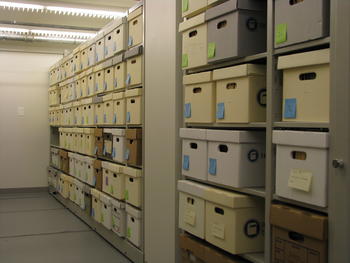
Fortunately for me, the Archives has enough free space for the materials while I process them, since doing so takes some time considering the quantity and variety of materials in the Robbins papers.
The first step in processing them was to stabilize those materials that were either housed in damaging boxes or inappropriate storage containers (such as Trader Joe's bags), until I could get to organizing them more fully. The reason being that acidic boxes could over time deteriorate the materials within them and that papers placed into a grocery bag would become damaged merely by their own weight on top of each other. By doing a little archival triage, the papers are not further damaged by what they were stored in. The next step was to do a preliminary inventory of what was in each box. The purpose of doing this was to get a sense of what the papers contain, and see how the materials could be arranged in way that made sense. For example, materials related to Robbins career as a Foreign Affairs Officer would be grouped together, while the materials regarding his publications would form another group. Once this was complete, I could arrange the boxes into their appropriate record series and begin the more labor intensive process of taking items out of hanging folders; putting materials in acid-free folders and writing titles on them; removing materials from binders and scrapbooks; putting photographs and negatives into polypropelene sheets; and arranging and describing materials that were not in folders.
So that is where I am at right now. Once I am finished, I will move on to writing the finding aid and collection record, both of which you will be able to find on the Archives' collections search in the future. As I read through the writings and correspondence of Warren M. Robbins, it is clear to me that his energy and passion for cultural understanding and African art made a lasting impression on those around him. The National Museum of African Art is a testament to his vision and continues to bring the wonders of African art that so enthralled Robbins to new audiences.
Produced by the Smithsonian Institution Archives. For copyright questions, please see the Terms of Use.
Leave a Comment