Smithsonian Institution Archives
  • Collections
  • Services
  • Smithsonian History
  • About
  • Education
  • Blog
  • Forums
  • Press
  • Audiences
  • Donate

The Bigger Picture: Visual Archives and the Smithsonian

Documenting the Family Treasure Chest

by Lynda Schmitz Fuhrig on January 22, 2013

Sugar bowl, circa 1945. An inventory can include the type of item, who made it and the year, and where it is currently stored.January is the perfect month for getting organized at work and at home. It also can be a time to focus on personal collections that have special meaning or worth.

During a family visit over the holidays a discussion about the history of a china set led into the importance of documenting histories and information about family heirlooms. 

Here are few things you can do to get started with your family treasures:

  • Create an inventory that includes what the object is and its location (This is also a good time to decide if the item/s need to be stored elsewhere due to condition or space issues, or if it is time to find the item a new home). It is usually easiest to work on one room or area at a time. If you create a digital version of the inventory, be sure to print out a copy as well. Consider where you will store the digital inventory and create a backup.
  • Take photos of the items, which can be digital or analog. Once you have the images downloaded or printed, be sure to add the pertinent information to them. If objects are part of a collection (set of china, series of books, flatware, etc.), a broader description (where did it come from, who had it, who made it, what are the materials) can be included as an introduction. Again, it is important to have more than one set of images for backup purposes.
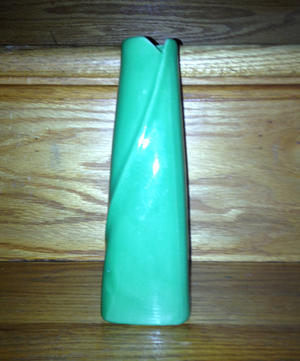
  • Decide if you want to label the items themselves as well, but proceed with caution. What the objects are made of and their condition need to be taken into consideration before adding information to the physical item, as inks and adhesives can damage materials.Art Deco vase, date unknown. An inventory can include the type of item, who made it and the year, and where it is currently stored.
  • Let family members know about the existence of the inventory and photos, especially if there are plans for passing on items.

The inventory with images also will provide family members with details they may not be aware of otherwise. Instead of just having a nice vase from Grandma, the inventory explains that it was bought by Grandpa during a trip to Paris where they first met.

And finally, inventories also are handy to have if a disaster occurs and items need to be replaced or for insurance purposes.

Related Resources

  • How to Care for Glass and Ceramics, Canadian Conservation Institute
  • Preservation of Low-Fired Ceramic Objects, Conserve O Grams, National Park Service
  • Resources for Private and Family Collections, Northeast Document Conservation Center
  • Artifact Appraisals, Museum Conservation Institute, Smithsonian Institution
Categories: What Gets Saved
Tags: Archive, Conservation
Comments: View 2 comments, or Give us yours!
All comments are moderated and subject to approval. Further information is available in The Bigger Picture’s Commenting Guidelines.

Comments (2) – Leave a comment

Micheal

This exact same thing should be done with valuables for insurance purposes. By creating an inventory, including backups and photos, you would be able to provide a list of your valuables to your insurance company as easily as you could provide a list of family heirlooms to your loved ones.

Either way, great advice.

Micheal January 25, 2013 at 7:22 pm
  • reply
Lynda Schmitz Fuhrig

Micheal,
Yes, this is very helpful for insurance purposes.

Lynda

Lynda Schmitz Fuhrig January 29, 2013 at 3:36 pm
  • reply

Leave a comment

The content of this field is kept private and will not be shown publicly.
  • Web page addresses and e-mail addresses turn into links automatically.
  • Lines and paragraphs break automatically.

More information about formatting options

CAPTCHA
This question is for testing whether you are a human visitor and to prevent automated spam submissions.
By submitting this form, you accept the Mollom privacy policy.

Produced by the Smithsonian Institution Archives. For copyright questions, please see the Terms of Use.

Stay in touch!

Facebook Twitter Flickr YouTube SlideShare
Join our eNewsletter

About

Connecting you to America’s past with a behind-the-scenes exploration of the Smithsonian’s history, treasures, and the challenges that Archives face preserving collections. More details...

Smithsonian on Flickr Commons

Topics/Tags

  • See Here (611)
  • American History (542)
  • Science (431)
  • Archive (331)
  • Cities/Places (279)
  • Exhibitions (234)
  • Web/Tech (210)
  • Photo History (189)
  • Link Love (153)
  • Politics/Government (153)

Blog Roll

All Smithsonian blogs
American Historical Association Blog
American Institute of Conservation Blog
Archives Next
Archives of American Art
Around the Mall
Field Book Project
Hanging Together
Library of Congress Blogs
National Archives (US) Blogs
National Museum of American History, O say can you see?
Smithsonian Collections Blog
Smithsonian Libraries
Teaching American History

Categories

  • Collections in Focus (990)
  • What Gets Saved (337)
  • Behind the Scenes (212)
  • Smithsonian History (136)

Recent Posts

  • "If you feed them, they will come."
  • Women in Science Wednesday: Mary Alice McWhinnie
  • Twenty-Six and Blooming!
  • Sneak Peek 5/20/2013
  • See Here: 5/17/2013

Monthly Archive

  • May 2013 (24)
  • April 2013 (26)
  • March 2013 (26)
  • February 2013 (26)
  • January 2013 (28)
  • December 2012 (26)
  • November 2012 (28)
  • October 2012 (32)
  • September 2012 (26)
  • August 2012 (31)
  • July 2012 (26)
  • June 2012 (27)
  • May 2012 (27)
  • April 2012 (27)
  • March 2012 (28)
  • February 2012 (27)
  • January 2012 (26)
  • December 2011 (31)
  • November 2011 (28)
  • October 2011 (35)
  • September 2011 (31)
  • August 2011 (35)
  • July 2011 (41)
  • June 2011 (43)
  • May 2011 (33)
  • April 2011 (40)
  • March 2011 (43)
  • February 2011 (35)
  • January 2011 (36)
  • December 2010 (42)
  • November 2010 (40)
  • October 2010 (44)
  • September 2010 (37)
  • August 2010 (39)
  • July 2010 (38)
  • June 2010 (37)
  • May 2010 (42)
  • April 2010 (44)
  • March 2010 (47)
  • February 2010 (40)
  • January 2010 (39)
  • December 2009 (43)
  • November 2009 (34)
  • October 2009 (11)
  • September 2009 (11)
  • August 2009 (12)
  • July 2009 (14)
  • June 2009 (10)
  • May 2009 (12)
  • April 2009 (14)
  • March 2009 (10)
  • January 2009 (1)
Smithsonian Institution Archives
eNewsletter Facebook Twitter Flickr Historypin YouTube SlideShare Browsealoud
Smithsonian Institution
  • Privacy
  • Copyright
  • Contact