
Results for "Values"
- Blog Post
Link Love: 10/15/10
- Date: October 15, 2010
- Creator: Catherine Shteynberg
- Description: [caption id="" align="alignright" width="180" caption="Nora's Conservation Bag, courtesy Nora Lockshin."][/caption] New guest blog posts from our own over at the Smithsonian Collections blog: Sarah Stauderman on why the Smithsonian hasn’t digitized all of our collections yet, and conservator Nora Lockshin on what’s in her bag (hint: it’s not lipstick). There are 153 miles of
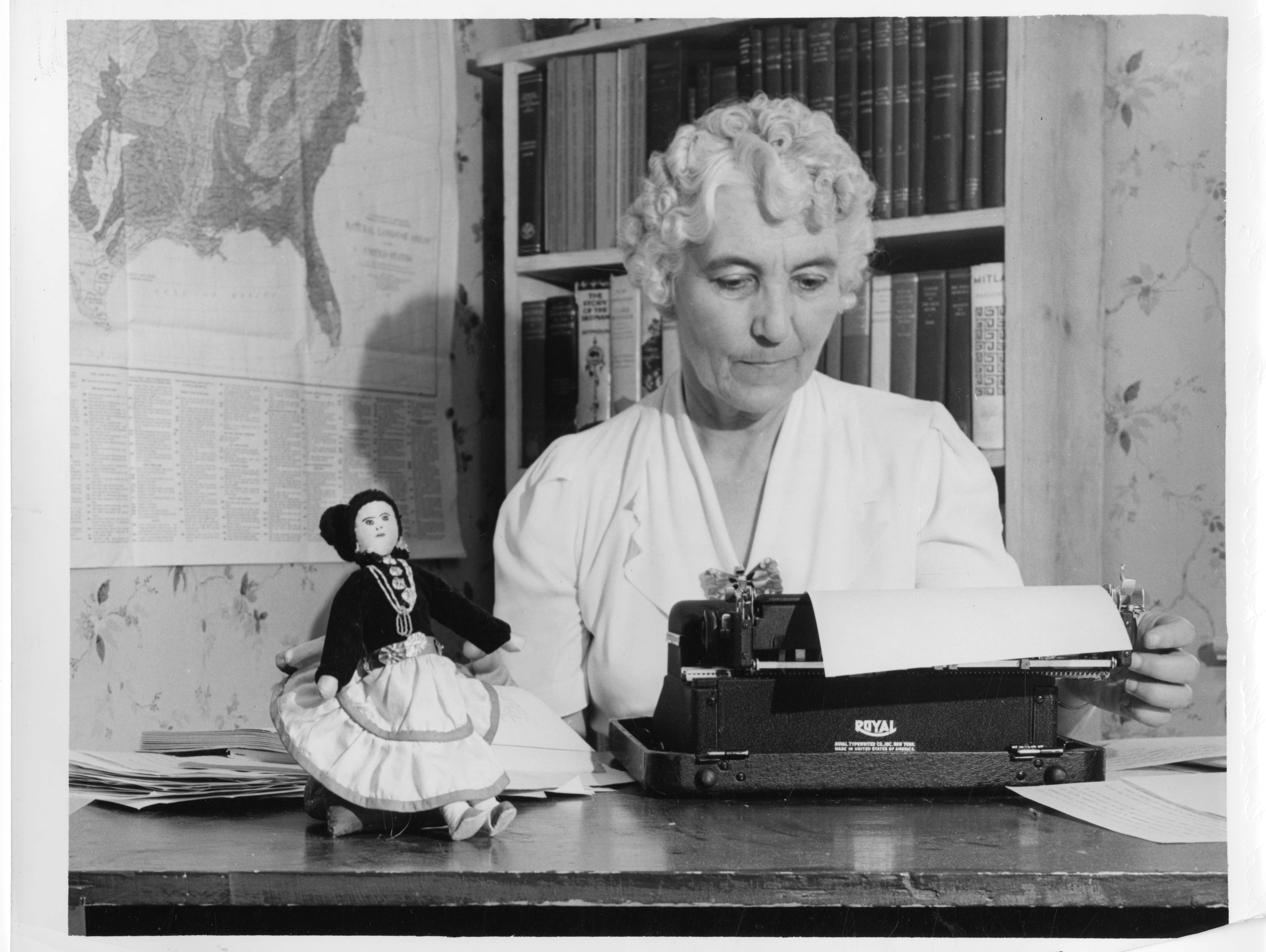
Ruth Murray Underhill: Woman of the People
- Date: March 21, 2013
- Creator: Tad Bennicoff
- Description: The life of Ruth Murray Underhill, an Anthropologist, who worked with Native American tribes throughout the Southwest.

The Education of George C. Wheeler - Part III
- Date: February 7, 2013
- Description: George C. Wheeler and his travel in the Caribbean illustrate the interplay between science and tourism in Latin America.
- Blog Post
Looking Smithson’s Gift Horse in the Mouth
- Date: July 28, 2015
- Creator: Pamela M. Henson
- Description: Today, James Smithson’s bequest to found the Smithsonian is considered a wonderful event, but in 1835 when it was announced, many Americans responded negatively. Why did they look his gift horse in the mouth?
- Blog Post
A Short History of Photography from Cigar Box to Cell Phone
- Date: June 23, 2009
- Description: [caption id="" align="aligncenter" width="448" caption="Portrait of Dorothy Catherine Draper, copy of the original photo by John Draper, created by Daniel Draper, 1893, National Museum of American History, Kenneth E. Behring Center, Division of Information Technology and Communications."][/caption] Imagine that you are the first person to take a photograph. What would you
Speak Softly . . .
- Date: November 3, 2010
- Creator: Marguerite Roby
- Description: This summer witnessed an exciting find by interns Shereen Choudhury and Rachel Midura, who identified Teddy Roosevelt in one of the broken glass plate negatives they were inventorying. This glass plate comes from a collection of images that have all been numbered, but have minimal descriptive records indicating what they may represent.

Archives, Record Management, and Digital Material
- Date: July 12, 2018
- Description: As a student with a background in libraries, one of the most interesting things I learned as an intern at the Smithsonian Institution Archives this summer was how closely related records management is to archival practice. I was unaware that as an institutional archive, the Archives is specifically concerned with preserving records that relate to the Smithsonian’s identity,
- Blog Post
Paper vs. Electronic: The Not-So-Final Battle
- Date: April 10, 2014
- Creator: Jennifer Wright
- Description: The question of which is better - paper or electronic records - doesn't have a simple answer.

& is for Ampersand
- Date: September 8, 2020
- Description: Today we honor the glyph with an incredibly long name that used to shorten an incredibly short word.
- Blog Post
Science Service, Up Close: Up in the Air for a Solar Eclipse
- Date: January 24, 2017
- Creator: Marcel Chotkowski LaFollette
- Description: On January 24, 1925, for the first time in over a century, a total solar eclipse would be visible across the northern part of the United States. How scientists used a dirigible to observe the phenomenon.

Camera Craze Comes to the Smithsonian
- Date: April 26, 2018
- Creator: Lisa Fthenakis
- Description: It would be hard to imagine stepping into a Smithsonian museum today and not seeing a single camera. Digital cameras and smart phones with cameras are so completely a part of today’s museum-going experience that - unless a flash goes off in your face – you probably wouldn’t notice the camera next to you. However, in 1938, you would have seen a very different sight. On August

There Are Records and Then There Are Records
- Date: April 12, 2016
- Creator: Jennifer Wright
- Description: Records, not to be confused with albums, are defined as information created or received during the course of business.