
Results for "Smithsonian Institution. Office of Environmental Sciences"
- Blog Post
You're Going to Throw That Out? Now?
- Date: May 9, 2011
- Creator: Marvin Heiferman
- Description: Institutions devise all sorts of procedures to determine what kinds of documents to collect, and how to save and archive them. The Smithsonian Institution Archives, for example, advises and works with various museums, research institutes, and offices across the Smithsonian, on an ongoing basis, to determine and manage what will get archived for posterity. But in some
- Blog Post
Photos Can Turn Down the Heat
- Date: October 20, 2009
- Creator: Marvin Heiferman
- Description: [caption id="" align="aligncenter" width="350" caption="Natural Gas Fracing, by Melissa Peffs."][/caption] Photography is valued for, among other things, seeing what the human eye cannot. From medical scans to red light cameras to artworks made by image makers offering up new perspectives, photography reminds us that there’s always more to observe than we’re physically able to
- Blog Post
Digital Humanists Dive Into Archives
- Date: August 3, 2011
- Creator: Marvin Heiferman
- Description: Bloggers on The Bigger Picture often describe how, in the course of their work, they come across intriguing archival objects and artifacts that trigger new insights into history. “Hands on” encounters with compelling evidence from the past are thrilling and can be provocative. But so can different sorts of encounters, including those that are driven by data, rather than
- Blog Post
Please Mr. Postman
- Date: February 16, 2010
- Creator: Marvin Heiferman
- Description: [caption id="" align="aligncenter" width="448" caption="Temperance Parade, Church of the Nazarene, Medora, Illinois, photographer unknown, real-photo postcard, 1908, Courtesy of Luc Sante, 2009."][/caption] One of the thrills of seeing—when you stop to pay attention to it—is how complex and quickly the process of looking and making sense of what we see happens. According to
- Blog Post
Sifting Through Archives and Snooping Through Desks
- Date: April 27, 2011
- Creator: Marvin Heiferman
- Description: [caption id="" align="alignleft" width="241" caption="Walt Whitman, 1883 ,by Unidentified photographer, Albumen silver print, 14.3 cmx10.1 cm, National Portrait Gallery, Image No.
- Blog Post
We've Got Mail?
- Date: January 11, 2011
- Creator: Marvin Heiferman
- Description: Right after Thanksgiving, on a promotional tour stop for his post-presidential memoir, Decision Points, George W. Bush visited Palo Alto, California to chat with Facebook CEO Mark Zuckerberg. According to a CBS News report, Mr. Bush mentioned that while he has more than 600,000 Facebook "friends," and now uses a Blackberry and iPad, during his presidency, he didn’t make much
- Blog Post
A Photographer, Not a Terrorist
- Date: March 11, 2010
- Creator: Marvin Heiferman
- Description: Starting last fall, stories started popping up in the British media and online about photographers who’d been stopped by officials empowered to question and search them if they seemed suspicious or might have some links to terrorism.
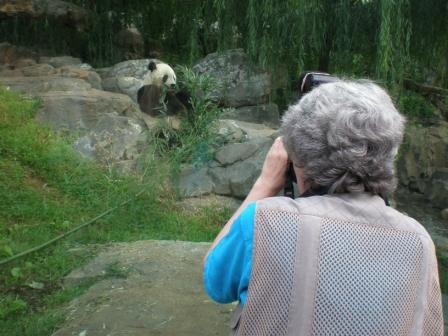
Remembering Jessie Cohen
- Date: October 29, 2009
- Creator: Marvin Heiferman
- Description: At SPI, we were sad to learn that Jessie Cohen died earlier this week. Jessie was one of the photographic mainstays at the Smithsonian; she started working at the Smithsonian National Zoo in 1979, photographing animals, their living quarters, and behind-the-scenes events for exhibition, education, and marketing purposes. In addition, Jessie also managed the Zoo’s exhibition
- Blog Post
The Whole World's Watching: Photography & Terrorism
- Date: March 16, 2010
- Creator: Marvin Heiferman
- Description: [caption id="" align="aligncenter" width="350" caption="Privacy And Control, by Michael Pickard, Creative Commons: Attribution 2.0."][/caption] It’s a sign of the times that we’re being watched often and everywhere. Surveillance, a word that once summoned up all things intrusive and sneaky, is part of everyday lexicon and experience.
- Blog Post
I'll Show You Mine.
- Date: April 2, 2010
- Creator: Marvin Heiferman
- Description: [caption id="" align="aligncenter" width="220" caption="Cover of Reader's Digest magazine featuring article on sexting, by Matt M, Creative Commons: Attribution 2.0."][/caption] Over the past few weeks, the web’s been abuzz with articles, blog posts, and comments about sexting, the practice of sending explicit photos (and sometimes texts and videos as well) over the Internet.
- Blog Post
For All the World to See
- Date: February 10, 2011
- Creator: Marvin Heiferman
- Description: The Smithsonian Institution Archives will be celebrating African American History Month throughout February with a series of related posts on THE BIGGER PICTURE.
- Blog Post
Collecting Stories. Saving Treasures. Building a New Museum.
- Date: February 16, 2011
- Creator: Marvin Heiferman
- Description: The Smithsonian Institution Archives will be celebrating African American History Month throughout February with a series of related posts on THE BIGGER PICTURE. When I interviewed Lonnie Bunch, director of the Smithsonian’s National Museum of African American History and Culture, as part of the Smithsonian Photography Initiative’s online project click! photography changes