
Results for "Archives of American Art. Texas Project"
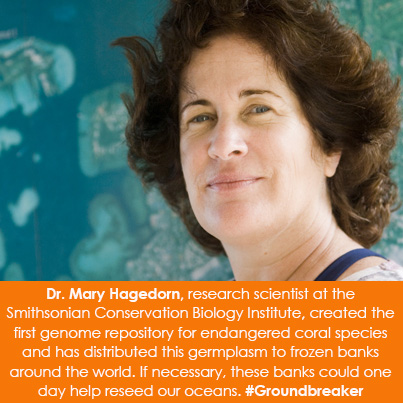
Women in Science Wednesday: Dr. Mary Hagedorn
- Date: November 12, 2014
- Creator: Effie Kapsalis
- Description: Dr. Mary Hagedorn, research scientist at the Smithsonian Conservation Biology Institute, created the first genome repository for endangered coral species and has distributed this germplasm to frozen banks around the world. If necessary, these banks could one day help reseed our oceans. #Grounbreaker
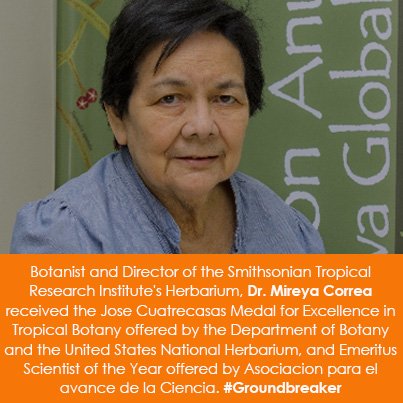
Women in Science Wednesday: Dr. Mireya Correa
- Date: March 11, 2015
- Creator: Effie Kapsalis
- Description: Botanist and Director of the Smithsonian Tropical Research Institute's Herbarium, Dr. Mireya Correa, received the Jose Cuatrecasas Medal for Excellence in Tropical Botany offered by the Department of Botany and the United States National Herbarium, and Emeritus Scientist of the Year offered by Asociacion para el avance de la Ciencia. #Groundbreaker
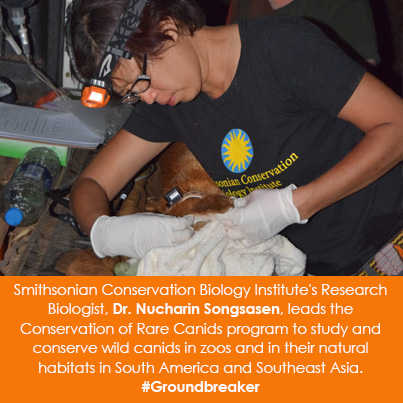
Women in Science Wednesday: Dr. Nucharin Songsasen
- Date: April 1, 2015
- Creator: Effie Kapsalis
- Description: Smithsonian Conservation Biology Institute's Research Biologist, Dr. Nucharin Songsasen, leads the Conservation of Rare Canids program to study and conserve wild canids in zoos and in their natural habitats in South America and Southeast Asia. #Groundbreaker
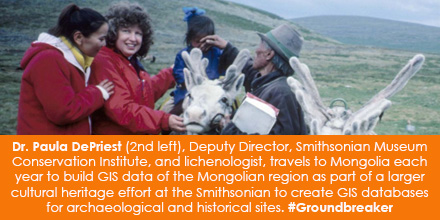
Women in Science Wednesday: Dr. Paula DePriest
- Date: February 24, 2016
- Creator: Effie Kapsalis
- Description: Dr. Paula DePriest, Deputy Director, Smithsonian Museum Conservation Institute, and lichenologist, travels to Mongolia each year to build GIS data of the Mongolian region as part of a larger cultural heritage effort at the Smithsonian to create GIS databases for archaeological and historical sites. #Groundbreaker
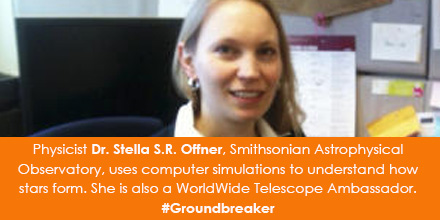
Women in Science Wednesday: Dr. Stella S.R. Offner
- Date: June 24, 2015
- Creator: Effie Kapsalis
- Description: Physicist Dr. Stella S.R. Offner, Smithsonian Astrophysical Observatory, uses computer simulations to understand how stars form. She is also a WorldWide Telescope Ambassador. #Groundbreaker

Women in Science Wednesday: Mary Jane Rathbun
- Date: September 23, 2015
- Creator: Effie Kapsalis
- Description: The Smithsonian’s first paid female scientist and full-time curator, Mary Jane Rathbun, spent her life’s work on the classification of decapod Crustacea (shrimps, crabs and their near relatives) and wrote a 4-volume series on the crabs of America. #Groundbreaker
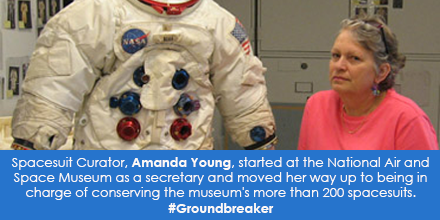
Wonderful Women Wednesday: Amanda Young
- Date: September 20, 2017
- Creator: Effie Kapsalis
- Description: Spacesuit Curator, Amanda Young, started at the National Air and Space Museum as a secretary and moved her way up to being in charge of conserving the museum's more than 200 spacesuits. #Groundbreaker
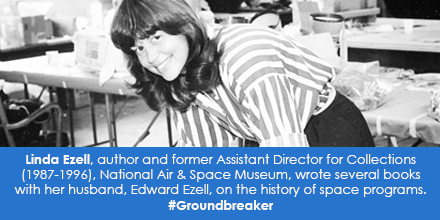
Wonderful Women Wednesday: Linda Ezell
- Date: April 5, 2017
- Creator: Effie Kapsalis
- Description: Linda Ezell, author and former Assistant Director for Collections (1987-1996), National Air & Space Museum, wrote several books with her husband, Edward Ezell, on the history of space programs.

Wonderful Women Wednesday: Mary Parrish
- Date: May 10, 2017
- Creator: Effie Kapsalis
- Description: Scientific illustrator Mary Parrish, Smithsonian's National Museum of Natural History, collaborates with paleobiologists to show the public what extinct landcapes looked like. #Groundbreaker
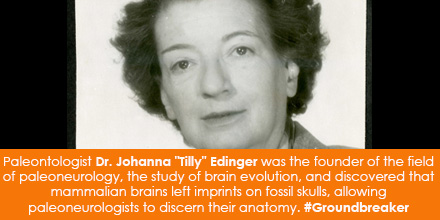
Women in Science Wednesday: Dr. Johanna "Tilly" Edinger
- Date: November 18, 2015
- Creator: Effie Kapsalis
- Description: Paleontologist Dr. Johanna "Tilly" Edinger was the founder of the field of paleoneurology, the study of brain evolution, and discovered that mammalian brains left imprints on fossil skulls, allowing paleoneurologists to discern their anatomy. #Groundbreaker
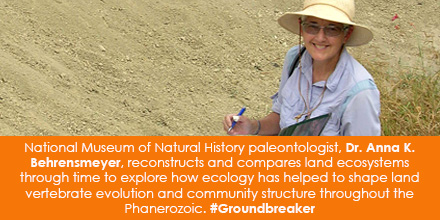
Women in Science Wednesday: Dr. Anna K. Behrensmeyer
- Date: February 3, 2016
- Creator: Effie Kapsalis
- Description: National Museum of Natural History paleontologist, Dr. Anna K. Behrensmeyer, reconstructs and compares land ecosystems through time to explore how ecology has helped to shape land vertebrate evolution and community structure throughout the Phanerozoic. #Groundbreaker
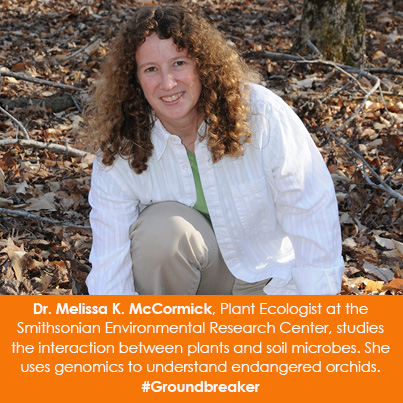
Women in Science Wednesday: Dr. Melissa K. McCormick
- Date: April 15, 2015
- Creator: Effie Kapsalis
- Description: Dr. Melissa K. McCormick, Plant Ecologist at the Smithsonian Environmental Research Center, studies the interaction between plants and soil microbes. She uses genomics to understand endangered orchids. #Groundbreaker