
Results for "Animals"
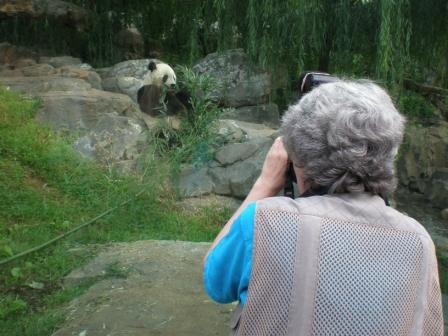
Remembering Jessie Cohen
- Date: October 29, 2009
- Creator: Marvin Heiferman
- Description: At SPI, we were sad to learn that Jessie Cohen died earlier this week. Jessie was one of the photographic mainstays at the Smithsonian; she started working at the Smithsonian National Zoo in 1979, photographing animals, their living quarters, and behind-the-scenes events for exhibition, education, and marketing purposes. In addition, Jessie also managed the Zoo’s exhibition
- Blog Post
When Good People Love Bad Pictures
- Date: August 19, 2009
- Creator: Marvin Heiferman
- Description: [caption id="attachment_1954" align="aligncenter" width="300" caption="Squirrel Kisses, by Flickr user (Alex)."][/caption] It’s summer, so time for a break from serious thoughts about photographs, their meaning and impact. Instead, let’s relax and have a laugh about the pictures that make us laugh. A recent article in the business section of Time magazine describes how Ben
- Blog Post
Here Kitty, Kitty, Kitty
- Date: June 16, 2010
- Creator: Marvin Heiferman
- Description: Since The Bigger Picture began in early 2009, I’ve written a number of posts about what might be called camera traps, situations where cameras are installed to collect evidence of one kind of unusual or unwanted behavior or another. Red light cameras are a controversial example; across the country and on an almost daily basis, local municipalities and motorists argue about
- Blog Post
In Living Color
- Date: January 12, 2010
- Creator: Marvin Heiferman
- Description: [caption id="attachment_4178" align="alignleft" width="206" caption="Levi Hill often photographed color lithographic prints, mostly European images, when attempting to perfect his Hillotype color process. This print of a girl and small animal shows his achievement in capturing natural colors on a daguerreotype plate, circa 1851-56."][/caption] Excepting the 8% of males and
- Blog Post
Avatar. A Photographic Game-Changer?
- Date: January 20, 2010
- Creator: Marvin Heiferman
- Description: A few days ago, I went to an IMAX 3D showing of Avatar to see for myself if the movie is a “game-changer,” as many have suggested. And, it is, but in a way no one seems to be focusing on—the way it acknowledges and exploits photography’s power to shape both everyday and alternate realities. What struck me, as soon as the movie started, was how sophisticated the film’s
- Blog Post
Look at Me! No. Look at You!
- Date: July 10, 2009
- Creator: Marvin Heiferman
- Description: Toward the end of a long day last week, tired of looking at and thinking about still pictures, I decided to take a break to check out what kinds of videos about photography had been posted on YouTube. The key word "photo" yielded 885,000 videos and feeling a little daunted, I started scanning the first couple of hundred to see what turned up. All the how-to videos about
- Blog Post
Shape-Shifting and Sharing Data
- Date: June 27, 2011
- Creator: Marvin Heiferman
- Description: When institutions archive data, they capture and organize it in digital formats that make the most sense to them, based upon their specific group of users, needs, and technical options that are available at a given point in time. But what happens if, for example, institutions decide that it makes sense to enhance their mission by their presenting data collections in less
- Blog Post
The Shadow of Your Smile
- Date: November 23, 2009
- Creator: Marvin Heiferman
- Description: Access the official records of the Smithsonian Institution and learn about its history, key events, people, and research.
- Blog Post
Tag! You're Saved!
- Date: October 25, 2010
- Creator: Marvin Heiferman
- Description: [caption id="" align="aligncenter" width="350" caption="Fingers typing, by Simon Steiner, Creative Commons: Attribution 2.0."] [/caption] You know that sinking, then maddening feeling: you need to find something you’ve carefully put away, but can’t remember where you’ve stored it or how you characterized or labeled it. That common problem, when it’s blown up to institutional