
Results for "Smithsonian Institution. Office of International Programs"
- Blog Post
I'll Show You Mine.
- Date: April 2, 2010
- Creator: Marvin Heiferman
- Description: [caption id="" align="aligncenter" width="220" caption="Cover of Reader's Digest magazine featuring article on sexting, by Matt M, Creative Commons: Attribution 2.0."][/caption] Over the past few weeks, the web’s been abuzz with articles, blog posts, and comments about sexting, the practice of sending explicit photos (and sometimes texts and videos as well) over the Internet.
- Blog Post
Digital Humanists Dive Into Archives
- Date: August 3, 2011
- Creator: Marvin Heiferman
- Description: Bloggers on The Bigger Picture often describe how, in the course of their work, they come across intriguing archival objects and artifacts that trigger new insights into history. “Hands on” encounters with compelling evidence from the past are thrilling and can be provocative. But so can different sorts of encounters, including those that are driven by data, rather than
- Blog Post
Sifting Through Archives and Snooping Through Desks
- Date: April 27, 2011
- Creator: Marvin Heiferman
- Description: [caption id="" align="alignleft" width="241" caption="Walt Whitman, 1883 ,by Unidentified photographer, Albumen silver print, 14.3 cmx10.1 cm, National Portrait Gallery, Image No.
- Blog Post
We've Got Mail?
- Date: January 11, 2011
- Creator: Marvin Heiferman
- Description: Right after Thanksgiving, on a promotional tour stop for his post-presidential memoir, Decision Points, George W. Bush visited Palo Alto, California to chat with Facebook CEO Mark Zuckerberg. According to a CBS News report, Mr. Bush mentioned that while he has more than 600,000 Facebook "friends," and now uses a Blackberry and iPad, during his presidency, he didn’t make much
- Blog Post
A Photographer, Not a Terrorist
- Date: March 11, 2010
- Creator: Marvin Heiferman
- Description: Starting last fall, stories started popping up in the British media and online about photographers who’d been stopped by officials empowered to question and search them if they seemed suspicious or might have some links to terrorism.
- Blog Post
The Whole World's Watching: Photography & Terrorism
- Date: March 16, 2010
- Creator: Marvin Heiferman
- Description: [caption id="" align="aligncenter" width="350" caption="Privacy And Control, by Michael Pickard, Creative Commons: Attribution 2.0."][/caption] It’s a sign of the times that we’re being watched often and everywhere. Surveillance, a word that once summoned up all things intrusive and sneaky, is part of everyday lexicon and experience.
- Blog Post
Magical Mystery Tour
- Date: December 29, 2010
- Creator: Marvin Heiferman
- Description: Recently, I read some interesting news about the National Public Radio blog, “The Picture Show,” that explores photographic images and issues.
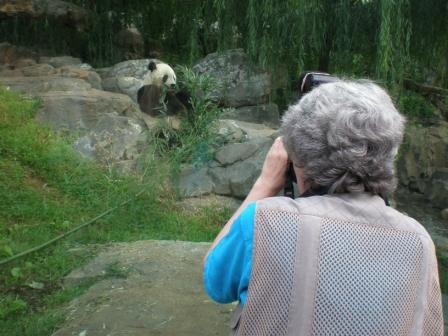
Remembering Jessie Cohen
- Date: October 29, 2009
- Creator: Marvin Heiferman
- Description: At SPI, we were sad to learn that Jessie Cohen died earlier this week. Jessie was one of the photographic mainstays at the Smithsonian; she started working at the Smithsonian National Zoo in 1979, photographing animals, their living quarters, and behind-the-scenes events for exhibition, education, and marketing purposes. In addition, Jessie also managed the Zoo’s exhibition
- Blog Post
Looking for Mr. or Ms. Right
- Date: April 20, 2010
- Creator: Marvin Heiferman
- Description: [caption id="" align="aligncenter" width="350" caption="Perfect, by Bruce Berrien, Creative Commons: Attribution 2.0."][/caption] At the turn of the 21st century, as federal organizations and private corporations were competing against each other in the race to decode the human genome, a number of exhibitions that explored areas where genetic science and visual imagery
- Blog Post
Less is More With Compressed Scanning
- Date: March 3, 2010
- Creator: Marvin Heiferman
- Description: [caption id="" align="aligncenter" width="350" caption="Window Necklace, by Hoong Wei Long, Creative Commons: Attribution 2.0."][/caption] For those who continue to believe that bigger is better—that you’re better off, for example, the more megapixels your digital camera delivers—a recent article by Jordan Ellenberg in WIRED magazine suggests the opposite may be true.
- Blog Post
Beating Hearts
- Date: August 11, 2010
- Creator: Marvin Heiferman
- Description: Artists are often among the researchers who comb through archives in search of inspiration and content. A few years back in 2008, an encyclopedic exhibition, Archive Fever, presented at the International Center of Photography in New York, presented works by leading contemporary artists who have made active use of archival images, documents, and methodology to explore the ways
- Blog Post
Everyone's a Curator, Now
- Date: November 15, 2010
- Creator: Marvin Heiferman
- Description: [caption id="" align="aligncenter" width="368" caption="Cybill Shepherd at the "Castle" during the filming of "Chances Are," where she plays an SI curator, 1988, by Jeff Tinsley, Photographic print, Smithsonian Institution Archives, Record Unit 371, Box 5, Negative Number: 88-10752-31. "][/caption] The frequency with which the words “curator” and “curating” pop up continues to