
Results for "Smithsonian Institution. Office of International Programs"

The World Is Yours: Flying the Ocean
- Date: June 23, 2020
- Creator: Kira M. Sobers
- Description: Take a listen to clips from the episode of The World Is Yours titled Flying the Ocean.
- Blog Post
Location! Location! Location!
- Date: July 6, 2011
- Creator: Marvin Heiferman
- Description: Access the official records of the Smithsonian Institution and learn about its history, key events, people, and research.
- Blog Post
Saving Face About Saving Data
- Date: November 1, 2010
- Creator: Marvin Heiferman
- Description: [caption id="" align="aligncenter" width="350" caption="Sorry, We're Open, by mofo, Creative Commons: Attribution 2.0."][/caption] Back in May, I wrote about a controversy that surfaced in Europe after privacy advocates revealed that in the act of collecting photographic images for its Street View application, Google was also scooping up private data from the unsecured WiFi
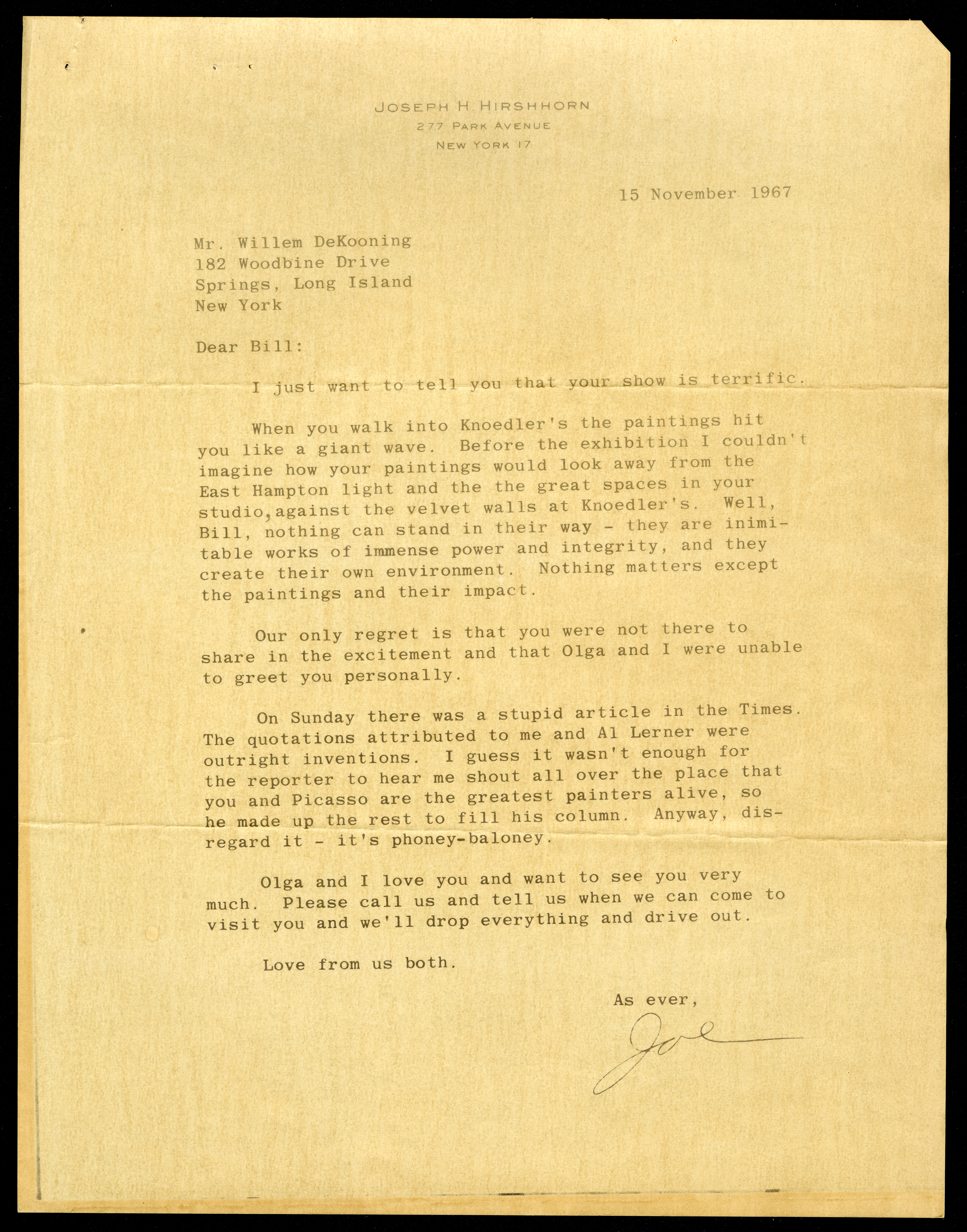
The Artist, The Collector, and Quality Correspondence in midst of the Digital Era
- Date: August 19, 2014
- Description: Archived correspondence between Joseph Hirshhorn and modern artists Willem de Kooning, Alexander Calder, and Marc Chagall bring light to the means in which we communicate artist to collector relationships in the digital era.
- Blog Post
Stellar Evolution: A Journey with Chandra
- Date: April 25, 2012
- Description: The Chandra X-ray Observatory explains the origins of recently added image of stellar evolution to the Smithsonian Flickr Commons stream.
- Blog Post
Digital Video Preservation: Further Challenges for Preserving Digital Video and Beyond
- Date: August 16, 2011
- Description: As one can expect, the complexity of digital video provides a few more factors to track and assess when compared with analog moving image counterparts in the archive.
- Blog Post
Just what is an archives, anyway?
- Date: October 5, 2010
- Creator: Jennifer Wright
- Description: This month, the Smithsonian Institution Archives, along with many other archives across the Smithsonian and around the nation, will be celebrating American Archives Month. The purpose of this celebration is "to raise awareness about the value of archives and archivists." We write a lot about what an archivist does on this blog, but, for those of you who don't know and are
Thank you, Volunteers!
- Date: April 23, 2015
- Creator: Effie Kapsalis
- Description: Volunteers have been an integral part of the Smithsonian since the beginning. As our historian Pamela Henson likes to say, we have always relied on the kindness of strangers. A blog post in honor of Volunteer Appreciation Month 2015. Includes a list of Smithsonian crowdsourcing projects that volunteers can participate in.
- Blog Post
Where to Begin? Determining Founding Dates in ForestGEO’s Global Network of Research Plots
- Date: April 21, 2020
- Description: Behind the seemingly objective certitude of a date lies an argument about what counts.
- Blog Post
Shake It, Shake It Like a Polaroid Picture
- Date: January 26, 2010
- Creator: Marvin Heiferman
- Description: Access the official records of the Smithsonian Institution and learn about its history, key events, people, and research.

Science Service, Up Close: George Sarton, Watson Davis, and “Panache”
- Date: June 23, 2016
- Creator: Marcel Chotkowski LaFollette
- Description: For historians of science, the name “Sarton” resonates like a deep-throated bell. Isis, the international journal that chemist and mathematician George Sarton (1884-1956) founded in Belgium in 1913, is now the premier publication of the History of Science Society. The field he envisioned is flourishing as well as continually responding to changes in science and its social

The Empress of the Galapagos Islands, Part 3
- Date: August 9, 2011
- Creator: Mary Markey
- Description: Access the official records of the Smithsonian Institution and learn about its history, key events, people, and research.