
Results for "Smithsonian Institution. Office of Information"
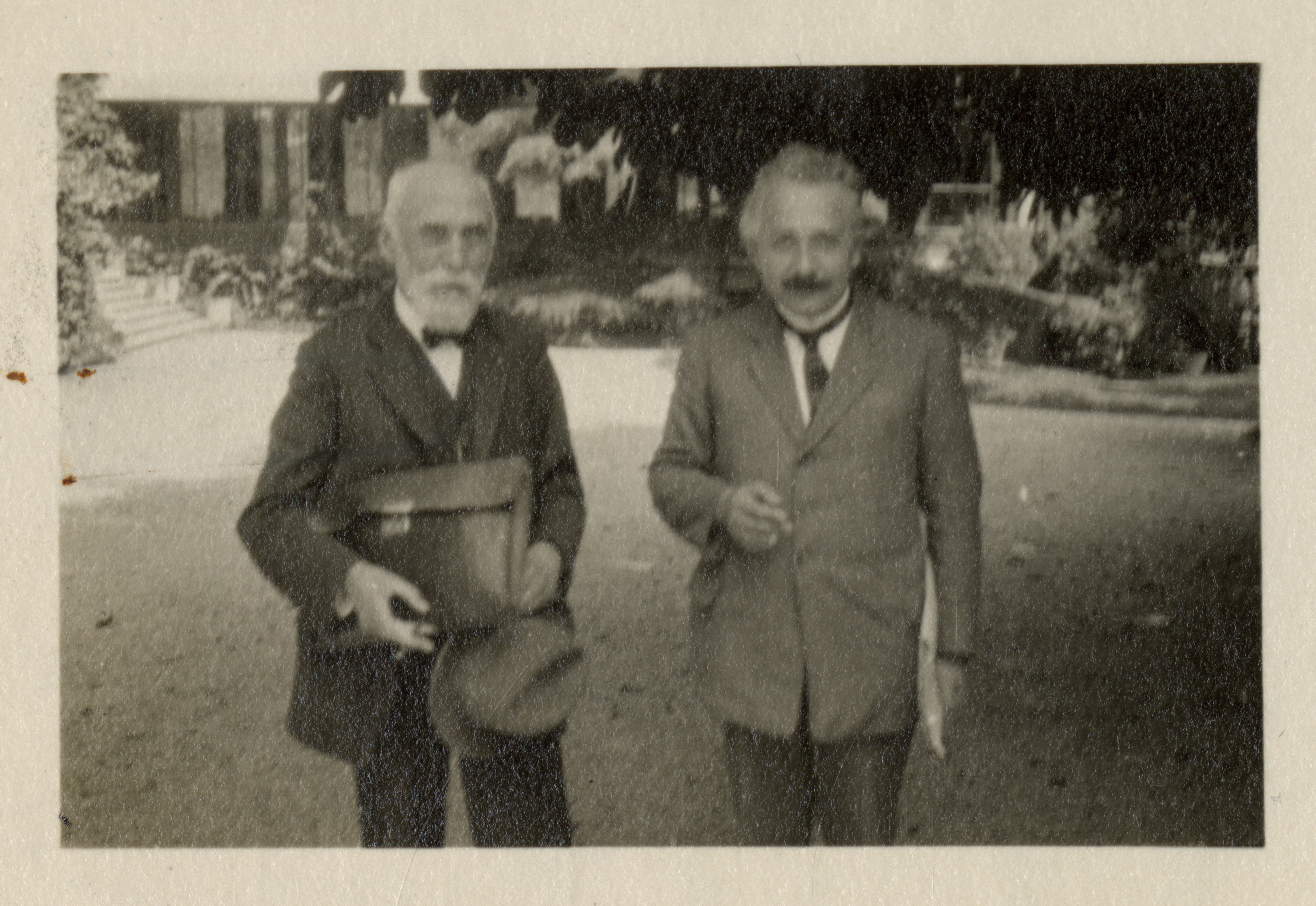
Science Service, Up Close: Informal Moments
- Date: May 8, 2018
- Creator: Marcel Chotkowski LaFollette
- Description: Formal portrait photographs of scientists tend to preserve the stiffness of the moment, rather than capture the sitter’s personality. Perhaps that is the reason that candid photographs of celebrities like Albert Einstein stick in public memory.A 1931 photograph of three Nobel laureate physicists illustrates why we tend to remember the informal photos of scientists more than
- Blog Post
Science Service, Up Close: Stuff Matters
- Date: September 3, 2015
- Creator: Marcel Chotkowski LaFollette
- Description: Science Service photographs, while having good identifying information, can still be helped by the cybercommunity to fill in some of the mission information.
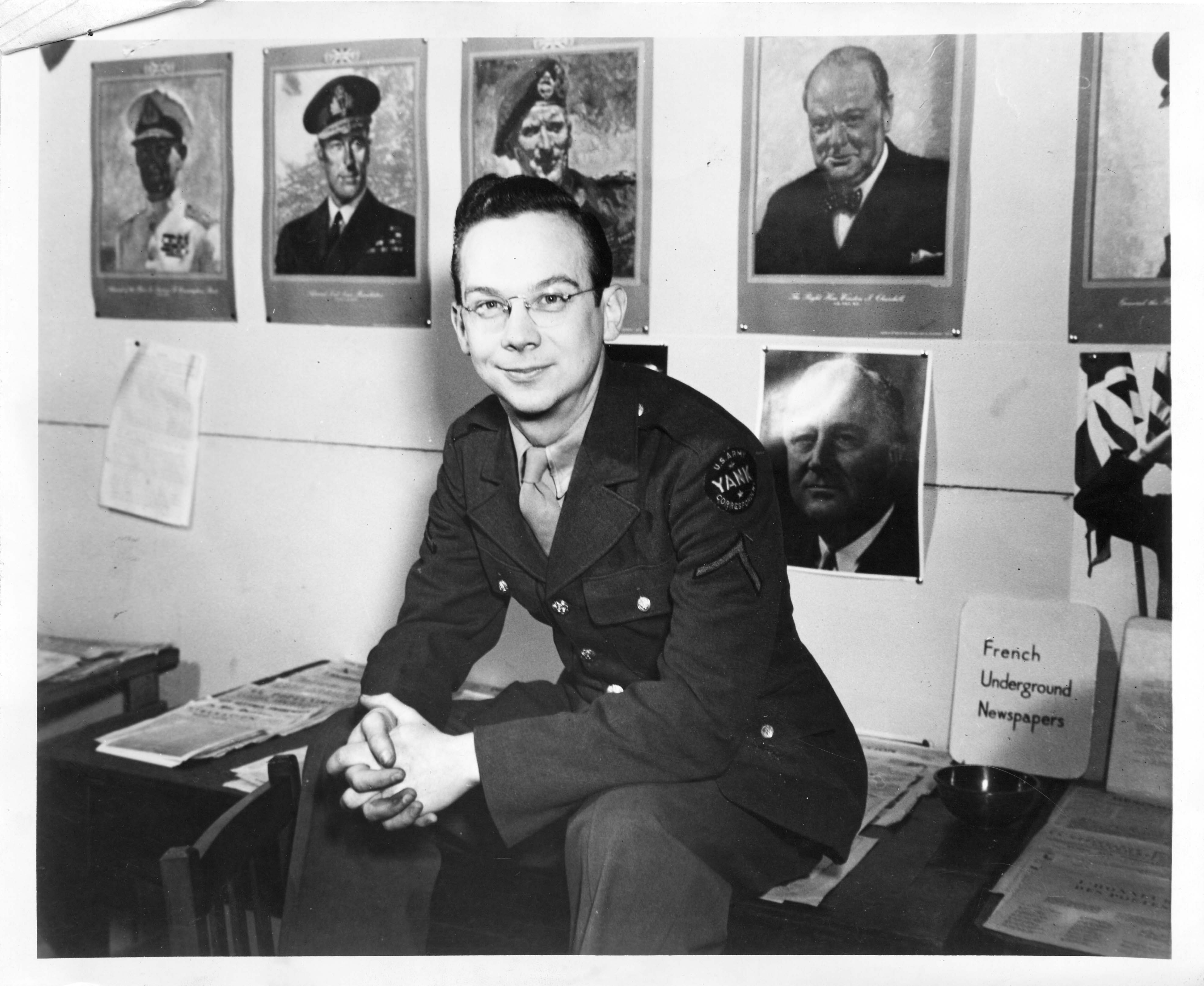
Science Service, Up Close: At the Front - War Correspondents and Cartoonists
- Date: August 27, 2015
- Creator: Marcel Chotkowski LaFollette
- Description: War correspondents and cartoonists amongst the Science Service collections at the Smithsonian Institution Archives.

Science Service, Up Close: Science Reporters on the Hunt
- Date: April 18, 2019
- Creator: Marcel Chotkowski LaFollette
- Description: Photographs from the Science Service collections preserve behind-the-scenes glimpses of the newsgathering process for science reporters.
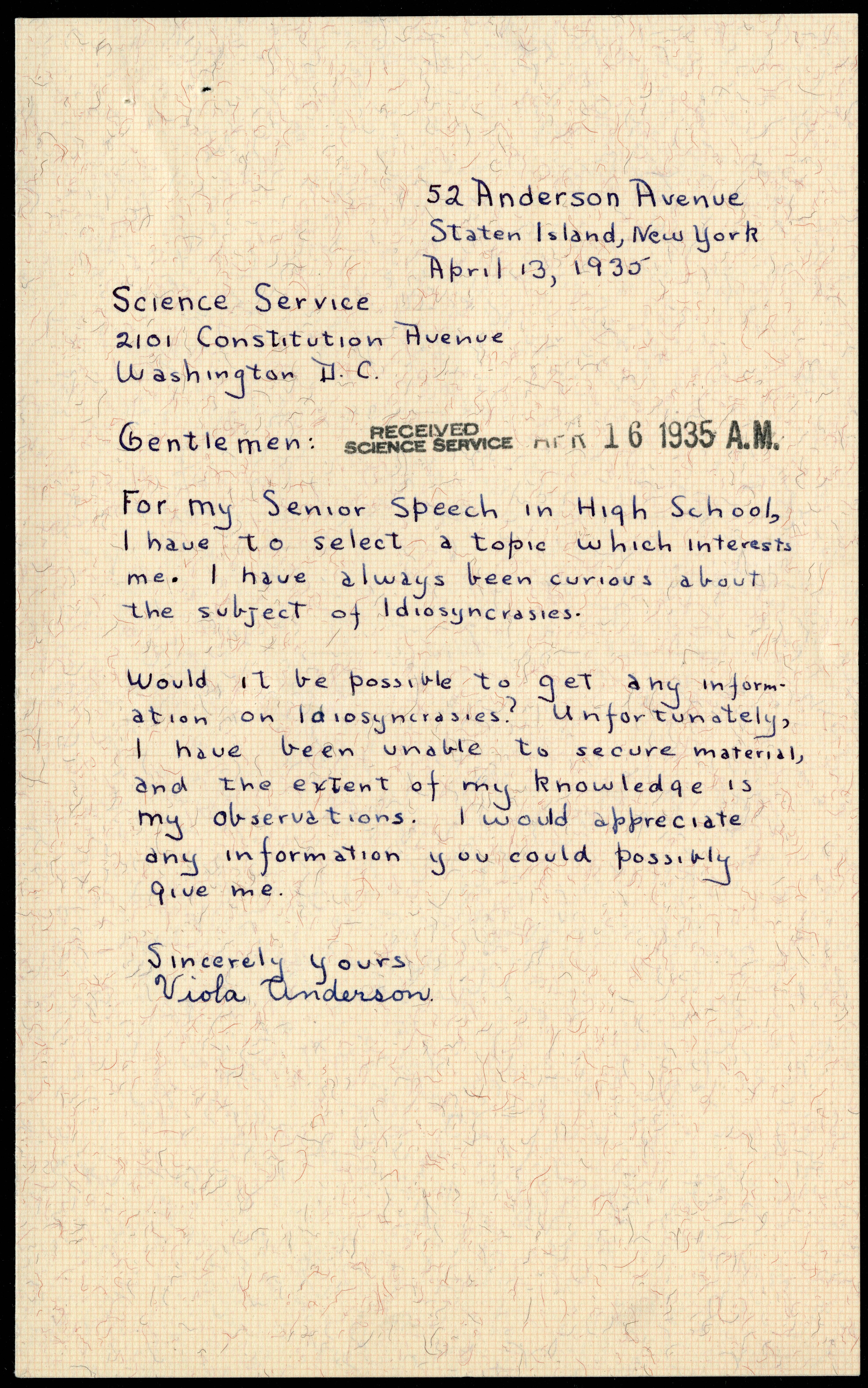
Science Service, Up Close: Idiosyncratic Discoveries
- Date: March 10, 2015
- Creator: Marcel Chotkowski LaFollette
- Description: A look at Viola Anderson and her letter to Science Service.
- Blog Post
Rediscovering Elizabeth’s Smile
- Date: November 18, 2010
- Creator: Marcel Chotkowski LaFollette
- Description: Access the official records of the Smithsonian Institution and learn about its history, key events, people, and research.
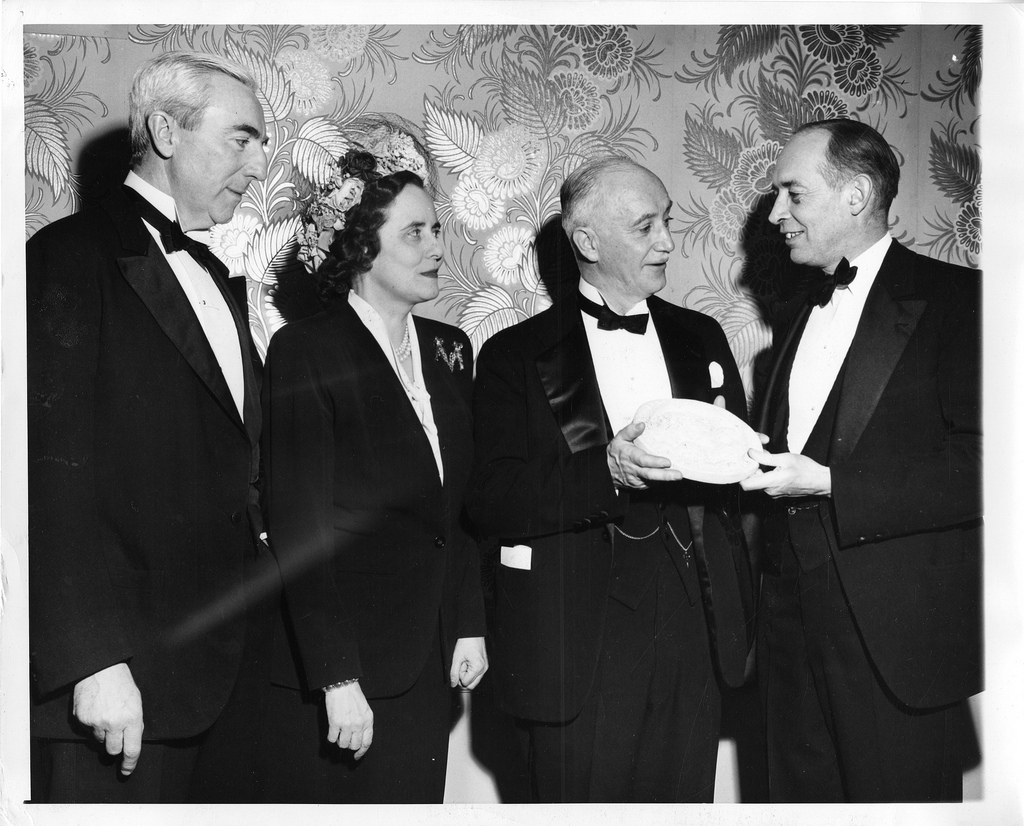
There Are Prizes . . . and There Are Winners
- Date: March 6, 2012
- Creator: Marcel Chotkowski LaFollette
- Description: Nobel prizes are not the only rewards for work improving public health and making the world a better place.

Science Service, Up Close: Technology and Political Conventions
- Date: July 19, 2016
- Creator: Marcel Chotkowski LaFollette
- Description: In a Presidential election year, political news coverage can sometimes seem almost too instantaneous and continuous. Thanks to smartphones with cameras and microphones, journalists and citizens can relay images and sound from almost anywhere inside campaign activities. There was a time, however, when live broadcasting from political conventions and rallies was novel.Starting
- Blog Post
Science Service, Up Close: Before DNA Made Them Famous - Crick, Wilkins, and Watson
- Date: February 27, 2018
- Creator: Marcel Chotkowski LaFollette
- Description: [edan-image:id=siris_arc_391843,size=300,center]By the 1960s, Science Service had been acquiring photographs of scientists, obscure as well as famous, for over four decades. Portraits of Edison or Einstein were always in demand, but experience had also shown that bright, accomplished young people might someday be awarded a major prize or make a discovery deemed

Science Service, Up Close: Journalists, Cancer Research, and Public Education
- Date: March 6, 2018
- Creator: Marcel Chotkowski LaFollette
- Description: Cancer, James T. Patterson observed in The Dread Disease, serves as a powerful metaphor in American culture, where the malady mirrors the “manifestation of social, economic, and ideological divisions” in modern life. In the decades since publication of Patterson’s book, medical research has made great strides in methods of detection and treatment. But the challenge for science
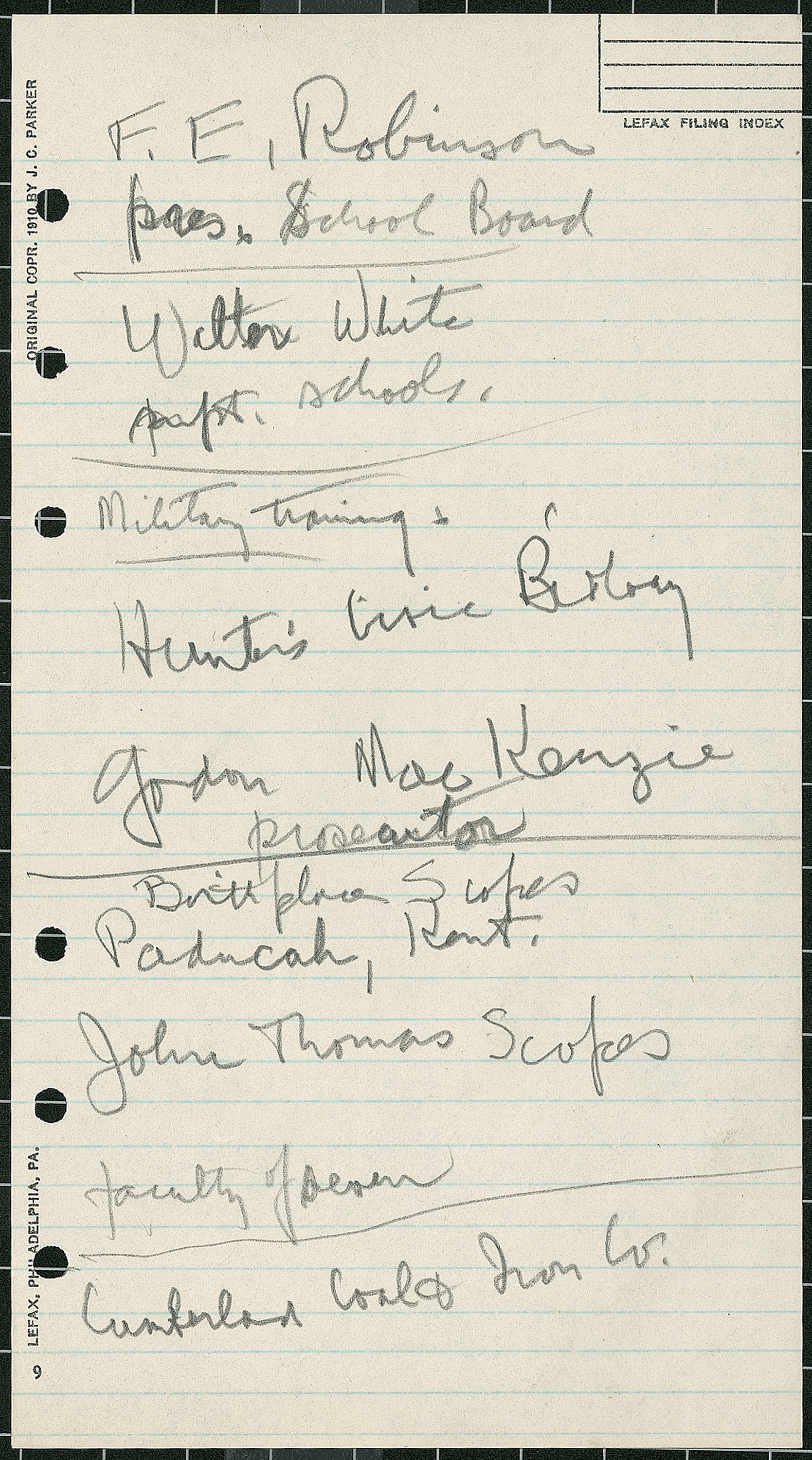
Science Service: Up Close
- Date: May 19, 2015
- Creator: Marcel Chotkowski LaFollette
- Description: Each Smithsonian Institution Archives collection has a life story. That narrative, much like the biography of a person, can explain how a collection's photographs, letters, and documents relate to each other. Closer inspection may also reveal hidden connections to other archival materials and can help in identifying photographers and writers. This new blog series will turn a

Science Service, Up Close: Watson Comes Home
- Date: October 6, 2015
- Creator: Marcel Chotkowski LaFollette
- Description: After successfully completing his 1925 European business trip, 29-year-old Watson Davis headed home on the S.S. Republic, boarding at Cherbourg, France, on October 2. The science journalist had covered the annual meeting of the British Association for the Advancement of Science and discussed with Sir Richard Gregory (Editor of the journal Nature) the plausibility of