
Results for "S. Dillon Ripley Center (Smithsonian Institution)"

Happy 100th Birthday, S. Dillon Ripley
- Date: September 20, 2013
- Creator: Pamela M. Henson
- Description: Celebrate the life of the eighth Smithsonian Secretary S. Dillon Ripley, who was born on September 20, 1913, 100 years ago today!
- Blog Post
Remembering Robert McCormick Adams, Secretary 1984-1994
- Date: January 29, 2018
- Creator: Pamela M. Henson
- Description: [edan-image:id=siris_sic_10199,size=500,center]Robert McCormick Adams (1926-2018) served as the ninth Secretary of the Smithsonian Institution from 1984 to 1994. He succeeded S. Dillon Ripley who had overseen a period of remarkable expansion from 1964 to 1984. Dr. Dr. Robert McCormick Adams (1926-2018) served as the ninth Secretary of the Smithsonian from 1984 to 1994. An
A Crafty Way to Support the Smithsonian
- Date: May 14, 2019
- Creator: Pamela M. Henson
- Description: Tracing the history of the Smithsonian Women’s Committee, created in 1966 to raise funds to support the Institution, especially its educational programs.
- Blog Post
Celebrating World Cultures—and Our Own
- Date: July 1, 2010
- Creator: Pamela M. Henson
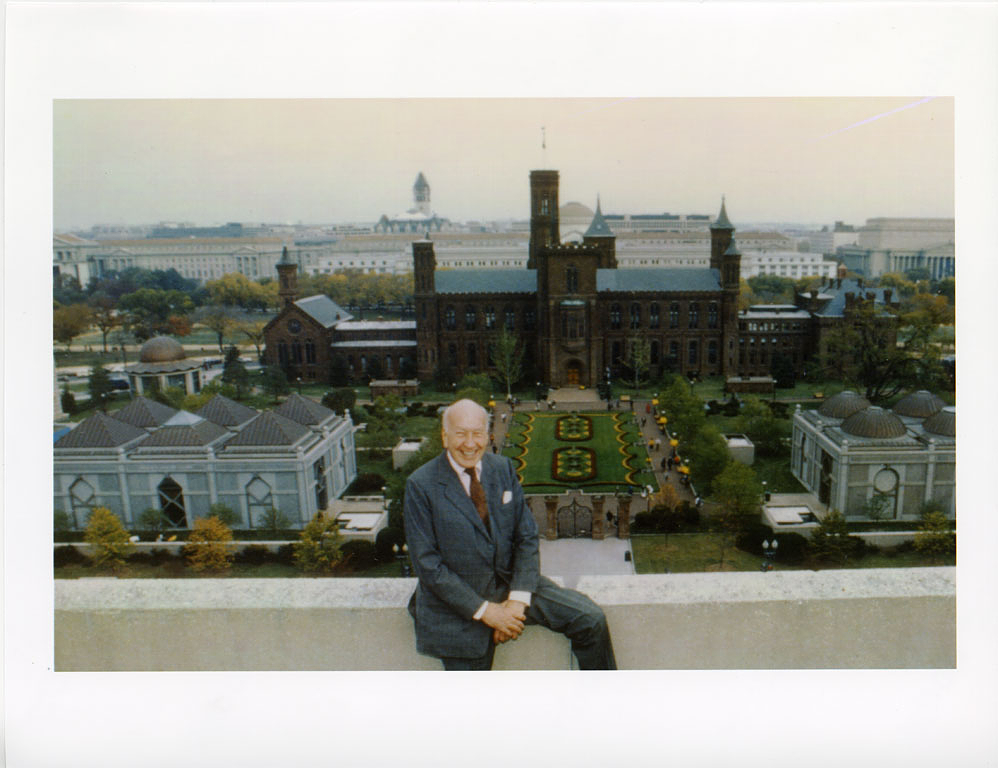
- Description: [caption id="" align="aligncenter" width="430" caption="Smithsonian Secretary S. Dillon Ripley (1913-2001) riding a scooter at the 1974 Folklife Festival in the Mississippi delta section, with a cotton field behind him, by Unidentified photographer, Photographic print, Smithsonian Institution Archives, Record Unit 613, Box 269, Folder: SDR Photos, Negative number:
The Smithsonian Secretaries: That Tall Man from New York, Part II
- Date: April 28, 2016
- Creator: Pamela M. Henson
- Description: The 1846 legislation that established the Smithsonian Institution provided for a Secretary, appointed by the Board of Regents, who would run the day-to-day affairs of the Institution. When David Skorton became Secretary last year, he was the thirteenth person to take on that responsibility. In our last blog, we discussed the first six and now we’ll look at seven through
Remembering Martin Luther King, Jr.
- Date: August 31, 2011
- Creator: Pamela M. Henson
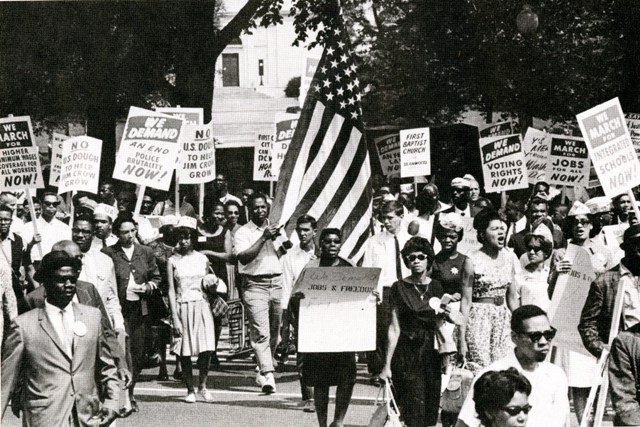
- Description: Access the official records of the Smithsonian Institution and learn about its history, key events, people, and research.

Welcoming Smithsonian Secretaries
- Date: November 5, 2019
- Creator: Pamela M. Henson
- Description: Lonnie G. Bunch III was installed as the Fourteenth Secretary of the Smithsonian on November 1, 2019 in the historic Arts and Industries Building. To celebrate this new day in Smithsonian history, let’s take a look back at installations past!

The Renwick Rises Again
- Date: November 19, 2015
- Creator: Pamela M. Henson
- Description: The Renwick Gallery has just reopened after a two-year renovation, reinventing itself yet again. Its history has mirrored the history of the nation.

Smithsonian Optimism for the Blue Planet
- Date: April 27, 2017
- Creator: Pamela M. Henson
- Description: An overview of the history of environmental conservation activities at the Smithsonian, since its founding in 1846.

"The whole Smithsonian was like one big family . . . "
- Date: March 12, 2013
- Creator: Pamela M. Henson
- Description: For forty years, Miss Helena Weiss kept the Smithsonian running smoothly as a clerk, stenographer, director of the Office of Correspondence and Documents, and Registrar. When she retired, her position was divided into seven separate jobs.
- Blog Post
“Smithsonian Station”: The Metro Station that Almost Wasn’t
- Date: July 5, 2016
- Creator: Pamela M. Henson
- Description: A station for the Metro, Washington DC’s subway system, was eliminated from early plans but protest by the Smithsonian ensured it would be built.
- Blog Post
A New Look at the Smithsonian: Louise Hutchinson
- Date: September 29, 2015
- Creator: Pamela M. Henson
- Description: Louise Hutchinson taught us about African American history in Washington, D.C., and in the Smithsonian itself.