
Results for "Land & Landscape: Views of America's History and Culture (Video recording : 1994)"
- Blog Post
Roxie Laybourne: A Bird of Many Feathers
- Date: March 24, 2016
- Creator: Tad Bennicoff
- Description: A brief biographical sketch of Roxie Laybourne, an Ornithologist who specialized in feather identification and pioneered the field of forensic ornithology.
- Gallery
National Museum of American History
- Date: September 16, 2013
- Description: The National Museum of American History first opened to the public in 1964 as the Museum of History and Technology. In 1980, a bill signed by President Jimmy Carter changed the museum’s name to the National Museum of American History. The postcards in this gallery show objects on display at the museum, as well as views of the building. Some objects that are now in the National
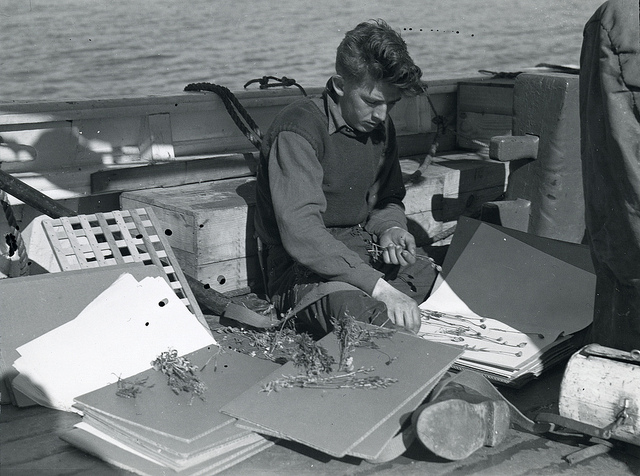
Another Milestone Met: Reminiscing about the Field Book Project and Looking Forward
- Date: February 21, 2019
- Creator: Ricc Ferrante
- Description: The intense efforts that started the Field Book Project and have kept it in high gear are slowing down to a sustainable pace. After almost ten years, grant funding for the Field Book Project has drawn to a close, but there is still plenty more to look forward to that will benefit researchers for years to come.

Architectural History of the National Museum Building (Arts and Industries), 1879
- Date: 1879-ongoing
- Gallery
Correspondence
- Date: September 19, 2013
- Description: People use postcards to correspond with each other, but the way they have used postcards to communicate has changed over time. The postcards in this gallery show how postcards began as a quick way to send short communications between individuals, but have since evolved to be used for longer communications and for requests between academics. While the typical use for a postcard

Rediscovering Historical Perspectives: A Newspaper Update on World War II
- Date: November 11, 2014
- Creator: William Bennett
- Description: In honor of Veteran's Day we talk a look at how a recently discovered newspaper illustrated how information was spread/kept secret during World War II.

Hot Topix in Archival Research, Winter 2022
- Date: January 12, 2022
- Creator: Deborah Shapiro
- Description: Think your archival research is on hold while our reading room is closed? Think again!
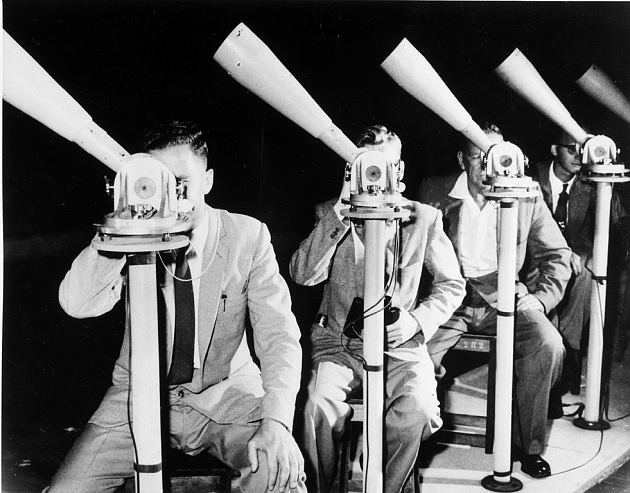
Thank you, Volunteers!
- Date: April 23, 2015
- Creator: Effie Kapsalis
- Description: Volunteers have been an integral part of the Smithsonian since the beginning. As our historian Pamela Henson likes to say, we have always relied on the kindness of strangers. A blog post in honor of Volunteer Appreciation Month 2015. Includes a list of Smithsonian crowdsourcing projects that volunteers can participate in.
Alaska, 1911 : with Arthur Cleveland Bent to gather data on the economic status and geographic distribution of birds and mammals; Included is correspondence, an expense book, maps, reports on the investigations, and photographs
- Date: 1911 19110501 19111130
Album 2 Pacific Islands, 1923 (Tanager Expedition), volume 1 : includes photographs of Wetmore, William G. Anderson, and Eric Schlemmer
- Date: 1923 1923 1923
- Creator: Wetmore, Alexander, 1886-1978
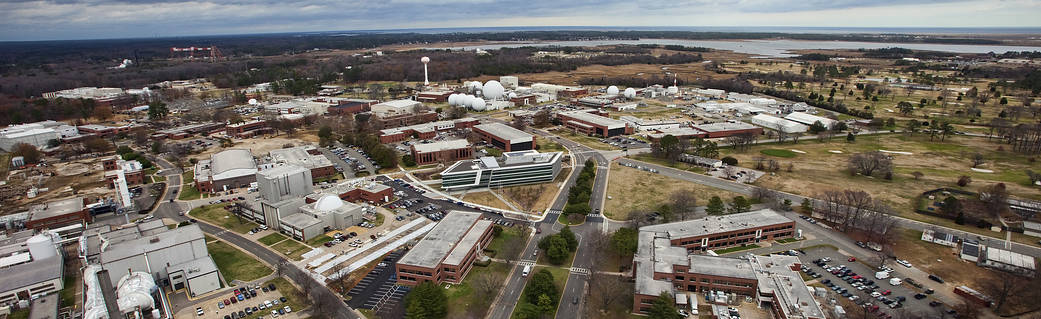
Getting Your Due, Samuel Pierpont Langley
- Date: November 28, 2017
- Creator: Ricc Ferrante
- Description: It can be so frustrating to put great effort into something, and then to have your work and achievements called into question. I can't begin to imagine how frustrated Samuel Pierpont Langley was in 1903. By that time, he had spent over forty years studying astrophysics and aerodynamics. His work on astronomically-derived time measurement in the late 1860's is the heart of the
- Blog Post
Mourning National Disaster at Smithsonian’s National Air and Space Museum
- Date: January 28, 2020
- Creator: Emily Niekrasz
- Description: When tragedy struck during the space shuttle era, mourners found a place to honor the fallen astronauts of the tragic Challenger and Columbia flights at Smithsonian’s National Air and Space Museum.
