
Results for "Continuity of Culture (Television production)"
- Blog Post
Looking Death in the Face
- Date: February 1, 2010
- Creator: Marvin Heiferman
- Description: [caption id="" align="aligncenter" width="384" caption="Moseley, Greenwood Cemetery, 1998, by Titus Brooks Heagins, Digital photograph, Anacostia Community Museum, Titus Brooks Heagins Collection, Gift of Titus Brooks Heagins, © 1998 Titus Brooks Heagins, PH 2005.7010.01."][/caption] At one point, early in CNN’s round-the-clock television coverage of Haiti after the earthquake
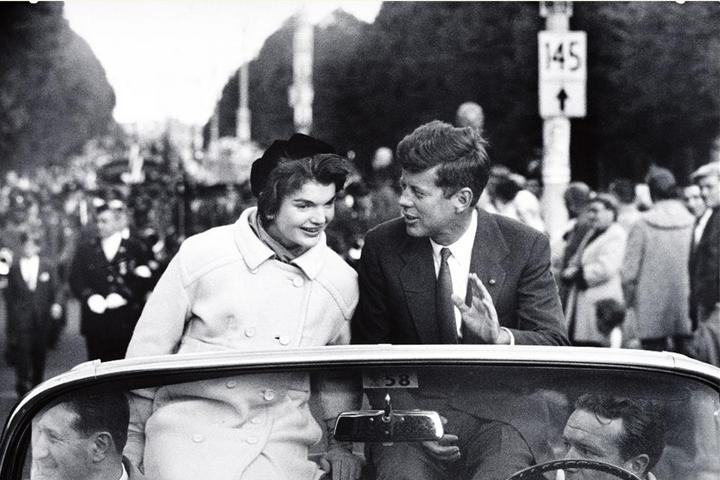
The Good Wife
- Date: September 28, 2011
- Creator: Marvin Heiferman
- Description: Access the official records of the Smithsonian Institution and learn about its history, key events, people, and research.
- Blog Post
Please Mr. Postman
- Date: February 16, 2010
- Creator: Marvin Heiferman
- Description: [caption id="" align="aligncenter" width="448" caption="Temperance Parade, Church of the Nazarene, Medora, Illinois, photographer unknown, real-photo postcard, 1908, Courtesy of Luc Sante, 2009."][/caption] One of the thrills of seeing—when you stop to pay attention to it—is how complex and quickly the process of looking and making sense of what we see happens. According to
- Blog Post
Will the Real Georgia O'Keeffe Please Stand Up?
- Date: February 23, 2010
- Creator: Marvin Heiferman
- Description: [caption id="" align="aligncenter" width="313" caption="Georgia O'Keefe at the Hirshhorn Museum and Sculpture Garden (HMSG) with Rene Magritte's sculpture "Delusions of Grandeur," 11 November 1977, by Richard Farrar, Photographic print, Smithsonian Institution Archives, Record Unit 371 Box 2 Folder December 1977, Negative Number: 92-1789."][/caption] It is always fascinating
- Blog Post
Games People Play, Then Save
- Date: November 22, 2010
- Creator: Marvin Heiferman
- Description: Access the official records of the Smithsonian Institution and learn about its history, key events, people, and research.
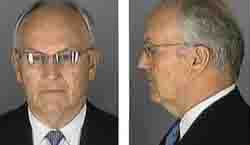
Love Thy Neighbor's Mug Shot
- Date: September 17, 2009
- Creator: Marvin Heiferman
- Description: Access the official records of the Smithsonian Institution and learn about its history, key events, people, and research.
- Blog Post
Avatar. A Photographic Game-Changer?
- Date: January 20, 2010
- Creator: Marvin Heiferman
- Description: A few days ago, I went to an IMAX 3D showing of Avatar to see for myself if the movie is a “game-changer,” as many have suggested. And, it is, but in a way no one seems to be focusing on—the way it acknowledges and exploits photography’s power to shape both everyday and alternate realities. What struck me, as soon as the movie started, was how sophisticated the film’s
- Blog Post
Them Bones
- Date: April 27, 2010
- Creator: Marvin Heiferman
- Description: Look at enough photographs and it’s inevitable that, at some point, you’ll find yourself pondering mortality and photography’s relationship to death. Because the medium so effectively captures fragments of lives, events, and data that have come and gone, you’re always looking at and trying to make sense of something that’s over, finished, part of the past. Writers—particularly