
Results for "Botany"
- Blog Post
Faces in the Crowd
- Date: March 3, 2011
- Creator: Tammy L. Peters
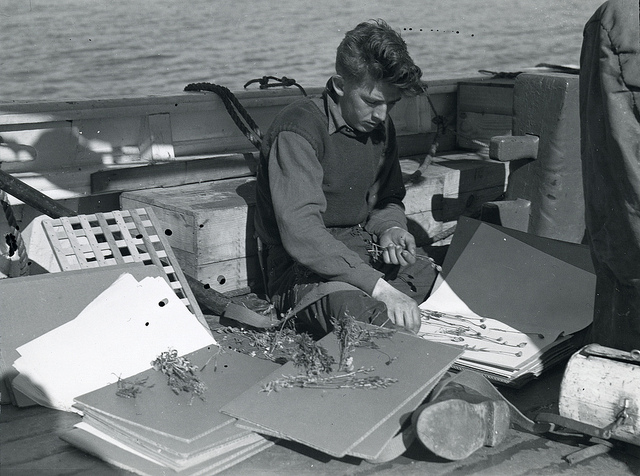
- Description: For the month of March, the Smithsonian Institution Archives will be posting new photos of women scientists to the Flickr Commons and highlighting these women in blog posts on THE BIGGER PICTURE, in honor of Women's History Month.[caption id="" align="aligncenter" width="400" caption="An unidentified woman (possibly Alice Haskins) sitting with U.S. Department of Agriculture,

How Many Objects does the Smithsonian Have?
- Date: January 25, 2018
- Creator: Lisa Fthenakis
- Description: [edan-image:id=siris_sic_12123,size=250,left]It is a simple answer really: We counted. From 1978 to 1983, the Smithsonian undertook a comprehensive inventory of its collections. It was the first time the Smithsonian had ever tried to count each object in its collections and it was a massive task. Over five years, staff from every museum and research center spent thousands of

Hot Topics in Archival Research
- Date: June 10, 2014
- Creator: Mary Markey
- Description: Quarterly post on research at the Smithsonian Institution Archives.
- Blog Post
Valentine’s Day at the Archives: A Blossoming Romance
- Date: February 14, 2019
- Creator: Emily Niekrasz
- Description: Nothing brings a couple together like scientific research, right? Celebrate Valentine’s Day by exploring a love so deep, new species were named about it.

Fostering Collaboration for the Public Good: Sphagnum Moss and WWI
- Date: May 23, 2017
- Creator: Lisa Fthenakis
- Description: A look at one of the many ways the Smithsonian’s mission to increase and diffuse knowledge brought scientific knowledge to aid the public good.

Embracing the Crowd
- Date: April 15, 2014
- Creator: Effie Kapsalis
- Description: When I started working with museums in 2005, the concept of crowdsourcing was in its infancy. That year, James Surowiecki ‘s book, “The Wisdom of Crowds,” was published and there were tiny experiments in crowdsourcing occurring in the cultural heritage sector. There were hesitations and objections about the whole concept within the GLAM (gallery, library, archive, museum)
- Blog Post
Saving the Smithsonian’s Web
- Date: August 25, 2011
- Description: This post is an update to Lynda Schmitz Fuhrig's post “Archiving the Smithsonian’s Presence on the Internet” from September 2, 2010. The Smithsonian Institution has had a presence on the Internet for more than sixteen years. It’s come a long way since then. Documenting the Smithsonian’s various websites falls under the purview of the Smithsonian Institution Archives...but how
- Blog Post
The Field Book Project: Uncovering Hidden Gems at the Smithsonian
- Date: September 21, 2010
- Description: Access the official records of the Smithsonian Institution and learn about its history, key events, people, and research.

Capturing Change
- Date: October 22, 2019
- Description: Forests change over time, and so do the approaches of organizations that seek to protect them.
- Blog Post
Research at the Archives: Finding Grasses for the South
- Date: May 26, 2011
- Description: As a postdoctoral fellow at the National Museum of American History, I’ve spent months in the Smithsonian Institution Archives researching a book tentatively titled, Not Naturally a Grass Country: Environment, Plant Genetics, and the Quest for Agricultural Modernization in the Humid World. It’s largely a story about global attempts to replace one form of agriculture—the
Another Milestone Met: Reminiscing about the Field Book Project and Looking Forward
- Date: February 21, 2019
- Creator: Ricc Ferrante
- Description: The intense efforts that started the Field Book Project and have kept it in high gear are slowing down to a sustainable pace. After almost ten years, grant funding for the Field Book Project has drawn to a close, but there is still plenty more to look forward to that will benefit researchers for years to come.

Accession Records: Not Just Interdepartmental Paper Piles
- Date: August 11, 2011
- Description: Access the official records of the Smithsonian Institution and learn about its history, key events, people, and research.