
Results for "Archives of American Art. Southwest Project"
- Blog Post
Science Service, Up Close: Charles Bittinger and the Worlds of Science and Art
- Date: December 6, 2016
- Creator: Marcel Chotkowski LaFollette
- Description: The work of painter Charles Bittinger, bridging the worlds of science and art.

Science Service, Up Close: Patent Parades, Silk Purses, and Snake Bite Remedies
- Date: March 30, 2017
- Creator: Marcel Chotkowski LaFollette
- Description: Everyone loves a parade – especially one followed by a banquet. When scientists and politicians met in Washington, D.C., on November 23, 1936, to celebrate the centennial of the U.S. patent system, they listened first to a conventional program of speeches. Then, in the afternoon, Science Service director Watson Davis arranged something different: a “Research Parade” featuring
- Blog Post
Science Service, Up Close: John Clavon Norman, Jr. – Pathbreaking Cardiac Surgeon and Researcher
- Date: August 23, 2018
- Creator: Marcel Chotkowski LaFollette
- Description: [edan-image:id=siris_arc_395101,size=300,left]When Harvard Medical School distributed these photographs of John Clavon Norman, Jr., M.D. (1930-2014) to news services in the 1960s, Dr. Norman was at an exciting stage of his career. The young physician had already made quite a journey, but there would be even more paths to blaze. He had been born in West Virginia to parents who
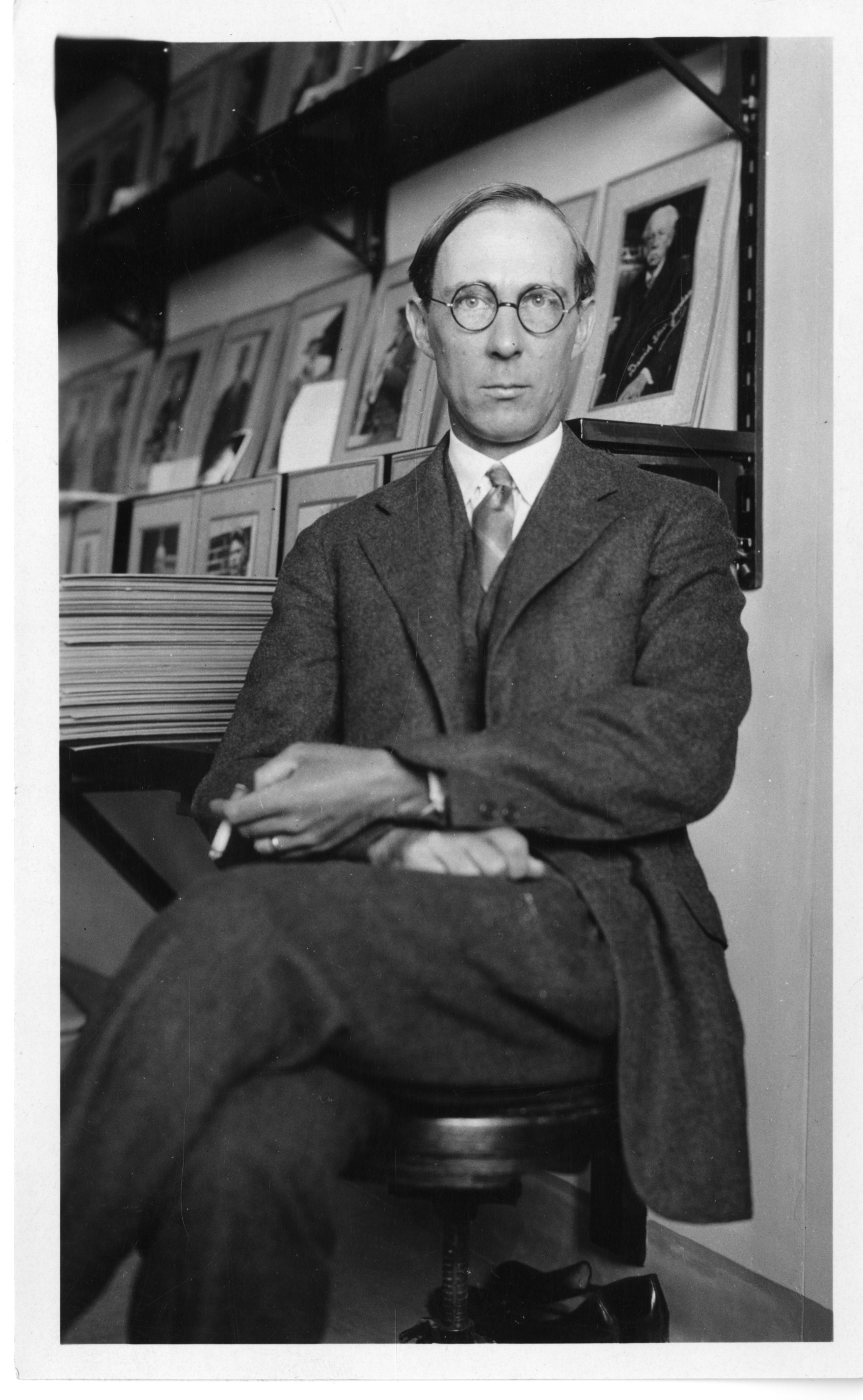
The Scientific Portraits of Julian Papin Scott, Part 1 of 2: The Photographer Behind the Lens
- Date: September 3, 2019
- Creator: Marcel Chotkowski LaFollette
- Description: In a world drowning in images, where we swipe past photos of friends, relatives, and selves in mere seconds, a set of remarkable portraits taken in the 1910s and 1920s by Julian Papin Scott (1877-1961) deserve more considered attention. Sometimes, his subjects appear immersed in work, surrounded by microscopes, beakers, or stacks of books, as if unaware of the photographer.

Science Service, Up Close: Honors and Honorees
- Date: August 4, 2016
- Creator: Marcel Chotkowski LaFollette
- Description: A selection from thirty years of engineering and scientific awards from the Science Service biographical morgue.
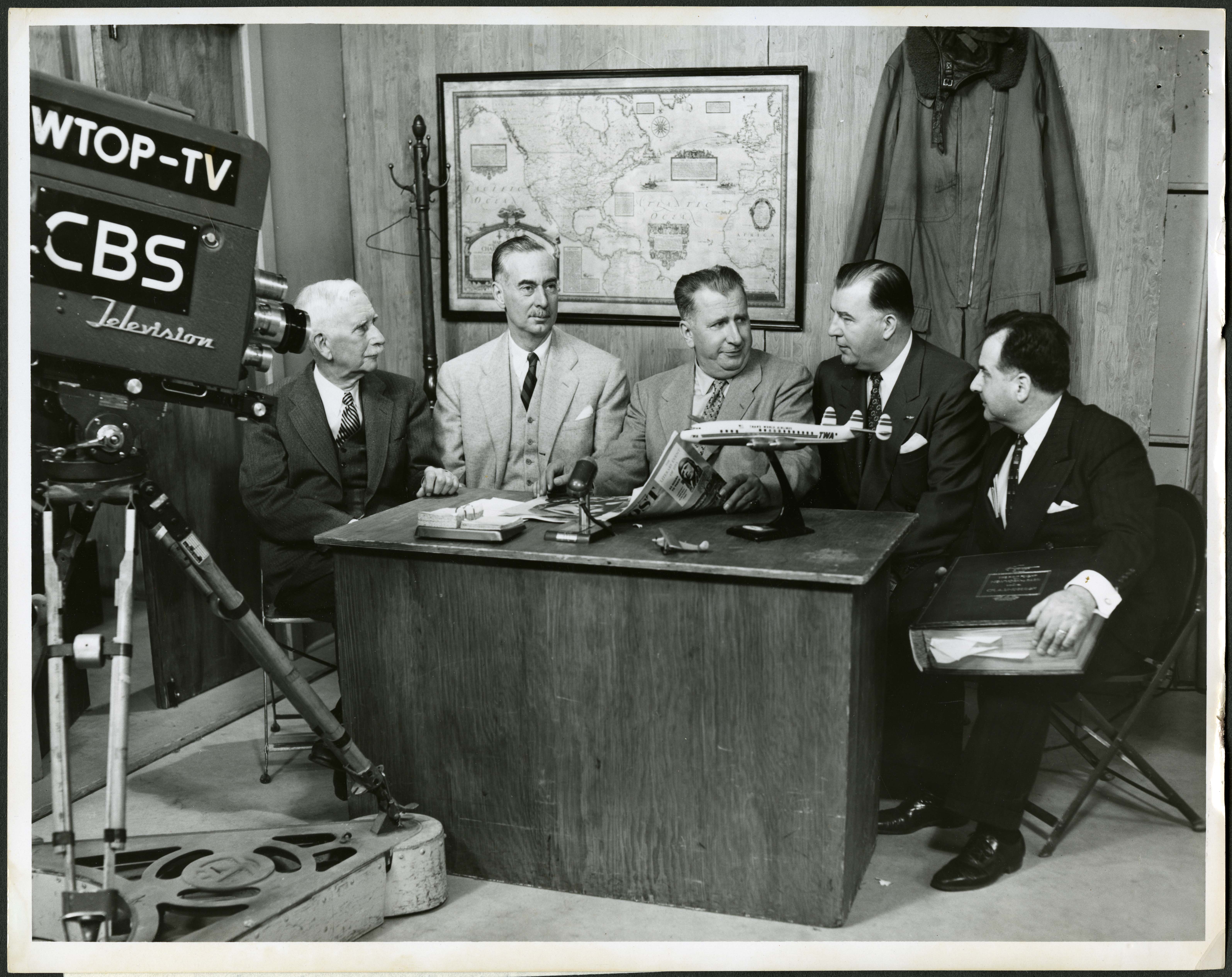
Television and the Smithsonian: The Allure of Objects
- Date: October 15, 2012
- Creator: Marcel Chotkowski LaFollette
- Description: Television often uses museum artifacts to impart reality within illusion, but the real objects retain their power and relevancy.
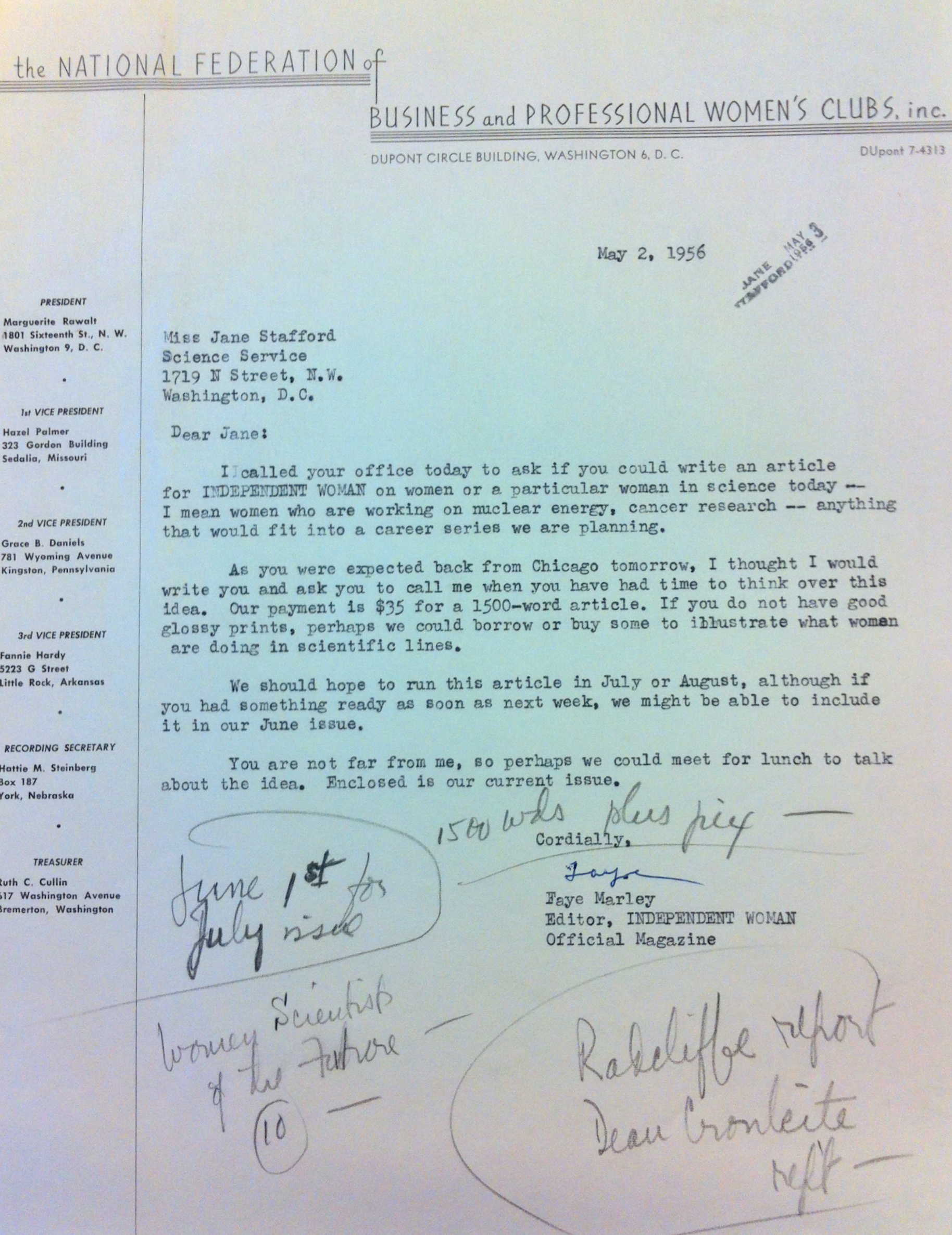
Playing Against Type: Women, Science, and Stereotypes
- Date: April 8, 2014
- Creator: Marcel Chotkowski LaFollette
- Description: Even enlightened publications and workplaces can succumb to the fallback position of choosing stereotyped images of female scientists.

Election Collection: Theodore Roosevelt
- Date: October 4, 2016
- Creator: Marcel Chotkowski LaFollette
- Description: In celebration of our friends at the National Archives’ #ElectionCollection campaign, we are sharing some unique photos of U.S. Presidents in our collection.
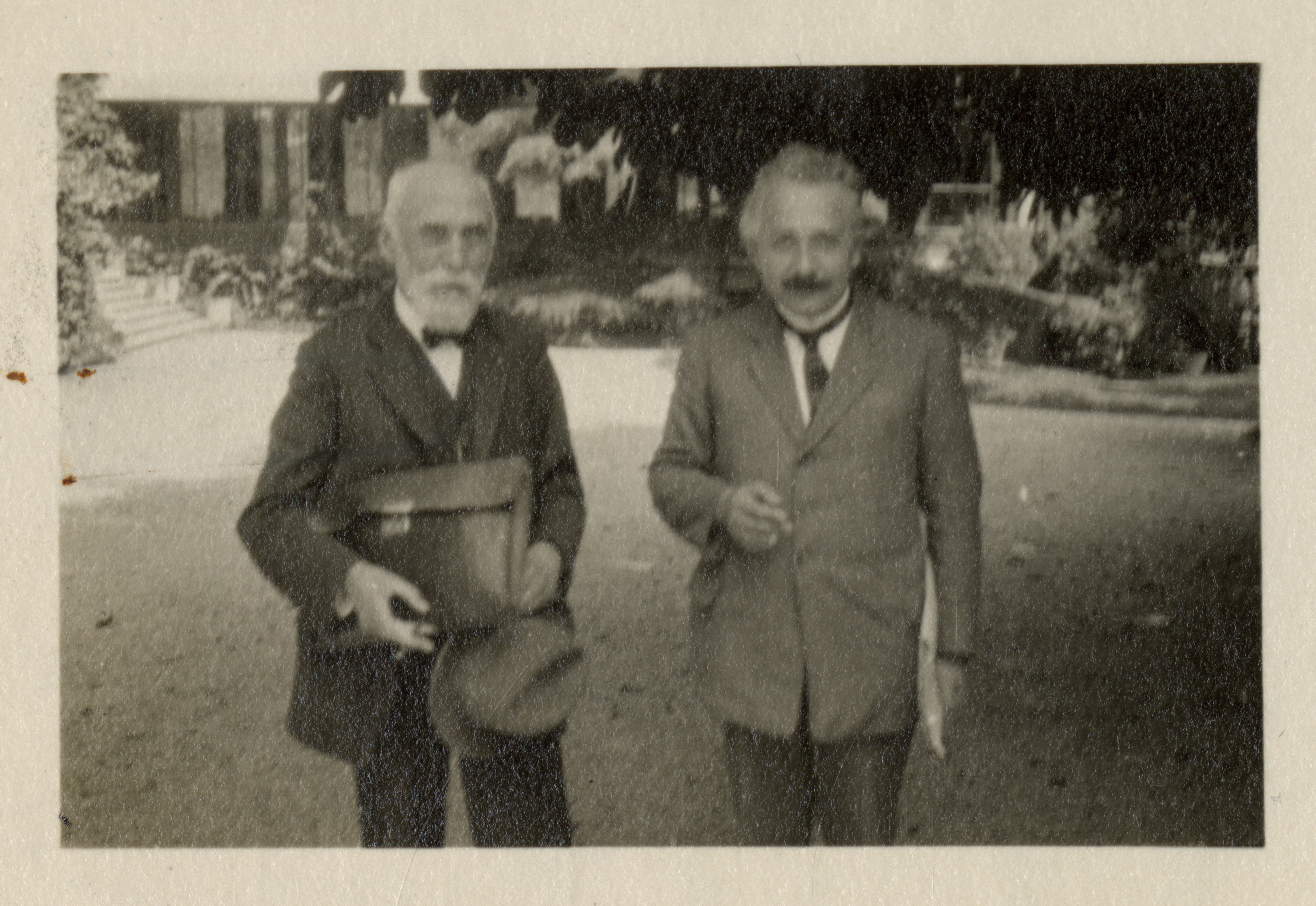
Science Service, Up Close: Informal Moments
- Date: May 8, 2018
- Creator: Marcel Chotkowski LaFollette
- Description: Formal portrait photographs of scientists tend to preserve the stiffness of the moment, rather than capture the sitter’s personality. Perhaps that is the reason that candid photographs of celebrities like Albert Einstein stick in public memory.A 1931 photograph of three Nobel laureate physicists illustrates why we tend to remember the informal photos of scientists more than

Science Service, Up Close: Science Reporters on the Hunt
- Date: April 18, 2019
- Creator: Marcel Chotkowski LaFollette
- Description: Photographs from the Science Service collections preserve behind-the-scenes glimpses of the newsgathering process for science reporters.
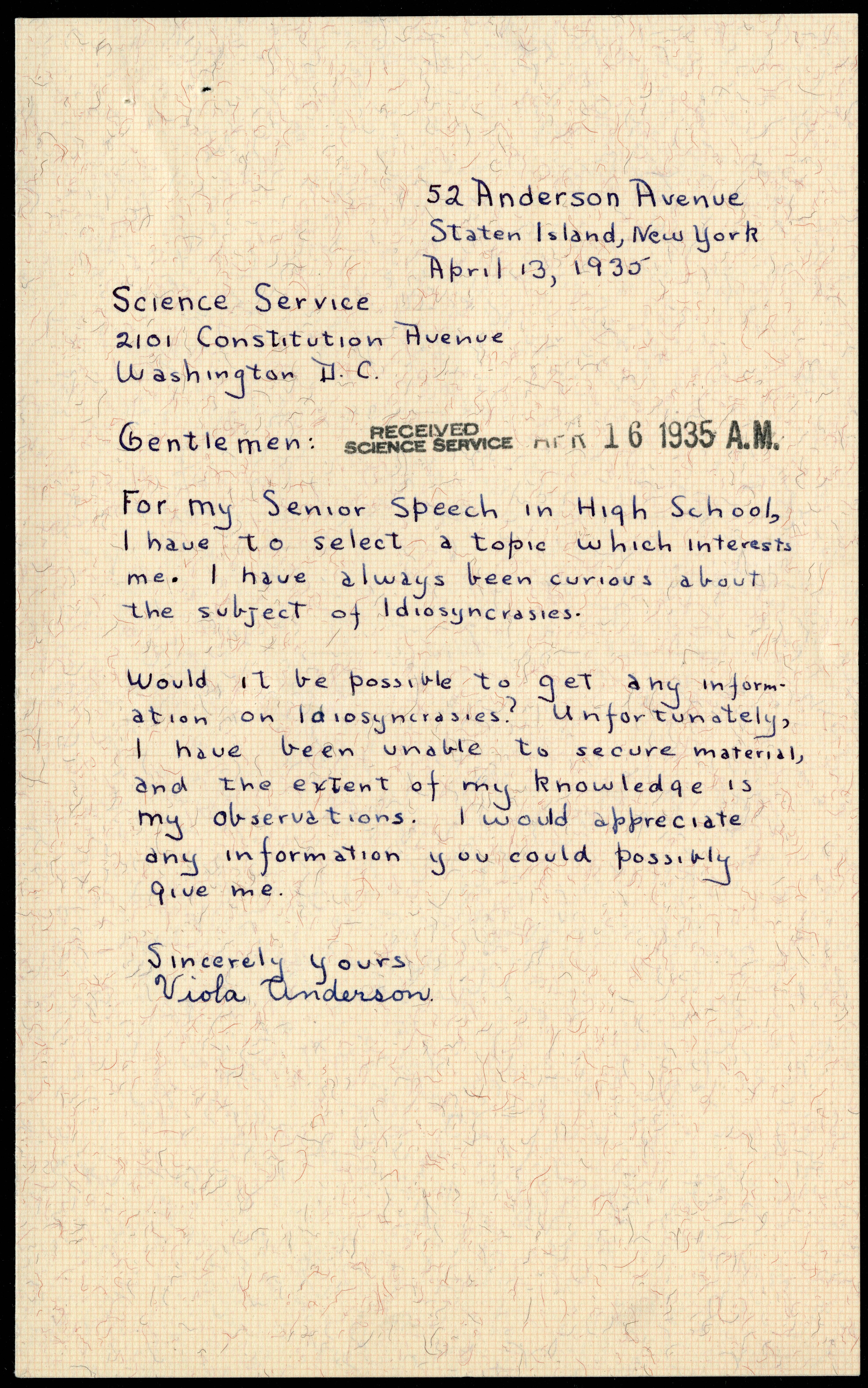
Science Service, Up Close: Idiosyncratic Discoveries
- Date: March 10, 2015
- Creator: Marcel Chotkowski LaFollette
- Description: A look at Viola Anderson and her letter to Science Service.
- Blog Post
Digitized Photos and Back Stories
- Date: October 22, 2015
- Creator: Marcel Chotkowski LaFollette
- Description: Discovering the “back story” behind a unique digitized image in the Science Service collections.