
Institutions devise all sorts of procedures to determine what kinds of documents to collect, and how to save and archive them. The Smithsonian Institution Archives, for example, advises and works with various museums, research institutes, and offices across the Smithsonian, on an ongoing basis, to determine and manage what will get archived for posterity.
But in some organizations, and under conditions when the guidelines determining how archives are acquired and processed may be less specific, problems can arise. An article in the New York Times a couple of weeks ago has drawn focused public scrutiny on what normally might have remained an inside-the-archival-beltway “situation.”
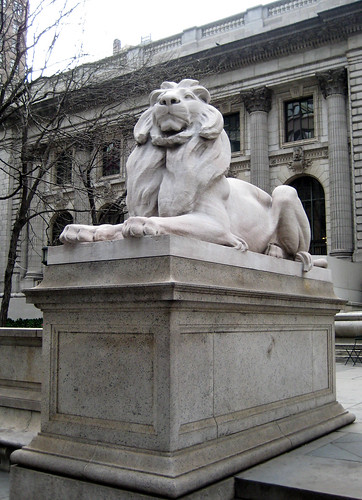
Almost two decades ago, back in 1992, Paul Brodeur, an award-winning investigative writer for The New Yorker magazine—who for over four decades wrote about environmental and heath issues—donated approximately 320 boxes of his personal papers to the New York Public Library (NYPL). The Times piece describes how, five years later, “Mr. Brodeur and his wife toured what was described as the ‘permanent collection’ of his papers in the main branch’s stacks, which stretch 88 miles. Mr. Brodeur watched, contentedly, as giant mechanized glass panels opened up to reveal the files behind his biggest exposés—on the flesh-eating enzymes in household detergents, the erosion of the ozone layer by industrial gases, and a corporate cover-up of the links between asbestos and cancer.”

But about a year ago, the NYPL notified Brodeur that it was finally planning to finish processing his collection and wanted to return to him about three-fourths of the material that he had donated and the library had accepted, almost twenty years ago. Brodeur was given one year in which to retrieve the material in question (approximately 270 boxes including, among other things, xeroxes of the articles he had collected while researching his own writing and multiple drafts of his articles). If he chose not to, the library would destroy the now-unwanted material. A letter sent to Brodeur by an archive curator explained the library’s rationale: “As I’m sure you understand, we need to manage our ever-diminishing resources, including space, even as our collection grows.” Not only did Brodeur not understand, but in June of 2010, he wrote back to the library demanding the return of his entire collection. The library refused, maintaining that according to an agreement Brodeur signed at the time of the donation, the NYPL is free to do what it wants with the material.
This past March, the argument went public and got even more heated when dueling pieces by Brodeur and the NYPL published in the Author’s Guild Bulletin triggered strong reactions and responses from writers, legal experts, archivists, and media scholars.
A blog post Felix Salmon wrote for Reuters in early April lays out both sides of the argument. Is it better for the library to fully index and focus on what Brodeur actually wrote—his manuscripts, notes, and correspondence, making available what they believe is the best 20 percent of his collection? Or is the collection, in its entirety, valuable precisely because of the light it sheds on Brodeur’s methodology and process as a writer? One thing is certain, as the stand-off over the material in question continues; Brodeur, in retrospect and in an email he wrote to Salmon, says he now wishes he had donated the collection to a school of journalism.
Produced by the Smithsonian Institution Archives. For copyright questions, please see the Terms of Use.
Leave a Comment