The Bigger Picture: Visual Archives and the Smithsonian
Posts tagged with: slideshow
Remembrance
Today we honor our military veterans, those who have served and those still serving, those we have lost and those still missing. To our heroes past and present we extend our gratitude for your service, bravery, and strength. In recognition of Veterans Day, we would like to share with you this selection of images taken during the weekend of the dedication of the Vietnam Veterans Memorial in Washington, DC in November 1982.
New Field Book Sets on the Smithsonian Flickr Commons
If you happen to follow the Smithsonian’s Flickr Commons stream very closely, you may have noticed that two new sets of photos were uploaded last week: a set from thePacific Ocean Biological Survey Program, as well as a set of Field Book Lantern Slides.
While the name may sound dry, the biological survey photos, as you can see above, are full of strikingly beautiful gems—abstract patterns of frigates fluttering across the horizon off the coast of the Phoenix Islands, and elegantly curved bird profiles. The photos document a biological survey of plants and animals of the Pacific completed by Smithsonian employees during the 1960s and 70s.
And the Field Book Lantern slides above are a series of image slides used by researchers to present their work to colleagues and the general public. They include some especially colorful slides documenting the Smithsonian-Roosevelt African Expedition 1909 (and the “specimens” they collected), as well as an incredible series of early 20th century slides of the preparation and installation of dinosaur specimens and other mammals from the Smithsonian’s Division of Vertebrate Paleontology.
Both sets of photos come from our collections at the Archives, and are a part of the the Field Book Project—a joint venture of the National Museum of Natural History and us, the Smithsonian Institution Archives—to create one online location for scholars and others to search for field books and other field research materials. Summer interns for the Field Book Project curated both sets and write in detail about their content on the Field Book Blog. Read more in their post, “On Land and at Sea: Two Intern Flickr Sets on The Commons.” You can follow the progress of the project on the Field Book blog.
PS- Did you know that you can subscribe to an RSS feed for the Smithsonian’s Flickr Commons stream?
Happy Flag Day!
On June 14, 1777 the Continental Congress adopted the stars and stripes as the national flag and on the same day one hundred years later, the first observance of the Flag was held. However, it was not celebrated again on such a scale until 1916, in the midst of World War I, when President Woodrow Wilson pronounced the day Flag Day. Though not officially adopted by Congress as a national holiday until 1949, on June 14, 1916 the Smithsonian’s staff and other government employees enjoyed an early release and headed out to the National Mall to celebrate Flag Day. Each participant, for a cost of 10 cents, received a small American flag and ticket to the enclosure for the celebration. The event included a speech by President Woodrow Wilson, music courtesy of the Marine Corp Band, and flag ceremonies.
As historical artifacts and evidence of the past, flags have always been an important part of the Smithsonian. Some flags are celebrated through exhibition, such as the Star Spangled Banner, or through events such as the one described above. But some of the most intriguing flags or banners at the Smithsonian are the Institution’s own. Not only does the Institution have a flag; but the individual bureaus have banners too.
[slidepress gallery='2011_06_flagday']
The bureau banners were designed in 1965 for the celebration of the bicentennial of James Smithson's birth. Each of the thirteen banners was blue with a gold fringe on the upper, lower, and right sides. The center of every one contained a gold sun burst with sixteen alternating straight and wavy rays representing the Smithsonian’s mission of the "increase and diffusion of knowledge." Each bureau had a unique design element in the upper left corner; for example, the National Zoo had an eagle, while the National Portrait Gallery had a silhouette. From lions to dinosaurs, these flags represented the diversity of the staff and the work done at the Smithsonian.
Happy Flag Day!
On June 14, 1777 the Continental Congress adopted the stars and stripes as the national flag and on the same day one hundred years later, the first observance of the Flag was held. However, it was not celebrated again on such a scale until 1916, in the midst of World War I, when President Woodrow Wilson pronounced the day Flag Day. Though not officially adopted by Congress as a national holiday until 1949, on June 14, 1916 the Smithsonian’s staff and other government employees enjoyed an early release and headed out to the National Mall to celebrate Flag Day. Each participant, for a cost of 10 cents, received a small American flag and ticket to the enclosure for the celebration. The event included a speech by President Woodrow Wilson, music courtesy of the Marine Corp Band, and flag ceremonies.
As historical artifacts and evidence of the past, flags have always been an important part of the Smithsonian. Some flags are celebrated through exhibition, such as the Star Spangled Banner, or through events such as the one described above. But some of the most intriguing flags or banners at the Smithsonian are the Institution’s own. Not only does the Institution have a flag; but the individual bureaus have banners too.
The bureau banners were designed in 1965 for the celebration of the bicentennial of James Smithson's birth. Each of the thirteen banners was blue with a gold fringe on the upper, lower, and right sides. The center of every one contained a gold sun burst with sixteen alternating straight and wavy rays representing the Smithsonian’s mission of the "increase and diffusion of knowledge." Each bureau had a unique design element in the upper left corner; for example, the National Zoo had an eagle, while the National Portrait Gallery had a silhouette. From lions to dinosaurs, these flags represented the diversity of the staff and the work done at the Smithsonian.
Love is in the Air, in the Field, and in the Lab
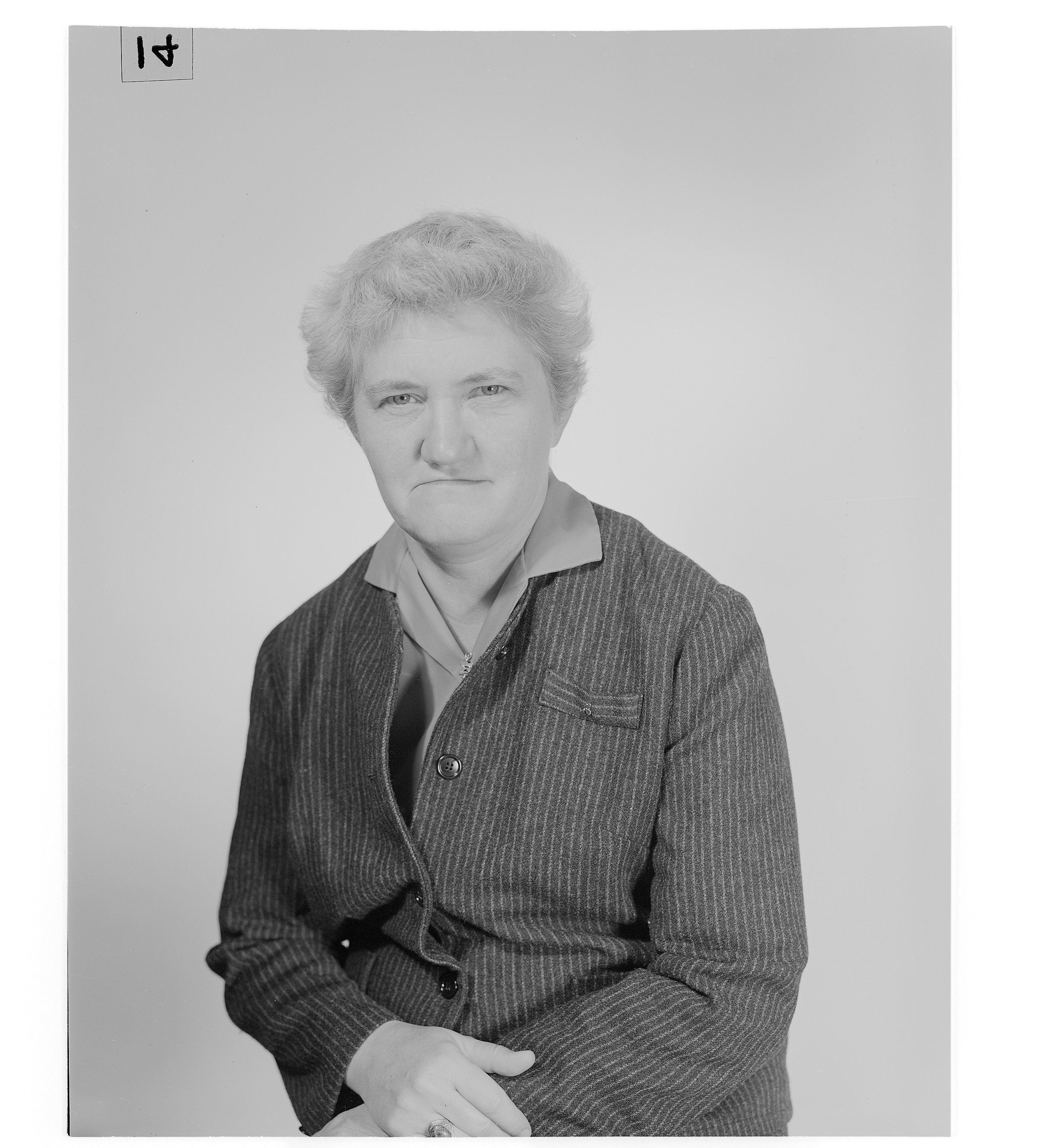
In the past, we’ve talked about how families of Smithsonian researchers helped out with research, and some have even lived in the Smithsonian itself. In the spirit of Valentine’s Day, it seems like love, too, has brought many couples together both at the Smithsonian and out in the field. Love, as you’ll see in the photos below, enabled some women to travel the world and get involved (if not always recognized) in science during a time when this was still an improbable career path for most women. Take, for example, Gustav Arthur Cooper (1902-2000) and his wife Josephine Cooper, who worked diligently alongside one another in the Division of Invertebrate Paleontology, United States National Museum (now the National Museum of Natural History). Though Josephine was not on the Smithsonian payroll (she definitely should’ve been!), she assisted her husband with collecting and ID’ing specimens. Biologist A. Stanley Rand and his wife Patricia Rand met one summer in Chicago, where they both had summer jobs cataloguing salamanders at the Field Museum. Soon after, they married and moved to the Smithsonian Tropical Research Institute on Barro Colorado Island, Panama where they raised their family and continued to collaborate in life and research, even writing papers together. And William M. Mann, Director of the National Zoo, and his wife, Lucile, looked happy together on a 1931 expedition in British Guiana collecting animals for the Zoo. As the zookeeper’s wife, Lucile traveled around the world with her husband on live-animal expeditions and acted as a foster parent (in their apartment!) to many of the orphaned infant zoo animals. She later was employed by the zoo, editing publications and working as an administrator. Enjoy our Valentine’s Day “Love at the Smithsonian” slideshow below, compiled by SIA’s Courtney Esposito, and featuring couples across the Smithsonian Institution who accompanied one another in the name of science and in the name of love.
- 1 of 4
- ››
Produced by the Smithsonian Institution Archives. For copyright questions, please see the Terms of Use.
About
Smithsonian on Flickr Commons
Topics/Tags
- See Here (611)
- American History (542)
- Science (431)
- Archive (331)
- Cities/Places (279)
- Exhibitions (234)
- Web/Tech (210)
- Photo History (189)
- Link Love (153)
- Politics/Government (153)
Blog Roll
Categories
- Collections in Focus (990)
- What Gets Saved (337)
- Behind the Scenes (212)
- Smithsonian History (136)
Monthly Archive
- May 2013 (24)
- April 2013 (26)
- March 2013 (26)
- February 2013 (26)
- January 2013 (28)
- December 2012 (26)
- November 2012 (28)
- October 2012 (32)
- September 2012 (26)
- August 2012 (31)
- July 2012 (26)
- June 2012 (27)
- May 2012 (27)
- April 2012 (27)
- March 2012 (28)
- February 2012 (27)
- January 2012 (26)
- December 2011 (31)
- November 2011 (28)
- October 2011 (35)
- September 2011 (31)
- August 2011 (35)
- July 2011 (41)
- June 2011 (43)
- May 2011 (33)
- April 2011 (40)
- March 2011 (43)
- February 2011 (35)
- January 2011 (36)
- December 2010 (42)
- November 2010 (40)
- October 2010 (44)
- September 2010 (37)
- August 2010 (39)
- July 2010 (38)
- June 2010 (37)
- May 2010 (42)
- April 2010 (44)
- March 2010 (47)
- February 2010 (40)
- January 2010 (39)
- December 2009 (43)
- November 2009 (34)
- October 2009 (11)
- September 2009 (11)
- August 2009 (12)
- July 2009 (14)
- June 2009 (10)
- May 2009 (12)
- April 2009 (14)
- March 2009 (10)
- January 2009 (1)
![[World War I Veteran Joe Ambrose salutes during the 1982 Vietnam Veterans Memorial dedication ceremonies, November 13, 1982, by Dane Penland, Photographic negative, Smithsonian Institution Archives, Negative Number: 82-13689-32.]](http://siarchives.si.edu/sites/default/files/blog-attached-images/82-13689-32-player-sm.jpg)