Smithsonian Institution Archives
  • Collections
  • Services
  • Smithsonian History
  • About
  • Education
  • Blog
  • Forums
  • Press
  • Audiences
  • Donate

The Bigger Picture: Visual Archives and the Smithsonian

Posts tagged with: Photo History

Just Me and My Photos: Zoe Martindale SIA Image Cataloger

by Courtney Bellizzi on April 16, 2013

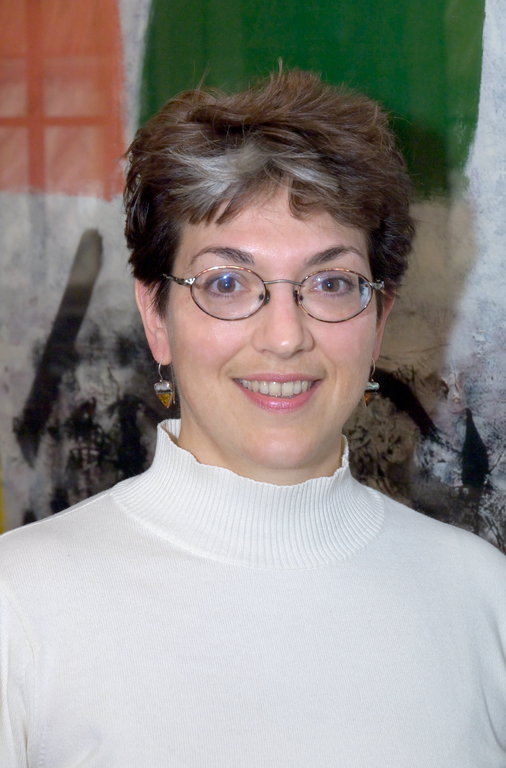
Zoe Martindale, 2011, by Courtney Bellizzi.American photographer and environmentalist Ansel Adams once stated, "A photograph is usually looked at—seldom looked into." Though this may be true for most people, for sixteen years the Smithsonian Institution Archives has been fortunate to have one volunteer to look into, research, discover, and catalogue thousands of images.

Zoe Martindale first came to  the Archives in 1997. Prior to retirement, Martindale read a Washington Post article about volunteer opportunities at the Smithsonian. She saved the article and when retirement came she promptly called the Smithsonian's volunteer office and applied for a position. The Smithsonian volunteer opportunities appealed to her because she thought it would give her a chance to "exercise her brain." Never one to stay idle, once accepted into the program Martindale scrolled through the hundreds of positions, looking for one that might be a good fit.  She knew she did not want to be a docent, but was otherwise open to anything. When asked why the  Archives position appealed to her, Martindale replied "I am not sure why the job stuck out to me, it just did."

Martindale came to the  the Archives offices, then located in the Arts and Industries Building (a building which she loved to work in and explore), and interviewed for the position with Historian Pam Henson. Today she recalls with amusement that Henson told her she needed a volunteer who could stay at least a year or two, since the training was pretty involved. Over a decade later she is still at the Archives chipping away at her work. 

As a historic image cataloguer, Martindale catalogs the images into a Smithsonian database, which allows them to be viewed on the Archives'  website and the Smithsonian's Collection Search Center. For each image, Martindale enters the physical and digital descriptions and locations, along with a summary and index terms. She loves to "find out information about the image, and elaborate on the brief descriptions that she is given." She also works diligently to come up with index terms so that people can easily find the images in search engines.

Zoe discovered that these views of the construction of the northwest quadrant of the United States National Museum (Arts & Industries Building) were all taken from the same point of view over time.

When an image first comes across her desk, Martindale "always questions what the image is showing and always feels that there is more information to find and more context to add." Information is "not just about the image itself, but the people, places and topics, that the image touches on." She looks at the image from the point of view of the public, and asks, "why is it important and where does it fit into the Smithsonian story?"

For Martindale it is "important to notice the small things," to differentiate one image from another. In fact she has helped determine dates by finding small details that others have missed. Martindale can look at an image that looks similar to a different image, but find there are differences to tell them apart. When asked how she acquired this skill, she replied, "I am not sure why I can pick it out, it just comes to me." The other invaluable skill Martindale possesses is her ability to remember every image she has come across. She commented, "I don't necessarily remember the content information and details, but I can look at a picture and remember if I cataloged it or an image that is similar to it." This allows her to connect images to others found in different collections that might otherwise have remained separate.

Prior to working at the Archives, Martindale never worked with images before. She always loved looking at photographs, but never pursued photography herself.  Martindale said, "I am bad at taking pictures because I cut people out of them accidently." However, she is always amazed to see what people can see in images. "I am always interested in what people see and pick out, because I can pick the picture apart." Aerial view of The Mall, by Unknown, Smithsonian Archives - History Div, 43049-E or MAH-43049E.

And the more to pick out the better. When asked what her favorite images are, Martindale replied, "I really like researching the scenes of Washington, DC, love the images of the history of the buildings. People images are not always very interesting, but I really like the buildings, and the changing face of the National Mall." She loves "images with multiple elements in the foreground, background, sides, and pointing those out to the public." But it is the mystery of each picture that brings her back for more each week. She sometimes goes home and mulls over the wording of the descriptions to make sure her summaries come across clear, so that people not only find it, but find it interesting.

Martindale sometimes becomes overwhelmed with the amount of images there are to describe. She can spend hours on one picture to try and identify things about the image, but likes that she will never run out of work. Martindale stated, "I have seen how the cataloging standards have changed and wish I could go back and improve some of the others, but I have so many new entries to do." She is still amazed though at how much she has learned about the Smithsonian and that it is much more than just the museums.

Martindale has become a great asset not just to the staff but to the research fellows, interns, and fellow volunteers. She constantly helps others with the images that she has cataloged, and likes to share her knowledge. Even after thousands of images, Martindale still gets excited when her images go live online. She loves sharing the things she has uncovered. When asked about the job Martindale simply stated, "some people might look at it as a boring job, but I love it."

Related Resources

  • Historic Pictures of the Smithsonian, Smithsonian Institution Archives
Categories: Behind the Scenes
Tags: Archive, Photo History, Behind the Scenes
Comments: View 2 comments, or Give us yours!
All comments are moderated and subject to approval. Further information is available in The Bigger Picture’s Commenting Guidelines.

Link Love: 4/12/2013

by Mitch Toda on April 12, 2013

PhotosNormandie, a collaborative collection of over 3,000 creative commons licensed photos from the Battle of Normandy and its aftermath.

  • A royal task, the British Library is set to archive all British websites. [via InfoDocket]
  • Can't make it to Rochester, New York to visit the George Eastman House? You can now visit them via Google Art Project. [via PetaPixel]
  • Smithsonian American Art Museum's Michael Mansfield, Associate Curator for Film and Media Art, talks about the challenges of preserving time based media art with the National Archives. [via The Signal: Digital Preservation]
  • If you are in Washington, DC be sure to check out the Searching for the Seventies: The DOCUMERICA Photography Project exhibition at the National Archives. [via Prologue: Pieces of History]
  • Ever wonder where the red sandstone used to build the Smithsonian Castle came from? The Smithsonian Magazine has the answer. [via Around the Mall]
  • For the World War II history buff, check out PhotosNormandie, a collaborative collection of over 3,000 creative commons licensed photos from the Battle of Normandy and its aftermath. [via PetaPixel]
  • You probably won't find this at your local Starbucks, but barista Mike Breach creates incredible small coffee and milk foam portraits for customers to enjoy. [via This is Colossal]


Categories: What Gets Saved
Tags: Web/Tech, Photo History, Digitization, Link Love
Comments: View comments, or Give us yours!
All comments are moderated and subject to approval. Further information is available in The Bigger Picture’s Commenting Guidelines.

Link Love: 4/5/2013

by Mitch Toda on April 5, 2013

Kermit the Frog is wearing a black armband in honor of the memory of Jane Nebel Henson. He is on display in "American Stories" on the second floor of the National Museum of American History.

  • At Stanford they are experimenting with a completely different approach to collecting a person's archives, the near real time archiving of William McDonough. [via New York Times]
  • This week saw the passing of Jane Nebel Henson, who along with her husband, Jim Henson, created wonderful memories of children and adults of all ages with their amazing puppetry and through the Muppets. [via O Say Can You See?, NMAH]
  • Over at the Field Book Project, they are continuing to explore digital connections between museum specimens, field book catalog records, and the resulting publications along with the Biodiversity Heritage Library. [via The Field Book Project Blog]
  • Perhaps more than anyone, the Official White House Photographer has incredible access to the President, documenting historic events as well as personal moments. Former presidential phorographers Eric Draper and Robert McNeely offer some insights into what it is like. [via PetaPixel]


Categories: What Gets Saved
Tags: American History, Archive, Photo History, Link Love
Comments: View 2 comments, or Give us yours!
All comments are moderated and subject to approval. Further information is available in The Bigger Picture’s Commenting Guidelines.

Sandved and his Snapshots

by Samantha DesRochers, Intern, Digital Services Division on April 4, 2013
Kjell Sandved, by Wapinski, Dave, 1970s, Smithsonian Archives - History Div, 96-927.

As a volunteer for the Digital Services Division I am able to help digitize and preserve a wide variety of objects housed at the Archives. So far, my favorite assignment has been scanning the more than 450 color slides in the Kjell Bloch Sandved Photographic Files.

Born in Denmark in 1922, Kjell Bloch Sandved began his 32-year career at the National Museum of Natural History (NMNH) as a photographer in 1960. Working in departments such as the Office of Exhibits and the Department of Botany, Sandved photographed archaeological excavations at the Dead Sea, coral reefs in the Caribbean and Pacific, and penguins in Antarctica. Sandved is well known for creating the Butterfly Alphabet, published in the Smithsonian Magazine in 1975. His collection of slides now at the Archives was created in 1975 when then Director of NMNH, Porter Kier, commissioned Sandved to document the research and work of the Museum’s staff.

Sandved’s shots of NMNH scientists include Dennis Sanford and Robert Stuckenrath of the Department of Anthropology working in a C-14 archaeology lab and G. Arthur Cooper of the Department of Paleobiology thoroughly examining fossils specimens. Numerous photos of James Mead are also included in Sandved’s collection. Mead, a Marine Mammalogist with, by far, the best beard in all of Sandved's slides, studied at the University of Chicago and received his PhD in Evolutionary Biology. Mead has held the title of Curator of Marine Mammals in the Division of Mammals since 1972. Though Sandved's shot depicts Mead with the skull of a whale, his current research interests lie with the crania of dolphins. 

Also mixed in with Sandved's slides were a number of images that show the preparations for the permanent installation of the Insect Zoo, which opened at NMNH on August 23, 1976. Exhibit designers and NMNH Entomologist, Terry Erwin, can be seen in these images laughing with Kier while looking on at a model of the soon to open exhibit.  

In addition, Sandved ventured outside of the Museum’s walls to photograph staff, as seen in an image of Mary E. Rice upon the Smithsonian’s "Blue Fox" in Florida. Currently an Emeritus Research Zoologist, Rice spent her Smithsonian career researching marine invertebrates after receiving her PhD in zoology from the University of Washington. As one of the few women scientists included in Sandved's slides I feel it is important to note some of Rice's many accomplishments: she served as President of the American Microscopical Society (1999) and of the Society for Integrative and Comparative Biology (1979); she helped to develop the Smithsonian Marine Ecosystem Exhibit; and she was the first director of the Smithsonian Marine Station's in Fort Pierce, Florida.

Sandved captured more than just scientists at work. Included in his slides are photos of staff members reconstructing archaeological pottery sherds and artists, such as Alice R. Tangerini, carefully drawing different NMNH specimens. Tangerini has been working as a Staff Illustrator in the Department of Botany ever since completing her BFA at the Virginia Commonwealth University in 1972. Not only has she artistically rendered countless botanical specimens, Tangerini also curated an exhibit, North American Wild Flowers: Watercolors by Mary Vaux Walcott, on display at NMNH in 1990.

It is easy to see why Sandved and his photography were so exciting to process. His snapshots offer a rare glimpse at what went on behind-the-scenes at NMNH in the mid-1970s. I was able to see things that the average Smithsonian visitor never get to see – but now, thanks to the Digital Services Division, Sandved’s images will soon be accessible and enjoyed by all! 


PreviousPauseNext
1 of 1
Dick Benson, March 1975, by Kjell Sandved, color transparencies, Smithsonian Institution Archives, Accession Number 95-013, Negative Number SIA2013-03868.

Dick Benson, March 1975, by Kjell Sandved


Dick Benson, March 1975, by Kjell Sandved, color transparencies, Smithsonian Institution Archives, Accession Number 95-013, Negative Number SIA2013-03868.

Dr. Fenner Chace, March 1975, by Kjell Sandved, color transparencies, Smithsonian Institution Archives, Accession Number 95-013, Negative Number SIA2013-03876.

Dr. Fenner Chace, March 1975, by Kjell Sandved


Dr. Fenner Chace, March 1975, by Kjell Sandved, color transparencies, Smithsonian Institution Archives, Accession Number 95-013, Negative Number SIA2013-03876.

G. Arthur Cooper, 1975, by Kjell Sandved, color transparencies, Smithsonian Institution Archives, Accession Number 95-013, Negative Number SIA2013-03893.

G. Arthur Cooper, 1975, by Kjell Sandved


G. Arthur Cooper, 1975, by Kjell Sandved, color transparencies, Smithsonian Institution Archives, Accession Number 95-013, Negative Number SIA2013-03893.

Raymond Fosberg, December 1975, by Kjell Sandved, color transparencies, Smithsonian Institution Archives, Accession Number 95-013, Negative Number SIA2013-03927.

Raymond Fosberg, December 1975, by Kjell Sandved


Raymond Fosberg, December 1975, by Kjell Sandved, color transparencies, Smithsonian Institution Archives, Accession Number 95-013, Negative Number SIA2013-03927.

Dr. James Mead, February 1975, by Kjell Sandved, color transparencies, Smithsonian Institution Archives, Accession Number 95-013, Negative Number SIA2013-04043.

Dr. James Mead, February 1975, by Kjell Sandved


Dr. James Mead, February 1975, by Kjell Sandved, color transparencies, Smithsonian Institution Archives, Accession Number 95-013, Negative Number SIA2013-04043.

Mary Rice, 1975, by Kjell Sandved, color transparencies, Smithsonian Institution Archives, Accession Number 95-013, Negative Number SIA2013-04079.

Mary Rice, 1975, by Kjell Sandved


Mary Rice, 1975, by Kjell Sandved, color transparencies, Smithsonian Institution Archives, Accession Number 95-013, Negative Number SIA2013-04079.

Dr. Dennis Sanford and Dr. Robert Stuckenrath, February 1975, by Kjell Sandved, color transparencies, Smithsonian Institution Archives, Accession Number 95-013, Negative Number SIA2013-04133.

Dr. Dennis Sanford and Dr. Robert Stuckenrath, February 1975, by Kjell Sandved


Dr. Dennis Sanford and Dr. Robert Stuckenrath, February 1975, by Kjell Sandved, color transparencies, Smithsonian Institution Archives, Accession Number 95-013, Negative Number SIA2013-04133.

Alice Tangerini, March 1975, by Kjell Sandved, color transparencies, Smithsonian Institution Archives, Accession Number 95-013, Negative Number SIA2013-04152.

Alice Tangerini, March 1975, by Kjell Sandved


Alice Tangerini, March 1975, by Kjell Sandved, color transparencies, Smithsonian Institution Archives, Accession Number 95-013, Negative Number SIA2013-04152.

Pottery Reconstruction in Gus Van Beeks. Lab, December 1975, by Kjell Sandved, color transparencies, Smithsonian Institution Archives, Accession Number 95-013, Negative Number SIA2013-04207.

Pottery Reconstruction in Gus Van Beeks. Lab, December 1975, by Kjell Sandved


Pottery Reconstruction in Gus Van Beeks. Lab, December 1975, by Kjell Sandved, color transparencies, Smithsonian Institution Archives, Accession Number 95-013, Negative Number SIA2013-04207.

Beth Miles, Terry Erwin, Harry Hart, and Porter Kier, July 1975, by Kjell Sandved, color transparencies, Smithsonian Institution Archives, Accession Number 95-013, Negative Number SIA2013-04247.

Beth Miles, Terry Erwin, Harry Hart, and Porter Kier, July 1975, by Kjell Sandve


Beth Miles, Terry Erwin, Harry Hart, and Porter Kier, July 1975, by Kjell Sandved, color transparencies, Smithsonian Institution Archives, Accession Number 95-013, Negative Number SIA2013-04247.

 Related  Collections

  • Accesion 95-013 - Kjell Bloch Sandved Photographic Files, 1975, Smithsonian Institution Archives
  • Kjell Sandved nature photograph collection, Collection #C0020, Special Collections and Archives, George Mason University


Categories: Collections in Focus
Tags: Science, Photo History
Comments: View 2 comments, or Give us yours!
All comments are moderated and subject to approval. Further information is available in The Bigger Picture’s Commenting Guidelines.

Link Love: 3/15/2013

by Mitch Toda on March 15, 2013

National Geographic's new tumblr, Found.

  • A daughter's research brings greater knowledge of the Curtiss-Wright Aeronautical Engineering Cadettes and their contributions to America's World War II efforts. [via AirSpace, NASM]
  • Rediscovered . . . National Geographic launches a new tumblr, Found, to showcase forgotten images from its archives. [via PetaPixel]
  • UCLA Library recently announced its Broadcast NewsScape, a broadcast news research and education platform that contains nearly two hundred thousand news programs from the United States and around the world from 2005 to the present. [via Internet Archive Blogs]
  • Another area of digital preservation that is getting some support . . . Stanford and the National Institute of Standards and Technology are collaborating to preserve over 15,000 software programs created between 1975 and 1995. [via InfoDocket]
  • A B.I.G. (namely the architectural firm Bjarke Ingels Group) plan is in store for the Smithsonian Institution Castle and the surrounding Quadrangle complex as it undergoes a redesign. [via core77]
  • Tears in the pages of my kids books are simple to fix, I just get out the Scotch tape.  But when it comes to repairing torn pages in volume III of Conrad Gessner’s seminal work Historiae Animalium (1551-1558) a more delicate fix is in order. [Unbound, SIL]
  • Photographer Mark Brodie provides a glimpse into a world that few of us will see or experience while train hopping over 50,000 miles and visiting 46 U.S. states on over 170 different freight trains. [via PetaPixel]

Photographer Mark Brodie documents trainhopping over 50,000 miles across the United States.

Categories: What Gets Saved
Tags: Web/Tech, Architecture, Photo History, Link Love, Conservation
Comments: View 2 comments, or Give us yours!
All comments are moderated and subject to approval. Further information is available in The Bigger Picture’s Commenting Guidelines.
  • ‹‹
  • 2 of 38
  • ››

Produced by the Smithsonian Institution Archives. For copyright questions, please see the Terms of Use.
Stay in touch!

Facebook Twitter Flickr YouTube SlideShare
Join our eNewsletter

About

Connecting you to America’s past with a behind-the-scenes exploration of the Smithsonian’s history, treasures, and the challenges that Archives face preserving collections. More details...

Smithsonian on Flickr Commons

Topics/Tags

  • See Here (614)
  • American History (553)
  • Science (437)
  • Archive (338)
  • Cities/Places (282)
  • Exhibitions (236)
  • Web/Tech (215)
  • Photo History (190)
  • Link Love (157)
  • Politics/Government (154)

Blog Roll

All Smithsonian blogs
American Historical Association Blog
American Institute of Conservation Blog
Archives Next
Archives of American Art
Around the Mall
Field Book Project
Hanging Together
Library of Congress Blogs
National Archives (US) Blogs
National Museum of American History, O say can you see?
Smithsonian Collections Blog
Smithsonian Libraries
Teaching American History

Categories

  • Collections in Focus (1002)
  • What Gets Saved (342)
  • Behind the Scenes (213)
  • Smithsonian History (141)

Recent Posts

  • Women in Science Wednesday: Constance Endicott Hartt
  • Mr. Rogers at the Zoo
  • Sneak Peek 6/17/2013
  • Link Love: 6/14/2013
  • Summertime on the Mall - Smithsonian Folklife Festival

Monthly Archive

  • June 2013 (14)
  • May 2013 (32)
  • April 2013 (26)
  • March 2013 (26)
  • February 2013 (26)
  • January 2013 (28)
  • December 2012 (26)
  • November 2012 (28)
  • October 2012 (32)
  • September 2012 (26)
  • August 2012 (31)
  • July 2012 (26)
  • June 2012 (27)
  • May 2012 (27)
  • April 2012 (27)
  • March 2012 (28)
  • February 2012 (27)
  • January 2012 (26)
  • December 2011 (31)
  • November 2011 (28)
  • October 2011 (35)
  • September 2011 (31)
  • August 2011 (35)
  • July 2011 (41)
  • June 2011 (43)
  • May 2011 (33)
  • April 2011 (40)
  • March 2011 (43)
  • February 2011 (35)
  • January 2011 (36)
  • December 2010 (42)
  • November 2010 (40)
  • October 2010 (44)
  • September 2010 (37)
  • August 2010 (39)
  • July 2010 (38)
  • June 2010 (37)
  • May 2010 (42)
  • April 2010 (44)
  • March 2010 (47)
  • February 2010 (40)
  • January 2010 (39)
  • December 2009 (43)
  • November 2009 (34)
  • October 2009 (11)
  • September 2009 (11)
  • August 2009 (12)
  • July 2009 (14)
  • June 2009 (10)
  • May 2009 (12)
  • April 2009 (14)
  • March 2009 (10)
  • January 2009 (1)
Smithsonian Institution Archives
eNewsletter Facebook Twitter Flickr Historypin YouTube SlideShare Browsealoud
Smithsonian Institution
  • Privacy
  • Copyright
  • Contact