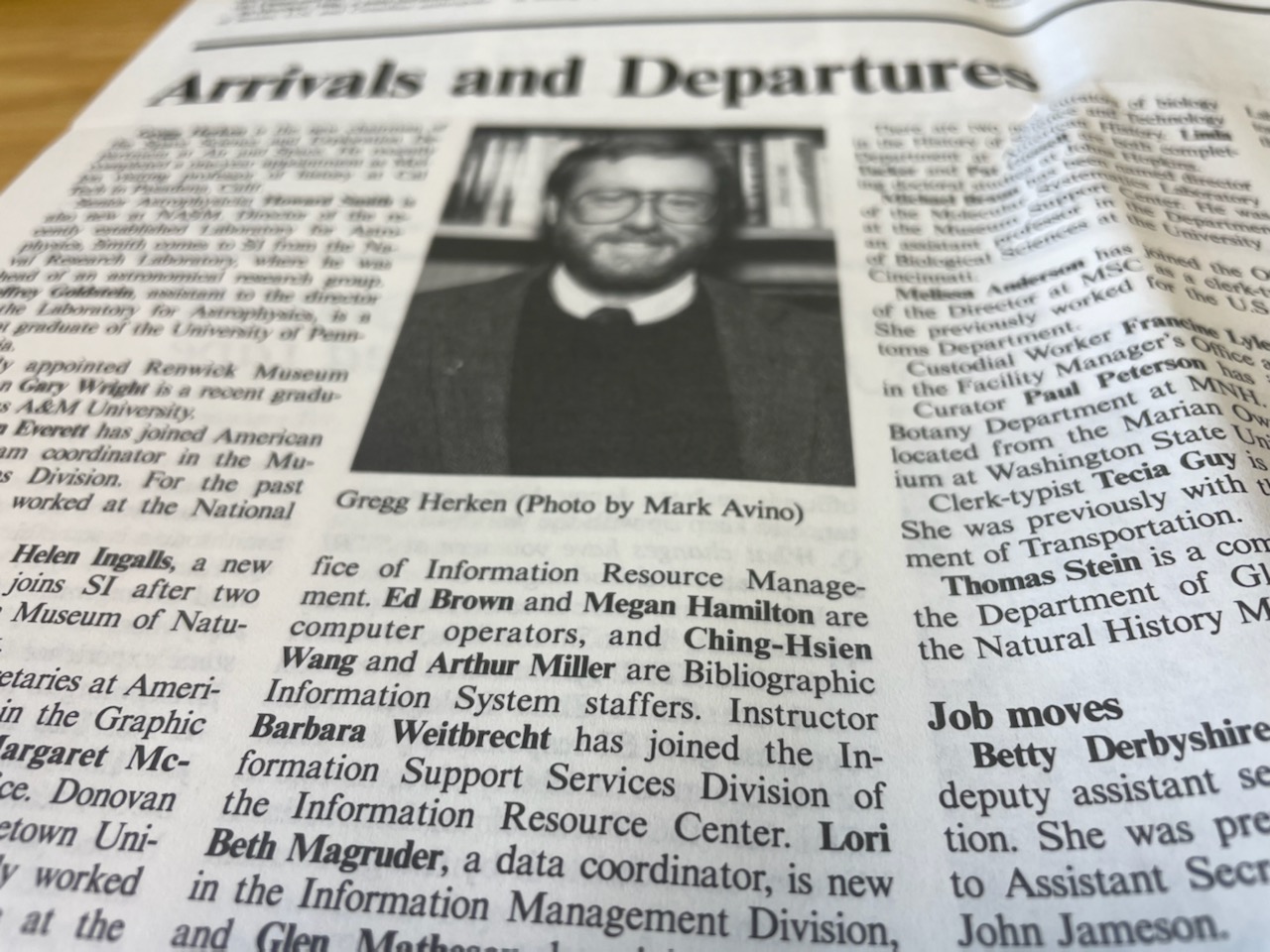
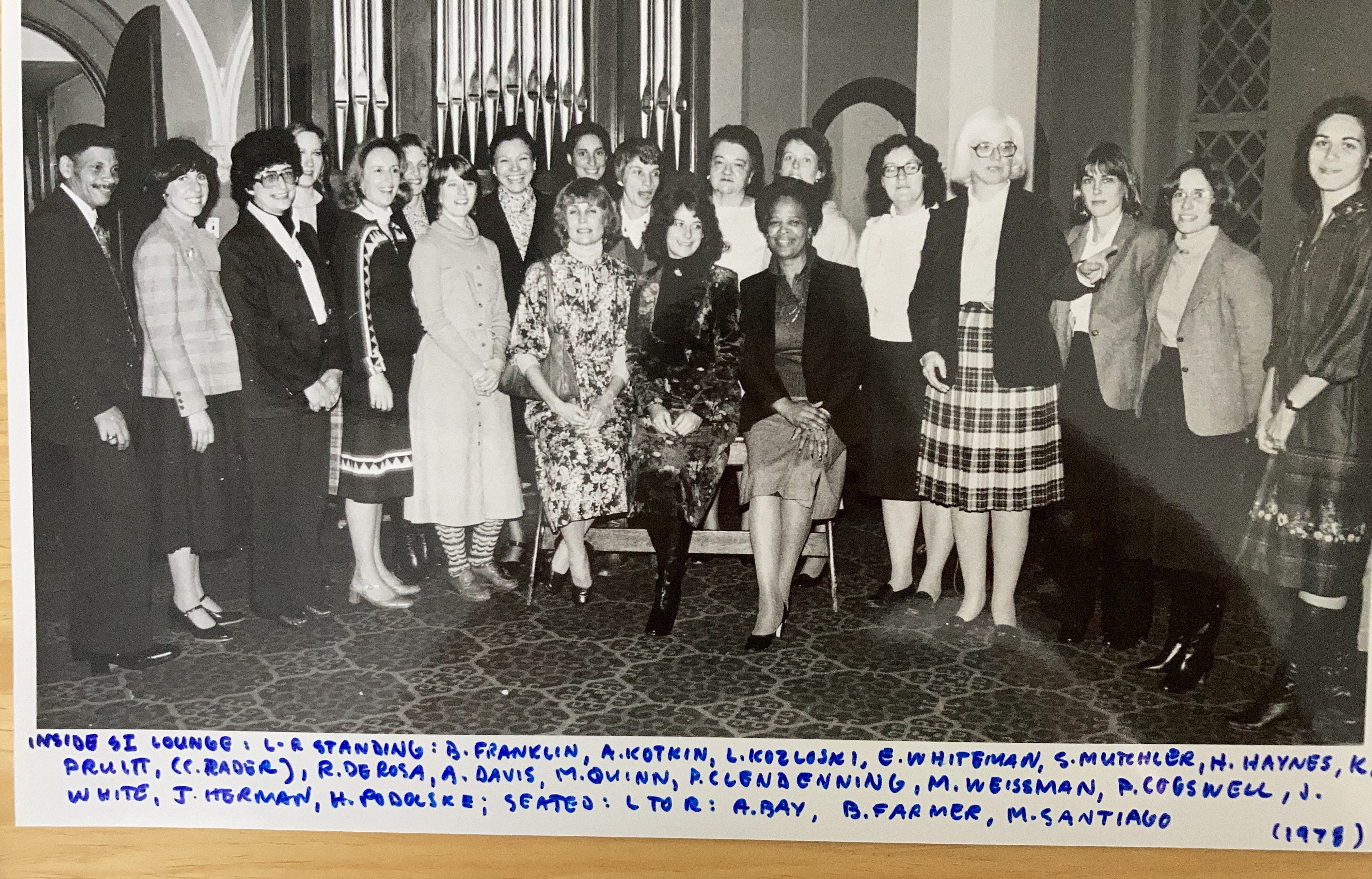
The Bigger Picture: Visual Archives and the Smithsonian
Posts tagged with: Education
Ask the Smithsonian, Third Time’s the Charm
Blogs across the Smithsonian will give an inside look at the Institution’s archival collections and practices during a month long blogathon in celebration of October’s American Archives Month. See additional posts from our other participating blogs, as well as related events and resources, on the Smithsonian’s Archives Month website.
It's that most wonderful surprising time of the year again, when we open our doors and invite you behind the blue and yellow Smithsonian curtain. People often call us for advice about their personal archives, scrapbooks, letters from grandparents, signed memorabilia, mysterious photographs with possible family members in them, and whether we might be able to just take a peek at them.

Usually we have to say no, for we must attend to our own collections and those of our colleagues, and refer the person to our online resources. But during October's American Archives Month, we open our doors to help you discover a thing or two about your own archival treasures in person.

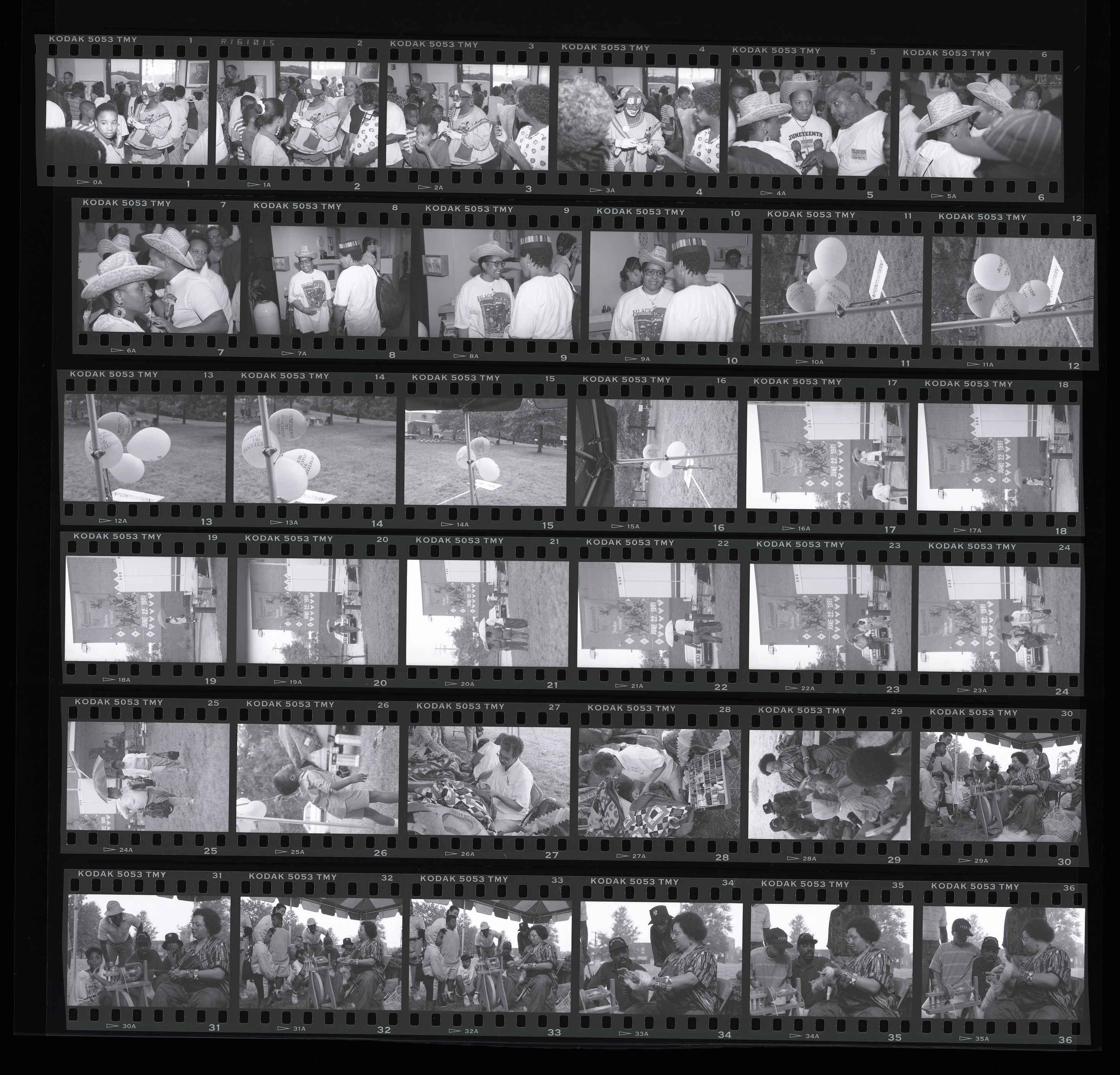
Pictured are some highlights from last year's 2011 Ask the Smithsonian event. A partenered team of an archives collection specialist and a conservator may help you by find clues to the origin of your works, suggest better housing, discuss how to safely access and preserve them for future generations, and more. We enjoy exercising our faculties with the challenge of rapid-fire response, and enjoy working with colleagues who we might not otherwise work with on a day-to-day basis.

You may still participate even if you are not local nor able to take the time off to visit us in person. We will also be answering inquiries in an Online Q & A: Ask-the-Smithsonian when we take over the Smithsonian Facebook page on Wednesday, October 17th . Since we started this annual event, the Smithsonian Magazine started an interactive column similarly called Ask Smithsonian. Why not submit a quick question there too and see your inquiry in print and eventually on the web? If you have a lengthier question, check our Collections Care Forum for previous topics, or submit your own if your question isn't covered. Do note that while we keep our focus on archival materials, for those with objects such as paintings, sculptures, or other artifacts, our colleages at the Lunder Conservation Center offer a monthly Conservation Clinic throughout the year.
Related Resources
- Sign up for "Ask the Smithsonian"
- Collections Care, Smithsonian Institution Archives
- Museum Conservation Institute, Smithsonian Institution
Teachers’ Night 2012
Blogs across the Smithsonian will give an inside look at the Institution’s archival collections and practices during a month long blogathon in celebration of October’s American Archives Month. See additional posts from our other participating blogs, as well as related events and resources, on the Smithsonian’s Archives Month website.

Last Friday, over two thousand teachers visited the Smithsonian's Donald W. Reynolds Center for American Art and Portraiture for the Smithsonian's annual Teachers' Night. This year marked the twentieth anniversary of the event and primary, secondary, and homeschool teachers attended from across the nation. Representatives around the Institution joined in the festivities to provide teachers with materials, lesson plans, and other fun giveaways, to help promote educational resources at the Smithsonian. Also, this year, Smithsonian Affiliates including NASA and George Washington's Mount Vernon Estate, Museum, and Gardens, participated. The Smithsonian Instution Archives (SIA) paired up with the Field Book Project and gave away postcards with information about our education resource package on primary source documents. SIA's education materials include resources on the Civil War, "Snowflake" Bentley, the Wright Brothers, and the architecture of the Castle, to name just a few. The Field Book project has a great lesson on scientific observation, providing yet another great lesson plan for teachers to utilize.

The most exciting element of the evening was getting the chance to talk to educators and learning how they could use our material. Some teachers were excited to look at the lesson plans we have online; while others were pleased to see that we had a host of our primary sources available for them to integrate into their own lesson plans. Other teachers had a more unique vision of how our materials might come in handy. One teacher took a host of postcards for her class to send to their penpals in China. Several art teachers took the postcards to use in the classrooms. However the teachers decide to use our materials is just fine by us. We just want it out there and hope that it can bring some interesting activities and lessons to their classrooms.

Related Resources
- Smithsonian Education - The gateway to Smithsonian educational resources, Smithsonian Center for Education and Museum Studies
- Teachers’ Night, Smithsonian Center for Education and Museum Studies
- Education Materials for K-12 Teachers, Smithsonian Institution Archives
Last Chance to Register for Smithsonian Teachers' Night 2012
School has been in session for a while now across the US, but we're still early in the year. What better time to get inspired by the myriad resouces that the Smithsonian has to offer teachers of all subjects and grade levels?
Smithsonian Teachers' Night 2012 will be held this Thursday Friday, September 28th at the Donald W. Reynolds Center for American Art and Portraiture at the National Portrait Gallery and Smithsonian American Art Museum in Washington DC. Attendees will find ready to use classroom resources, meet Smithsonian educators, and attend demonstrations of school programs and materials. Archives staff will be on hand to share history-related educational materials.
And did we mention it's free? However, since space is limited, you must register on the event website.
For any of you unable to attend, we encourage you to explore the Archives' educational resources and the Smithsonian Education website.
Summer School
The Smithsonian Institution Archives' Conservation Lab was pleased to host the first round of sessions during the summer of 2012 of the Foundation of the American Institute for Conservation of Historic & Artistic Works-sponsored workshop, "Conservation of Transparent Papers." Created and taught by conservator Hildegard Homburger of Berlin, Germany, this recent two-day workshop offered an intensive and personalized introduction to the historic manufacturing processes for tracing papers and hands-on practice with mending of tears and losses, flattening, removal of tapes, dyeing of mending paper, and lining techniques. We put together a Flickr set of images, to share a behind-the-scenes look at the workshop.
The workshop was an excellent blend of theory and practice, provided by the very well-informed teacher, but also multiplied by the experience of the many paper conservators taking part in discussions. One of our own contributions was to discuss the difficulty of estimating and recovering the orginal size of another somewhat analogous thin, heavily processed paper—crêpe paper— a topic we’ve written about on this blog before. The participants, who reflected a diversity between university, museum, and private practice conservation, freely discussed aspects of aesthetics and difficulty of treatment versus expense for the client, be that measured in dollars or time expended in balance to the value of the collection or object.
With her background and expertise working in all types of practices, ranging from regional center to museum, individual or private art dealer and teacher, Homburger brought very sensible and literal weight to bear on approaches to treatment. She has continued to experiment with colleagues, students, and to dialog with manufacturers to promote improvement for current and new methods to treat this particularly challenging type of paper. Much of this is discussed in Homburger and Barbara Korbel’s joint article, "Architectural Drawings on Transparent Paper: Modifications of Conservation Treatments," but is no substitute for seeing best practice and results of the "hard-soft sandwich" performed live by the expert. I think you can tell by the look on everyone's faces in this image!
We are so glad to have been able to host the workshop on behalf of our colleagues who came from near and far, as part of their summer adventures. And you may look forward to further adventures in transparent paper by our library preservation colleagues, Beth Doyle and Melissa Tedone. They will be blogging their perspectives on the Iowa State University sessions of the workshop on their Preservation Underground and Parks Library Preservation blogs, respectively. They also will be sharing their own Flickr set with images from the workshop. We'll be sure to share the links to the specific blog posts and new Flickr set when they go live later in August.
Related Resources
My Day With Henry
Today the Smithsonian Institution Archives launches its new web resource about Joseph Henry, the Smithsonian’s first Secretary. For the past few months I worked on the team that brought these new pages to life. And though at this point I am very much looking forward to moving on to some new research projects, I realized I just can’t seem to shake this guy.
Every day before I get to work I encounter several of Henry’s legacies. For instance, when my alarm clock goes off, the batteries operating that machine are based on Henry’s research, when he demonstrated through experimentation that a high-intensity source worked best with the coils connected end-to-end. After I rub the sleep out of my eyes and turn on the news, I am hit again with one of Henry’s projects. The National Weather Service, established in 1891, grew out of the Smithsonian's network of volunteer meteorologists, established in the 1840s. Henry cultivated these volunteers, sent them equipment to record weather observations, and collected all of the data to make some of the earliest forecasts in the country.
As I walk out the door and send some text messages, I touch upon yet another element of Henry's scientific research. Though we all know that Samuel Morse invented the electromagnetic telegraph, one of the earliest versions of a "text message", much of the science incorporated into the creation of the telegraph came from Henry's research on the relationship of electricity and magnetism.
And as I walk on and swipe my metro card’s magnetic strip in order to take the train to work, I benefit from more of Henry's electromagnetic research.
So there you have it, even though I get a little break from writing about Henry, his work still has an impact on my day and yours. Not to mention, when I come to work each day, I am at the Institution he helped set on its course. So if you would like to check out some more about Henry, his life, scientific career, and work at the Smithsonian, explore the new site. You can read his documents, look at images from the early years of the Institution, and find out how his scientific research has an effect on our day to day lives.
Produced by the Smithsonian Institution Archives. For copyright questions, please see the Terms of Use.
About
Smithsonian on Flickr Commons
Topics/Tags
- See Here (611)
- American History (542)
- Science (430)
- Archive (330)
- Cities/Places (278)
- Exhibitions (234)
- Web/Tech (210)
- Photo History (189)
- Link Love (153)
- Politics/Government (153)
Blog Roll
Categories
- Collections in Focus (990)
- What Gets Saved (337)
- Behind the Scenes (212)
- Smithsonian History (135)
Monthly Archive
- May 2013 (23)
- April 2013 (26)
- March 2013 (26)
- February 2013 (26)
- January 2013 (28)
- December 2012 (26)
- November 2012 (28)
- October 2012 (32)
- September 2012 (26)
- August 2012 (31)
- July 2012 (26)
- June 2012 (27)
- May 2012 (27)
- April 2012 (27)
- March 2012 (28)
- February 2012 (27)
- January 2012 (26)
- December 2011 (31)
- November 2011 (28)
- October 2011 (35)
- September 2011 (31)
- August 2011 (35)
- July 2011 (41)
- June 2011 (43)
- May 2011 (33)
- April 2011 (40)
- March 2011 (43)
- February 2011 (35)
- January 2011 (36)
- December 2010 (42)
- November 2010 (40)
- October 2010 (44)
- September 2010 (37)
- August 2010 (39)
- July 2010 (38)
- June 2010 (37)
- May 2010 (42)
- April 2010 (44)
- March 2010 (47)
- February 2010 (40)
- January 2010 (39)
- December 2009 (43)
- November 2009 (34)
- October 2009 (11)
- September 2009 (11)
- August 2009 (12)
- July 2009 (14)
- June 2009 (10)
- May 2009 (12)
- April 2009 (14)
- March 2009 (10)
- January 2009 (1)