
The Bigger Picture: Visual Archives and the Smithsonian
Link Love: 5/18/2012
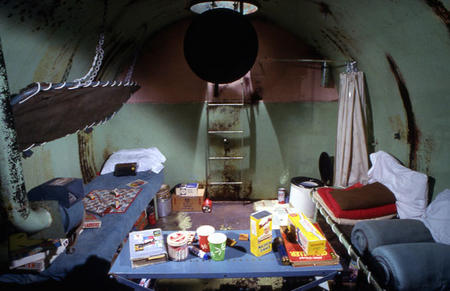
- How in the world did an emergency fallout shelter end up at the Smithsonian’s National Museum of American History?
- The Library of Congress’ Digital Preservation blog asks, does the distinction between the born digital and the digitized object do more harm than good?
- Surprisingly beautiful: a collection of hand-drawn designs for 19th century walking sticks from the Smithsonian Institution Libraries.
- The Walters Art Museum in Baltimore, Maryland, has donated more than 19,000 freely-licensed images of artworks to Wikimedia Commons.
- Our sister blog, the Field Book Project blog, talks about how “Photographs commonly straddle the line between the personal and profession side of the scientist.”
- The Encyclopedia of Life passes a huge milestone: over one million species are now documented and available online. Go explore!
- A 3D model of the Great Pyramids of Giza has been created by Dassault Systèmes, and is the “only way we can see Giza in its ancient splendor, due to looting, erosion, urban sprawl and artifacts being sent across the world” [via Mashable].
Comments (2) – Leave a comment
Thanks so much for this update. I particularly enjoyed the Smithsonianmag article about the fallout shelter. What an extraordinary cultural artifact to have preserved!
It captures that certain, pervasive and uniquely Cold War era sense of nuclear war fear--justified or not, as things were at the time.
When Bethesda Game Studios launched their hugely successful Fallout 3 game franchise series in 2008 (to which they acquired the rights in 2004, I belive), a major aim was to create a post-apocalyptic, Cold War era-esque, gameplay setting.
Of all the possible fictional devices available, Bethesda chose to launch the storyline with the main character in … a fallout shelter. This immediately established just the right kind of atmosphere for the game. This in turn, I think, speaks to the cultural significance to the younger generation of preserving such "unusual" artifacts as a fallout shelter.
Best regards
Christian

Hi Christian-
Thanks for dropping by. You bring up a very interesting point, which is that many of us are too old to have a real understanding of what a fallout shelter was, and our experience of them comes from movies or video games.
This is exactly what museums, and especially history museums, can do: provide context for historical and political situations that we might not otherwise understand through the objects and stories of an era.
Best,
Catherine
Leave a comment
Produced by the Smithsonian Institution Archives. For copyright questions, please see the Terms of Use.
About
Smithsonian on Flickr Commons
Topics/Tags
- See Here (614)
- American History (553)
- Science (437)
- Archive (338)
- Cities/Places (282)
- Exhibitions (236)
- Web/Tech (215)
- Photo History (190)
- Link Love (157)
- Politics/Government (154)
Blog Roll
Categories
- Collections in Focus (1002)
- What Gets Saved (342)
- Behind the Scenes (213)
- Smithsonian History (141)
Monthly Archive
- June 2013 (14)
- May 2013 (32)
- April 2013 (26)
- March 2013 (26)
- February 2013 (26)
- January 2013 (28)
- December 2012 (26)
- November 2012 (28)
- October 2012 (32)
- September 2012 (26)
- August 2012 (31)
- July 2012 (26)
- June 2012 (27)
- May 2012 (27)
- April 2012 (27)
- March 2012 (28)
- February 2012 (27)
- January 2012 (26)
- December 2011 (31)
- November 2011 (28)
- October 2011 (35)
- September 2011 (31)
- August 2011 (35)
- July 2011 (41)
- June 2011 (43)
- May 2011 (33)
- April 2011 (40)
- March 2011 (43)
- February 2011 (35)
- January 2011 (36)
- December 2010 (42)
- November 2010 (40)
- October 2010 (44)
- September 2010 (37)
- August 2010 (39)
- July 2010 (38)
- June 2010 (37)
- May 2010 (42)
- April 2010 (44)
- March 2010 (47)
- February 2010 (40)
- January 2010 (39)
- December 2009 (43)
- November 2009 (34)
- October 2009 (11)
- September 2009 (11)
- August 2009 (12)
- July 2009 (14)
- June 2009 (10)
- May 2009 (12)
- April 2009 (14)
- March 2009 (10)
- January 2009 (1)
